
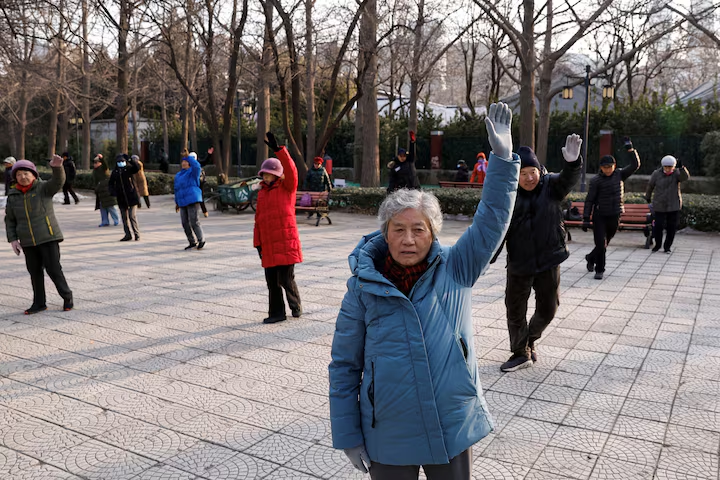

Beijing is expected to become a “super-aged” city by 2035, with around one-third of its residents aged 60 or older. The projection highlights China’s growing demographic challenges as birth rates decline and the population continues to age.
According to the official Beijing Daily, the Chinese capital is already experiencing a significant rise in its elderly population. The trend could place increasing pressure on healthcare services, pension systems and the working-age population.
One in Three Residents Could Be Over 60
Beijing had approximately 5.29 million permanent residents aged 60 and above at the end of 2025. They accounted for nearly one-quarter of the city’s population.
However, that share is projected to rise to around one-third by 2035. This shift would increase demand for elderly care, medical services and financial support for retirees.
City authorities have begun expanding support for older residents, including raising basic pension payments. These measures aim to help the elderly while addressing the financial challenges associated with an ageing population.
China Faces Declining Birth Rates
Beijing’s demographic outlook reflects a wider national trend. China’s population has been shrinking since 2022, while low birth rates and rising life expectancy continue to reshape its population structure.
Fewer births could eventually mean fewer workers entering the labour market. At the same time, a growing number of retirees could increase pressure on pension funds and public healthcare budgets.
These changes also present challenges for China’s economic growth strategy. A smaller workforce and fewer households could weaken consumption growth over time.
Government Weighs Measures to Boost Births
Chinese policymakers have made population planning a central part of their economic strategy. Reuters estimates suggest that supporting births and encouraging population growth could carry a potential annual cost of around 180 billion yuan, equivalent to approximately $26.92 billion.
The government faces the challenge of encouraging families to have children while strengthening support for older citizens.
Beijing’s projected transition highlights the need for long-term planning in healthcare, pensions and social services. How effectively authorities respond could shape the city’s economic and social development over the coming decade.
For the latest updates, visit and follow The Truth International website (www.thetruthinternational.com) and subscribe to the YouTube Channel.

