

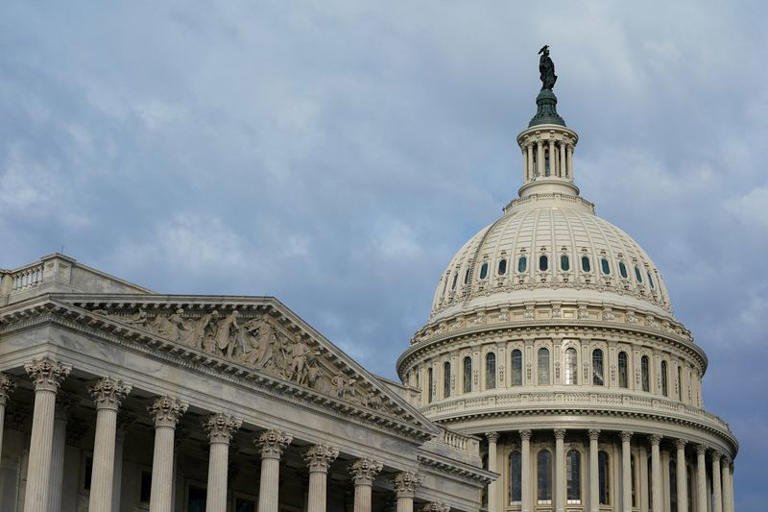

U.S. Senate
US senators remain sharply divided over the effectiveness of recent American air strikes targeting Iran’s nuclear infrastructure. The debate intensified following a classified briefing on the operation, which was authorized by US President Donald Trump.
While Republicans defended the mission’s outcomes as a significant setback to Iran’s nuclear ambitions, Democrats expressed skepticism about the actual impact and the administration’s strategic clarity.
Senate Democratic Leader Chuck Schumer voiced strong criticism of the operation, describing it as lacking a clear plan or defined end game. Schumer said that when he questioned officials during the briefing about Trump’s claims that Iran’s nuclear program had been “obliterated,” he received no satisfactory answers.
He emphasized the need to enforce the War Powers Act to restrict the president’s ability to conduct military operations without Congressional approval.
Similarly, Senator Chris Murphy of Connecticut argued that the air strikes had only delayed Iran’s nuclear program by a few months rather than delivering a decisive blow. Murphy dismissed President Trump’s rhetoric as exaggerated, asserting that “you cannot bomb knowledge out of existence, no matter how many scientists you kill.”
On the other hand, Republican Senator Tom Cotton of Arkansas praised the strikes, asserting they caused “catastrophic damage” to critical components of Iran’s nuclear program, including centrifuges, conversion facilities, and key scientists. Cotton expressed confidence that these were “single points of failure” in Iran’s weapons effort, thereby significantly hindering progress.
Senator Lindsey Graham of South Carolina concurred that the strikes were effective but warned that the threat remains. He cautioned the public not to assume the problem is resolved, noting that Iran will continue pursuing its nuclear ambitions.
Despite these assertions, the classified briefing did little to quell ongoing disputes regarding the strategic outcomes and timing of the strikes. A contemporaneous European intelligence report acknowledged that while damage was inflicted, Iran’s nuclear infrastructure was far from destroyed, with many facilities likely reparable over time.
President Trump has repeatedly criticized US media outlets such as CNN and The New York Times for reporting that questioned whether the strikes had ended Iran’s nuclear pursuits.
In response to the strikes, Iran’s Supreme Leader Ali Khamenei dismissed American claims, accusing President Trump of exaggeration. Speaking publicly for the first time since the ceasefire in the conflict with Israel, Khamenei declared Iran’s “victory” and vowed never to succumb to US pressure. He maintained that the attacks had done “nothing significant” to Iran’s nuclear capabilities.
Contrasting Khamenei’s stance, Iran’s Foreign Minister Abbas Araghchi acknowledged the damage as “serious” and indicated that a comprehensive assessment was underway.
The Israeli military confirmed that Iran’s nuclear sites suffered a “significant” blow but cautioned that it was “still early” to fully evaluate the damage. Israeli Prime Minister Benjamin Netanyahu claimed that Israel had “thwarted Iran’s nuclear project” and warned that any Iranian attempts to rebuild would be met with similar force and resolve.
Iran continues to deny ambitions to develop nuclear weapons, asserting its right to peaceful atomic energy use. However, the military exchanges have led to substantial casualties, with Tehran reporting at least 627 civilian deaths due to Israeli attacks, while Israeli authorities confirmed 28 fatalities from Iranian strikes.
