

VENICE: Danny Boyle’s high-energy drama Ink has opened at the Venice Film Festival to enthusiastic reviews but also triggered debate over its relatively sympathetic portrayal of media tycoon Rupert Murdoch.
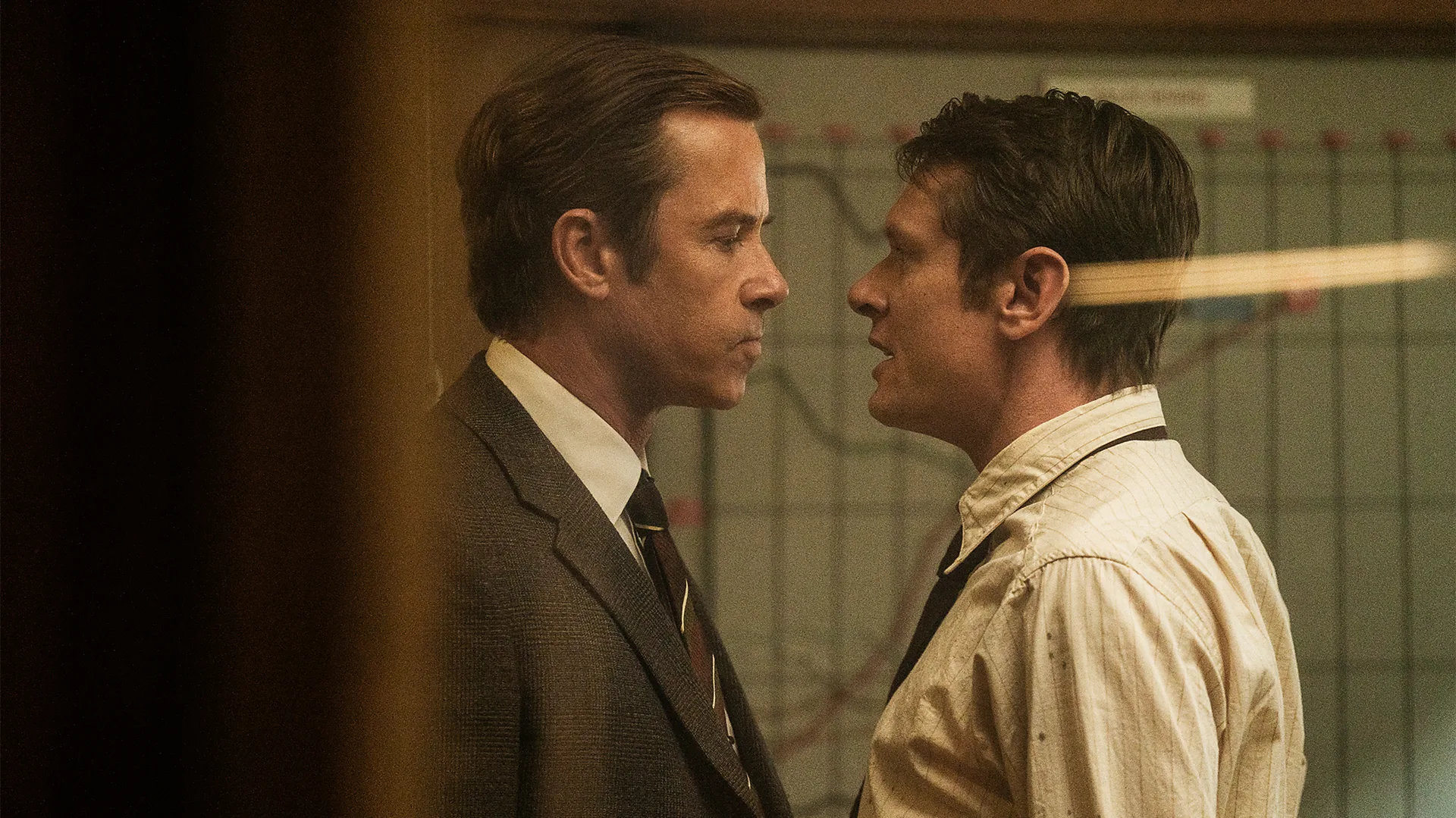
Adapted by James Graham from his own play, the film follows Murdoch’s rise in British newspapers during the late 1960s and 1970s. Guy Pearce portrays Murdoch, while Jack O’Connell plays Larry Lamb, the working-class editor appointed to transform The Sun.
The film presents Murdoch as an anti-establishment Australian businessman challenging Britain’s entrenched newspaper elite after acquiring the struggling tabloid in 1969.
Film Portrays Murdoch as Media Industry Outsider
Lamb assembles an unconventional team and pursues readers through stories focusing heavily on sport, sex and television. Consequently, Ink explores how the battle for circulation helped reshape Britain’s popular press.
However, some critics questioned whether the film treats Murdoch too gently. Time Out critic John Bleasdale described Ink as “a toothless, apolitical film” and questioned its unusually moral depiction of Murdoch.
Boyle defended the approach at Venice, describing the Murdoch of 1969 as “a breath of fresh air” in a rigid British society.
Boyle Says Audiences Should Feel Complicit
Meanwhile, the film places greater responsibility for The Sun’s increasingly sensational content on Lamb, while Murdoch frequently appears removed from editorial decisions.
Ink combines rapid editing, rock music, freeze frames and energetic performances reminiscent of Boyle’s Trainspotting.
Nevertheless, Boyle rejected the idea of portraying Murdoch simply as a villain. He argued that “monster-ising” the media magnate could allow others to avoid responsibility for the development of modern media culture.
The director said the filmmakers instead wanted audiences to consider their own role as consumers, adding that it was important for viewers to “feel complicit.”

