

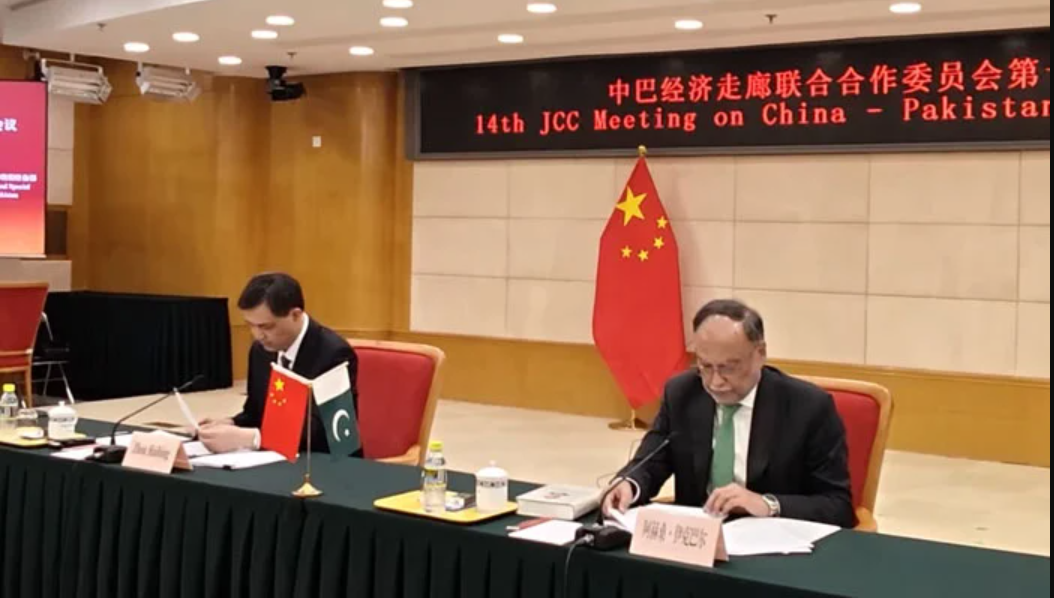

The China-Pakistan Economic Corridor (CPEC) has officially entered its second phase, with both nations unveiling a comprehensive roadmap to guide cooperation over the next decade. This new chapter aims to transform the initiative into a driver of industrialisation, technological advancement, sustainable development, and shared prosperity for the region.
The 14th Joint Cooperation Committee (JCC) meeting concluded in Beijing with a renewed focus on strategic projects and policy alignment. The latest phase builds on the foundations of the past decade, with a forward-looking agenda designed to deliver long-term economic benefits and regional integration.
Strategic Goals and Priority Projects
The newly adopted action plan outlines a wide-ranging agenda. It prioritises industrial cooperation, the development of Special Economic Zones, agricultural modernisation, maritime advancement, and mining projects. Key infrastructure initiatives include the modernisation of the ML-1 railway line, realignment of the Karakoram Highway (KKH), and further development of the Gwadar port and city.
Despite progress, the long-standing issue of capacity payments owed to Chinese independent power producers remains unresolved. Islamabad has sought an extension in the repayment timeline, while Beijing has requested firm commitments before finalising financing agreements, particularly in the context of Pakistan’s ongoing economic programme with the International Monetary Fund.
A Vision for High-Quality Development
Federal Minister for Planning and Development Ahsan Iqbal described Phase-II as a “corridor of industrialisation, technology, sustainability, and shared prosperity.” He emphasised that this new era would focus on five interconnected pillars: growth, innovation, green development, improved livelihoods, and enhanced regional connectivity.
These priorities will be closely aligned with Pakistan’s URAAN 5Es framework, which focuses on Exports, E-Pakistan, Energy and Environment, and Equity and Empowerment. According to the minister, this alignment will ensure that CPEC contributes directly to Pakistan’s broader economic transformation agenda.
Emphasis on Connectivity and Cooperation
Ahsan Iqbal highlighted the strategic importance of implementing key projects such as the ML-1 and KKH realignment. Early execution, he explained, would unlock significant economic opportunities and strengthen trade and transport links between Pakistan and China.
To accelerate progress, he proposed increasing the frequency of JCC meetings to every six months and holding Joint Working Group sessions quarterly during the first three years of Phase-II. These steps aim to enhance coordination, improve decision-making, and ensure timely implementation.
Security, Stability, and Strategic Partnership
The minister also addressed the geopolitical challenges surrounding CPEC, stressing the importance of unity in countering negative narratives. He announced that both countries had agreed to publish an updated CPEC long-term plan within 90 days. This updated document will reflect the convergence between Pakistan’s 5Es and the five strategic corridors outlined for Phase-II.
Reaffirming Pakistan’s commitment to the safety and security of all CPEC projects and personnel, Ahsan Iqbal described the initiative as a powerful symbol of the enduring partnership between Pakistan and China. “CPEC is not just a development programme — it is a testament to our iron-clad friendship and mutual trust,” he said.
Looking Ahead: The Next Decade
The conclusion of the JCC meeting marks a turning point for CPEC. As both nations look to the future, the focus will shift from infrastructure development to industrial growth, technology transfer, innovation, and green transformation. These changes aim to position CPEC as a cornerstone of regional economic integration and a catalyst for sustainable development.
Ahsan Iqbal proposed that the 15th JCC meeting be held in Islamabad in May 2026, coinciding with the 75th anniversary of diplomatic relations between Pakistan and China. This milestone event would not only celebrate decades of friendship but also reaffirm the commitment to a shared future built on cooperation, innovation, and prosperity.
