
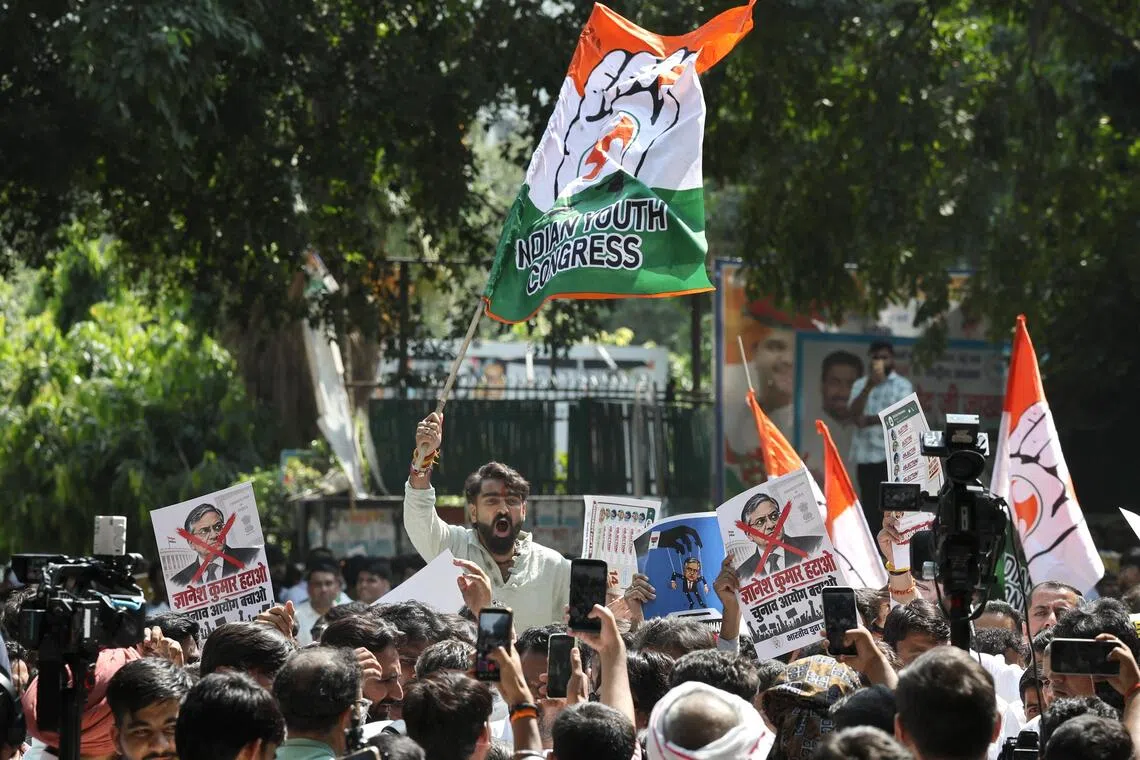

India’s ruling establishment faces renewed scrutiny as the youth-led Cockroach Janata Party (CJP) prepares fresh protests over India’s voter roll revision process.
The CJP plans demonstrations in Mumbai, while student and civil society groups are expected to gather at New Delhi’s Jantar Mantar. The protesters are demanding the resignation of Chief Election Commissioner Gyanesh Kumar. The dispute has intensified following allegations that changes to voter registration systems could exclude eligible voters. The Election Commission of India has rejected claims that its process was politically motivated.
Cockroach Janata Party Plans Fresh Protests
The CJP emerged earlier this year as a satirical youth movement before expanding into street protests and political activism.
Its founder, Abhijeet Dipke, has led demonstrations focused on concerns over education, employment and government accountability. The movement first gained widespread attention during protests over examination irregularities.
Earlier protests targeted former Education Minister Dharmendra Pradhan. The CJP later broadened its campaign to issues surrounding elections and voter registration. The movement now plans to mobilise supporters over the Election Commission’s voter verification exercise. CJP convenor Saurav Das said protesters would continue their campaign until Gyanesh Kumar resigns.
Election Commission Faces Growing Scrutiny
The controversy centres on a nationwide voter-verification exercise known as the Special Intensive Revision (SIR). The Election Commission says the exercise aims to improve electoral rolls by removing duplicate, deceased and otherwise ineligible voters. However, opposition parties and activists have raised concerns about the number of voters potentially excluded during the process.
Reuters reported that an initial draft exercise left around 130 million people out of voter lists, although the figures and their interpretation remain part of the wider dispute.
The Election Commission has defended the process and recently announced changes to verification procedures. These included plans for local officials to visit voters when discrepancies arise, rather than requiring citizens to visit government offices themselves.
Internal Disagreements Add Pressure
The controversy intensified after an investigation by The Indian Express reported disagreements inside the Election Commission.
According to the report, Election Commissioners Sukhbir Singh Sandhu and Vivek Joshi formally objected at least 14 times over 10 months to decisions taken by the commission without their knowledge. The concerns reportedly covered voter-list revisions, registration procedures and the commission’s digital systems. The Election Commission has characterised such disagreements as part of normal internal deliberations.
Meanwhile, the controversy has reached India’s Supreme Court. The court has agreed to hear a petition challenging aspects of Kumar’s functioning and the nationwide SIR process.
Opposition Parties Also Prepare Protests
The CJP is not alone in demanding action against Kumar. India’s opposition parties, including the Congress, are also preparing protests over the voter-roll revision process. The Congress-led opposition has announced plans for demonstrations beginning October 6. Their demands include greater transparency in the voter verification process and accountability within the Election Commission.
The growing protests place additional political attention on the commission as India prepares for upcoming elections.
CJP Expands Beyond Youth Activism
The Cockroach Janata Party began as an online movement driven largely by young Indians frustrated by unemployment and problems within the education system. Its first major street protest took place in New Delhi in June. Hundreds of supporters gathered at Jantar Mantar and demanded accountability over examination irregularities.
Since then, the movement has continued expanding its political message. Dipke has become the public face of the campaign, while supporters have used social media to organise demonstrations across India.
The group’s involvement in the voter-roll controversy marks a broader shift from education-related activism toward questions of governance and electoral accountability.
Voter Roll Dispute Enters New Phase
The latest protests come as the Election Commission faces pressure from activists, opposition parties and legal challengers. Critics argue that voter verification must not result in eligible citizens losing their right to vote. The commission, meanwhile, maintains that its procedures are intended to protect the accuracy of electoral rolls.
With fresh demonstrations planned in Mumbai and Delhi, the dispute is likely to remain a major public issue.
For now, the central questions concern how voter deletions are verified, how citizens can appeal decisions and whether the Election Commission can address concerns over its internal decision-making.
For the latest updates, visit and follow The Truth International website (www.thetruthinternational.com) and subscribe to the YouTube Channel.

