

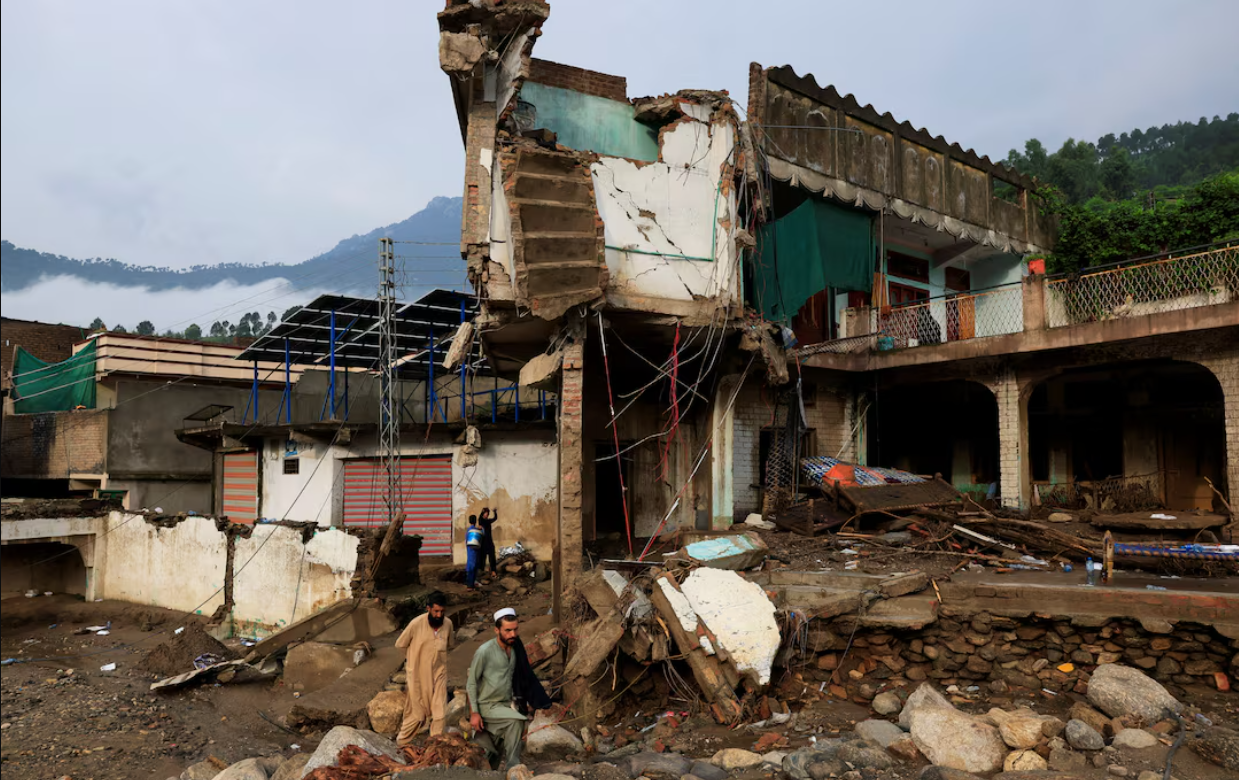

A devastating cloudburst followed by severe flooding has wreaked havoc in Buner district, resulting in tragic human and economic losses. According to official data, 234 people lost their lives, marking the highest death toll reported from the affected areas. The floods not only claimed lives but also left behind widespread destruction of property, agriculture, and infrastructure.
Homes and Infrastructure Severely Damaged
The disaster destroyed 162 houses and partially damaged another 575, leaving hundreds of families homeless. Key infrastructure was also hit hard, with 110 kilometers of roads, several bridges, and essential facilities severely damaged or washed away. The loss of connectivity has hampered relief and rehabilitation operations, making access to affected communities increasingly difficult.
Massive Agricultural and Livelihood Losses
Agricultural losses in Buner are staggering. Nearly 55,890 acres of farmland were submerged under floodwaters. The Agriculture Department further confirmed that 26,142 acres of standing crops were completely ruined, leading to losses estimated at over Rs 250 million.
The disaster also destroyed 825 shops and killed 3,638 livestock, delivering a crushing blow to local livelihoods. Farmers and traders in the region now face extreme financial uncertainty as their primary sources of income have been wiped out.
Damage to Education and Public Health Sectors
The Education Department reported that 29 schools and educational institutions were affected. Among them, one school was completely destroyed while several others sustained partial damage. This disruption has left hundreds of children without access to classrooms.
The Public Health Department also faced damages worth Rs 194.8 million due to the collapse of water supply channels and related infrastructure. The breakdown in clean water supply has raised health concerns for residents already coping with flood-related hardships.
Highway Authority Reports Major Financial Losses
The Highway Authority confirmed that four kilometers of road were completely washed away. The damage is estimated at more than Rs 320 million, underscoring the severity of the impact on transport networks. Restoring connectivity will require significant resources and time.
Government Response and Rehabilitation Plans
Authorities have warned that rehabilitation and reconstruction will demand extensive resources as the region struggles to recover from the disaster. The Prime Minister has reaffirmed the government’s commitment to assist affected families and accelerate rehabilitation in Khyber Pakhtunkhwa’s worst-hit districts.
He also directed federal ministers, secretaries, the National Disaster Management Authority (NDMA), and the armed forces to remain actively engaged in relief operations. Emphasizing lessons from the 2022 floods, which killed nearly 100 people, the prime minister acknowledged that this year’s floods have caused even greater devastation, with more than 700 deaths recorded nationwide. Over 400 of these fatalities occurred in Khyber Pakhtunkhwa alone.
Environmental Concerns and Preventive Measures
The Prime Minister further highlighted the urgent need to discourage illegal construction along waterways, stressing that such practices significantly increase flood risks. He also expressed alarm over large-scale deforestation in Galyat and surrounding regions, announcing plans to convene a high-level meeting on environmental protection and disaster preparedness.
The Buner floods serve as a grim reminder of Pakistan’s vulnerability to climate-induced disasters. With 234 deaths, thousands displaced, and billions lost in infrastructure and agricultural damage, recovery will require both immediate humanitarian support and long-term preventive strategies. Strengthening environmental safeguards, enforcing construction regulations, and accelerating relief efforts remain critical to protecting vulnerable communities from future calamities.
