
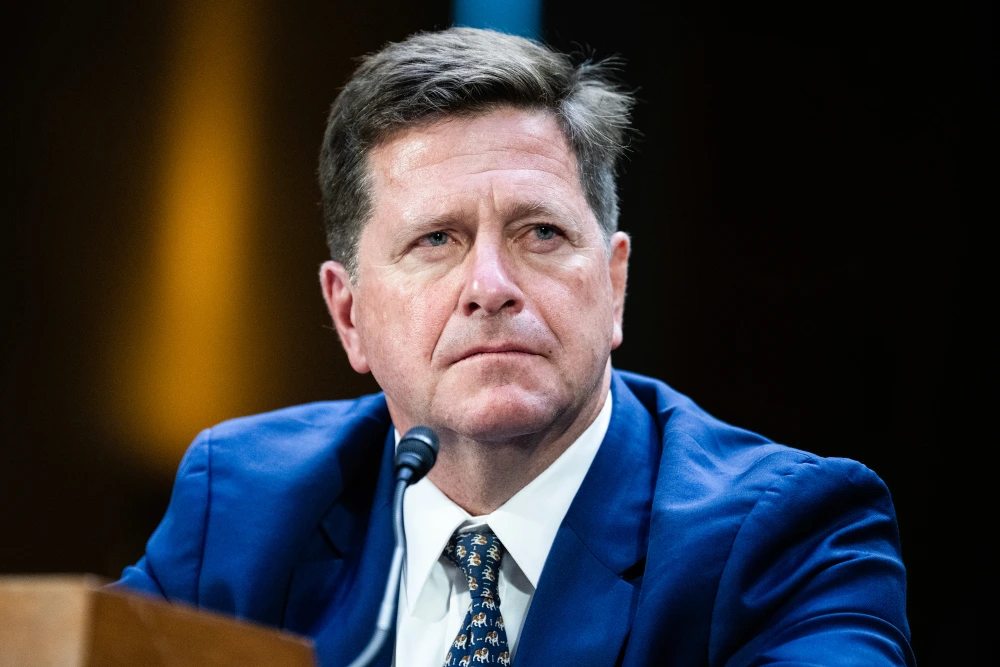

The US Senate has confirmed Jay Clayton as the country’s top intelligence official, giving President Donald Trump a permanent leader for the nation’s intelligence agencies. Senators approved Clayton’s appointment on Tuesday with a 51-47 vote, while all Democratic members opposed his confirmation.
Trump welcomed the decision and praised Clayton shortly after the vote. The former Securities and Exchange Commission (SEC) chairman will now lead the intelligence community after Tulsi Gabbard resigned from the position last month.
Clayton takes charge of an intelligence system facing leadership changes, staff reductions, and political disputes. His appointment comes as concerns grow over the role of national security agencies ahead of the upcoming midterm elections.
Democrats Raise Concerns Over Clayton’s Views
During his confirmation hearing, Democrats questioned Clayton about the 2020 presidential election. They repeatedly asked whether he accepted Joe Biden’s victory.
Clayton said Biden had been “certified” as the winner but avoided giving a direct response. He also stated, “I’m not an election denier.”
Democratic lawmakers expressed concerns over his answers. Senate Intelligence Committee Vice Chair Mark Warner said Democrats faced a difficult choice because they considered Clayton more experienced than the previous acting director but remained concerned about his statements.
Senator Adam Schiff argued that Clayton might struggle to resist political pressure if intelligence agencies faced demands related to election issues.
Republicans Defend Clayton’s Experience
Republicans defended Clayton’s record and highlighted his previous government roles. They pointed to his time leading the SEC and serving as US attorney for the Southern District of New York.
Senate Majority Leader John Thune said Clayton’s background in financial crime investigations and national security cases made him suitable for the position.
Before Clayton’s confirmation, acting intelligence chief Bill Pulte faced criticism from lawmakers over agency staff cuts and his lack of intelligence experience.
Pulte also announced further reductions at the Office of the Director of National Intelligence before leaving the role.
Clayton Faces Key Intelligence Challenges
Clayton’s appointment may influence future discussions on Section 702 of the Foreign Intelligence Surveillance Act. The program allows US authorities to collect communications involving foreign nationals abroad without individual warrants.
Democrats previously opposed extending the authority while Pulte served as acting director. They raised concerns about possible government overreach.
However, discussions on renewing Section 702 are unlikely to conclude before September because the House of Representatives has started its summer recess.
Clayton now faces the challenge of leading the intelligence community while addressing concerns over agency independence, national security, and political pressure.

