

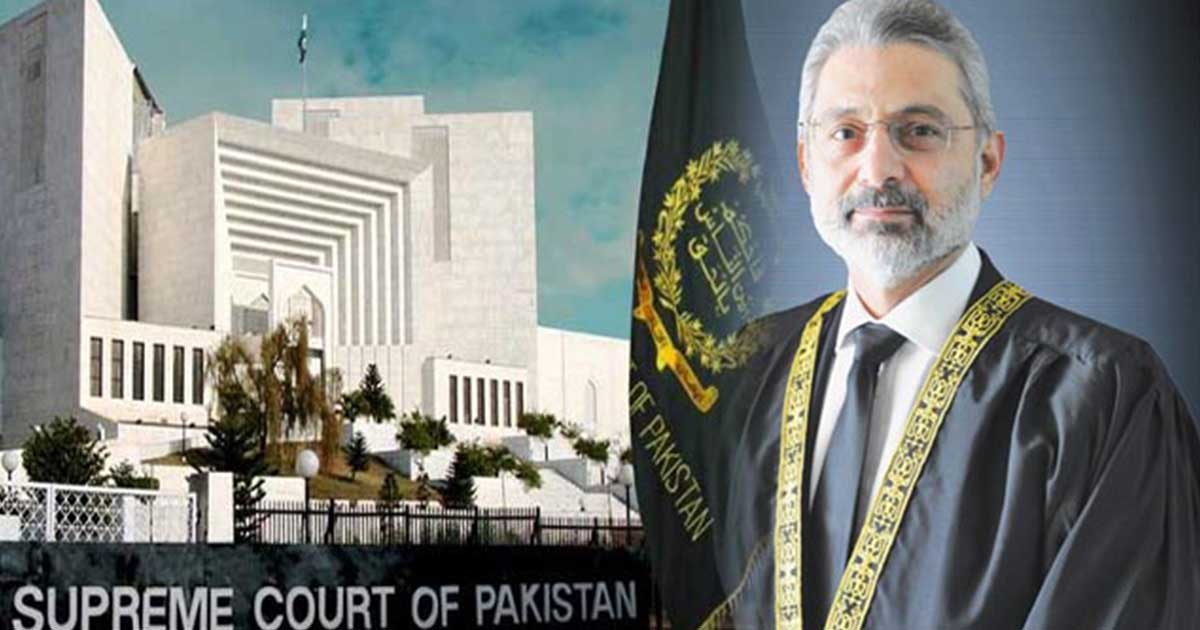

ISLAMABAD: On Tuesday, Chief Justice of Pakistan (CJP) Qazi Faez Isa emphasized that Islam requires individuals to consult with others before making decisions.
During the second live hearing on petitions challenging the Supreme Court (Practice and Procedure) Act 2023, which aims to limit the Chief Justice’s discretionary powers, Chief Justice Isa, heading a full-court bench of 14 judges, set October 9 as the final hearing date, cautioning that proceedings could continue until midnight.
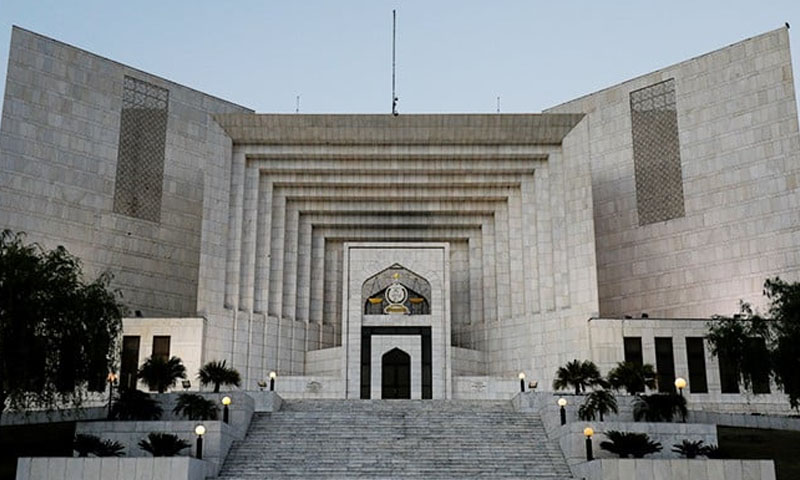
State-run PTV broadcasted the proceedings live.
The full court bench comprises Chief Justice Isa, Justice Sardar Tariq Masood, Justice Ijaz Ul Ahsan, Justice Syed Mansoor Ali Shah, Justice Munib Akhtar, Justice Yahya Afridi, Justice Aminuddin Khan, Justice Sayyed Mazahar Ali Akbar Naqvi, Justice Jamal Khan Mandokhel, Justice Muhammad Ali Mazhar, Justice Ayesha A. Malik, Justice Athar Minallah, Justice Syed Hasan Azhar Rizvi, Justice Shahid Waheed, and Justice Musarrat Hilali.
Chief Justice Isa directed the PTI lawyer, Uzair Bhandari, to read the first page of the Constitution during the proceedings, emphasizing the Quran’s guidance for decision-making and the importance of consultation. He also highlighted the right to appeal and the value of decisions made through consultation, citing the Holy Quran and parliamentary statements.
Can’t spend too much time on one case
At the beginning of the hearing, CJP Isa expressed the court’s intent to conclude the case on the same day, emphasizing the need to address the numerous pending cases. He directed the petitioner’s counsel to wrap up their arguments within 10 minutes. CJP Isa clarified that the legislation does not curtail the powers of the chief justice but instead redistributes them among the judges, with a more significant impact on the chief justice and the two senior-most judges.
Parliament bulldozed judiciary’s independence
The petitioner’s lawyer, Ikram Chaudhry, argued that the Parliament compromised judicial independence through the Practice Act, suggesting it encroached on the court’s jurisdiction. However, when asked by the CJP if they had requested parliamentary records, Chaudhry said they did not possess them.
CJP Isa advised against discussing politics in the courtroom after Chaudhry read a former prime minister’s statement, stating that political discussions should be held in the media, not the court.
CJP Isa noted that some believed the Supreme Court and Parliament were at odds over this law but refrained from using the term “war.” He emphasized that the debate should focus on whether the Supreme Court Practice and Procedure Act is unconstitutional.
In response to the argument that the apex court can strike down legislation, CJP Isa mentioned that the court had declared its authority to review constitutional amendments in the 21st Amendment. He also questioned whether Parliament passing a law prioritizing cases involving widows would affect the independence of the judiciary.
Act makes access to justice easy
Lawyer Hasan Irfan, another petitioner’s counsel, argued that the Constitution mandated the Supreme Court’s use of Article 184(3). The CJP questioned if this extended the power to the entire Supreme Court.
Justice Ahsan highlighted that Article 191 granted the Supreme Court the authority to set procedural rules, and the Act transferred the Chief Justice’s powers to a committee of judges, allowing allocation of powers.
Justice Minallah raised questions about enhancing transparency within the Supreme Court’s internal affairs and its impact on fundamental rights related to access to justice.
Lawyer Irfan inquired if the Chief Justice and the committee could take notice of rights violations. Justice Minallah questioned if access to justice was affected when suo motu powers were with the Chief Justice.
Everyone surrenders after martial law
CJP Isa commented on judges who forgot their oath during martial law, emphasizing the court’s duty to prevent destabilization and respect for Parliament.
The PTI lawyer, Uzair Bhandari, argued that rules take precedence over laws based on judicial precedents.
CJP Isa pointed out that Article 204 didn’t provide the right of appeal, which was added by Parliament, defending the right to appeal in SC law.
CJP Isa questioned why the PTI didn’t address the issue in Parliament, with the lawyer distancing himself from political decisions, and CJP Isa suggesting they should have raised it in Parliament.
Case background
On April 13, the Supreme Court suspended a law limiting the Chief Justice’s suo moto powers. In June, similarities between this law and another relating to the right of appeal in suo moto cases were discussed. The Attorney General suggested harmonizing these laws.
When CJP Isa took office, he set a hearing date, and live telecasts began. The hearing raised questions, and lawyers were given until September 25 to respond, with the hearing adjourned until October 3. CJP Isa formed a committee to allocate cases and establish benches for the Supreme Court’s continued operation.
The law
The law empowers a three-member committee, including the Chief Justice and two senior judges, for suo motu cases and aims to ensure transparency and the right to appeal in the apex court.
All cases in the apex court are decided by this committee, and decisions require a majority vote.
Original jurisdiction under Article 184(3) falls under the committee’s purview.
For constitutional interpretation, a bench with at least five apex court judges is formed.
Appeals for Article 184(3) judgments must be filed within 30 days, heard within 14 days by a larger SC bench, and can be retroactive.
Parties can choose their counsel for review applications under Article 188.
Urgent or interim relief applications in cases are heard within 14 days from filing.
