

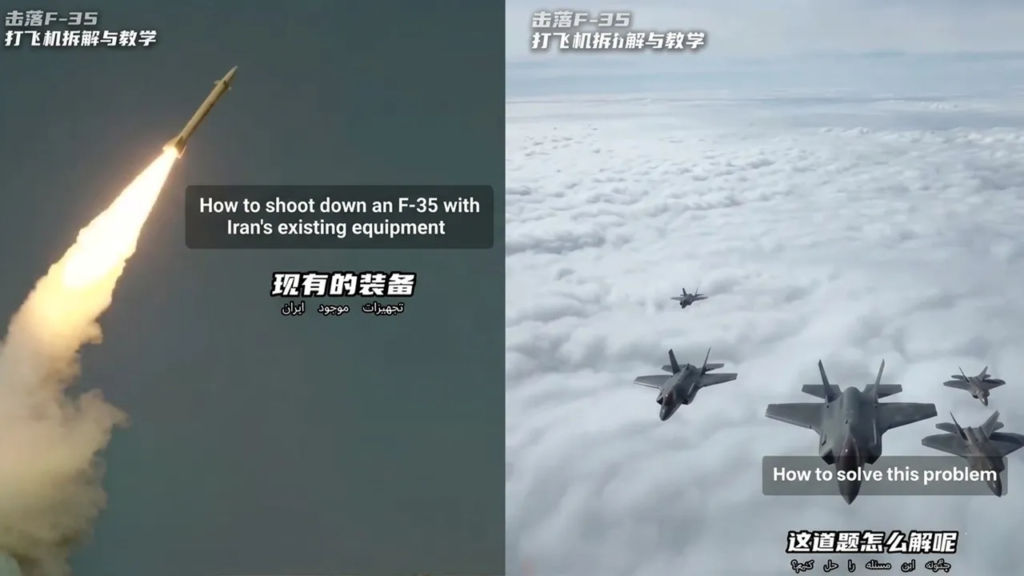
A wave of detailed Chinese online videos has caught attention across the Middle East and beyond. These tutorials explain how to track and strike advanced American fighter jets, appearing just as Iran reported shooting down US aircraft in the ongoing conflict.
One popular Chinese account called “Lao Hu Talks About the World” posted a clear step-by-step guide on March 14. The video showed ways to detect and hit an F-35 using simple, low-cost equipment. It even came with Persian subtitles and spread fast on both Chinese and Iranian platforms. Millions watched it within days. The creator, who studied at a top Chinese defence university, often shares military analysis and has built a huge following.
Timing raises eyebrows
Iran claimed it damaged a US F-35 over central Iran shortly after the video appeared. On April 3, Iranian forces brought down an F-15E, though American rescue teams later saved the pilot. Many people started asking whether these open tutorials played any role in the battlefield successes.
Some experts see the videos as genuine public interest and sympathy for Iran. Others believe the content gains traction because it fits wider views in certain circles, even if no official hand is involved. Either way, the timing has triggered fresh questions about how military knowledge now travels so quickly online.
Questions over navigation systems too
Talk also grew about China’s BeiDou satellite system. Observers wonder if Iran is quietly using it in its missiles and drones to avoid American GPS jamming. No one has proved direct links yet, but such technology could give Iran better accuracy without depending on Western systems.
Chinese officials firmly deny giving any military help. They repeat that Beijing follows a policy of staying out of conflicts and keeps normal trade ties with Iran. Still, some analysts describe it as soft support through shared knowledge and dual-use items that strengthen Iran without clear proof.
The videos highlight a changing face of modern war. Ordinary engineers and enthusiasts now break down tactics, share satellite pictures, and run simulations for anyone to see. This digital flow adds a new layer to the fighting between Iran, Israel and the United States.

