

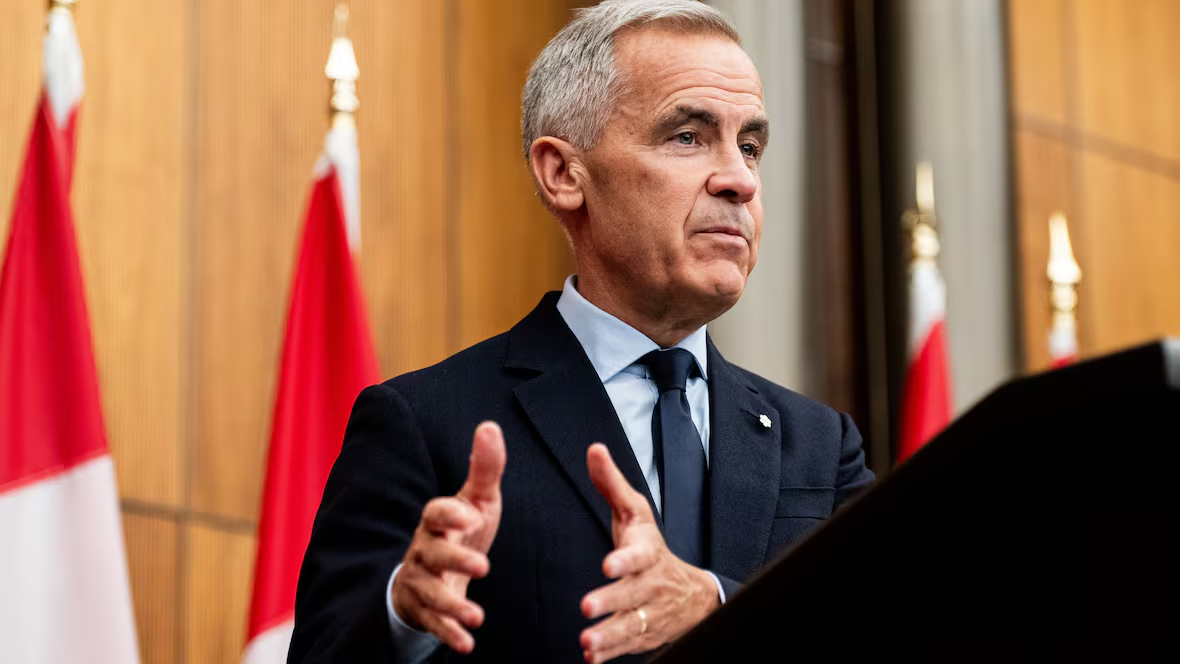

Canada has announced that it will remove a significant portion of its retaliatory import tariffs on U.S. goods, signaling a shift toward a more cooperative trade stance with its southern neighbor, Prime Minister Mark Carney said on Friday. The decision comes as part of ongoing efforts to strengthen economic and security ties between the two nations, though tariffs on U.S. autos, steel, and aluminum will remain in place for the time being.
Speaking at a press conference in Ottawa, Carney emphasized that this move aligns with Canada’s obligations under the United States-Mexico-Canada Agreement (USMCA). “In this context and consistent with Canada’s commitment to USMCA, I am announcing today that the Canadian government will now match the United States by removing all of Canada’s tariffs on U.S. goods specifically covered under USMCA,” he said. He added that the decision effectively restores free trade for the majority of goods traded between Canada and the U.S., marking a positive step toward easing long-standing trade tensions.
Carney noted that the United States had recently clarified it would not impose tariffs on Canadian goods compliant with the USMCA framework, a development he described as encouraging. The announcement was welcomed by financial markets, with the Canadian dollar strengthening to C$1.3837 against the U.S. dollar, or 72.27 U.S. cents, reflecting investor optimism about improved bilateral trade relations.
The announcement also forms part of broader discussions between Canada and the United States on establishing a new economic and security relationship. While talks are ongoing, both sides are not yet close to finalizing a deal. Carney confirmed that he spoke with U.S. President Donald Trump on Thursday, and indicated that lifting the tariffs could help jumpstart the negotiations.
Carney’s decision represents a more moderate approach compared with the initial aggressive measures introduced by his predecessor, Justin Trudeau, who in March imposed 25% tariffs on approximately C$30 billion ($21 billion) worth of U.S. imports in response to the Trump administration’s duties. Since taking office, Carney has gradually softened Canada’s stance, including scrapping a proposed digital services tax in late June and scaling back discussions of additional sanctions.
Using an ice hockey analogy, Carney suggested that it was time for Canada to adopt a more pragmatic and less confrontational approach toward the United States. “Let’s be clear, we have the best deal of anyone in the world right now,” he said.
Despite the positive economic and diplomatic signals, Carney faces potential political challenges at home, with opposition parties criticizing his softer approach toward Washington while his minority government relies on support from other parties to maintain confidence in the House of Commons.
Overall, the removal of tariffs marks a significant step in improving Canada-U.S. trade relations, providing relief for exporters and creating a more stable framework for future negotiations on both economic and security issues.
