
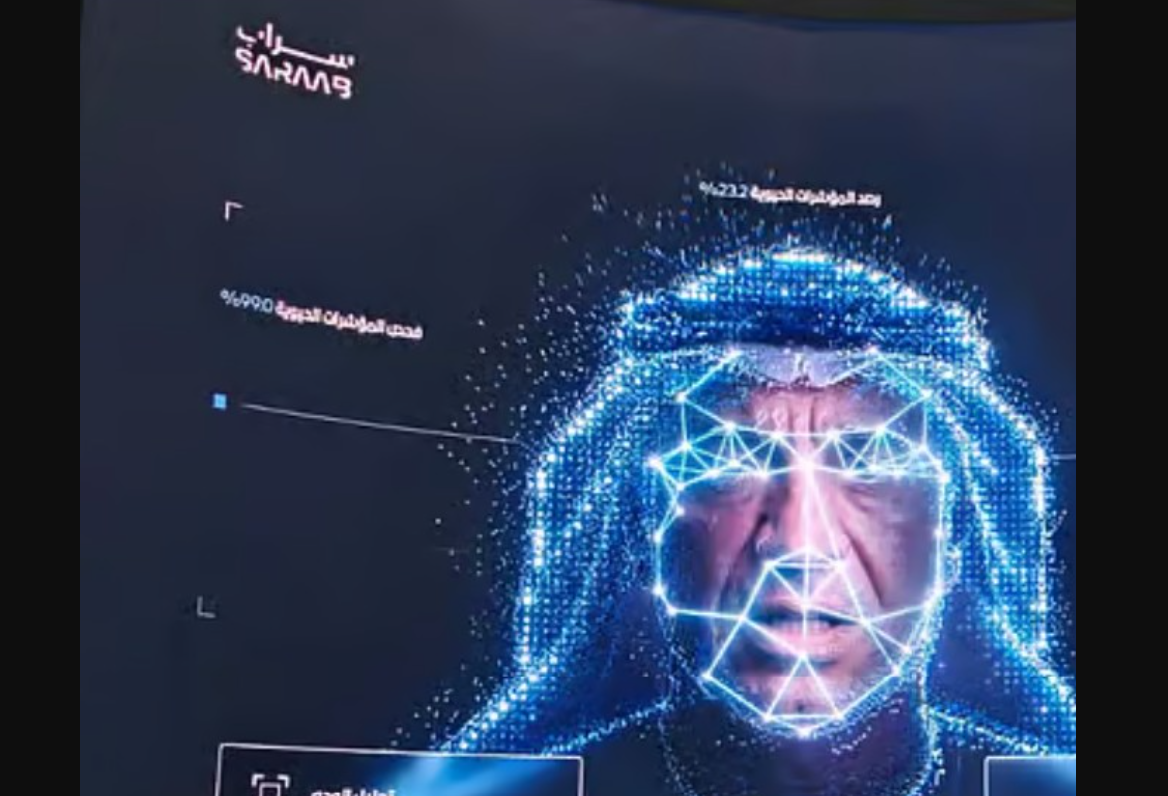

Dubai is preparing to introduce SARAAB, an open-source artificial intelligence model designed to detect manipulated videos.
The model will examine facial features and movement to identify signs of synthetic content. It is expected to launch by the end of 2026.
The Dubai Electronic Security Centre (DESC) unveiled details about SARAAB during GISEC Global 2026. The event is taking place from September 16 to 18 at Dubai Exhibition Centre in Expo City Dubai.
SARAAB is designed to detect hidden synthetic layers within video footage. Importantly, the system can identify manipulation even when only part of a video has been altered.
How SARAAB Detects Deepfake Videos
The AI model analyses facial features using a heat map to identify possible signs of synthetic manipulation.
This approach allows SARAAB to examine the visual characteristics of a video rather than focusing only on obvious alterations.
Moreover, the system can analyse an entire video when manipulation appears in only a small section. For instance, a two-minute video could contain changes only during its final 30 seconds.
In that situation, SARAAB would still examine the complete two-minute recording. This feature is intended to help identify manipulated sections that may otherwise be difficult to detect.
DESC says SARAAB can achieve 91% accuracy. However, the announcement does not provide details about the dataset, evaluation process, or testing conditions behind that figure.
Therefore, the 91% accuracy figure remains a claim from DESC rather than an independently verified benchmark.
SARAAB Could Become an Open-Source Tool
DESC plans to make SARAAB available through developer platforms after its expected launch.
The open-source model could allow AI engineers, cybersecurity specialists, and researchers to test the system. They could also examine its performance and contribute to further improvements.
Hugging Face is expected to host the model. However, no public model page or exact release date was available in the information reviewed.
The open-source approach could also give organisations another tool for examining suspicious video footage. At the same time, the effectiveness of such systems depends on how they perform against different types of synthetic manipulation.
Why Full-Video Analysis Matters
Deepfake videos do not always involve changes throughout an entire recording. Instead, manipulation can affect only specific sections or frames.
SARAAB is being designed to address this issue by analysing the complete video. As a result, a manipulated segment could potentially be identified even when most of the footage remains unchanged.
The model’s facial analysis and motion-based approach are intended to uncover synthetic elements that may not be immediately visible.
However, deepfake detection remains an evolving challenge as synthetic video techniques continue to change.
A single detection system also cannot independently establish that a video is genuine or manipulated in every situation. Instead, its results need to be considered alongside the available evidence and testing standards.
SARAAB Expected by the End of 2026
Dubai expects to launch SARAAB before the end of 2026. The planned open-source release could give researchers and cybersecurity professionals access to the technology.
For now, questions remain about the model’s public release, testing methodology, and independent performance evaluation.
Nevertheless, SARAAB represents Dubai’s effort to develop an AI-based tool for identifying synthetic video content. Its ability to examine entire videos could become a key feature once the model becomes publicly available.
For the latest updates, visit and follow The Truth International website (www.thetruthinternational.com) and subscribe to the YouTube Channel.

