

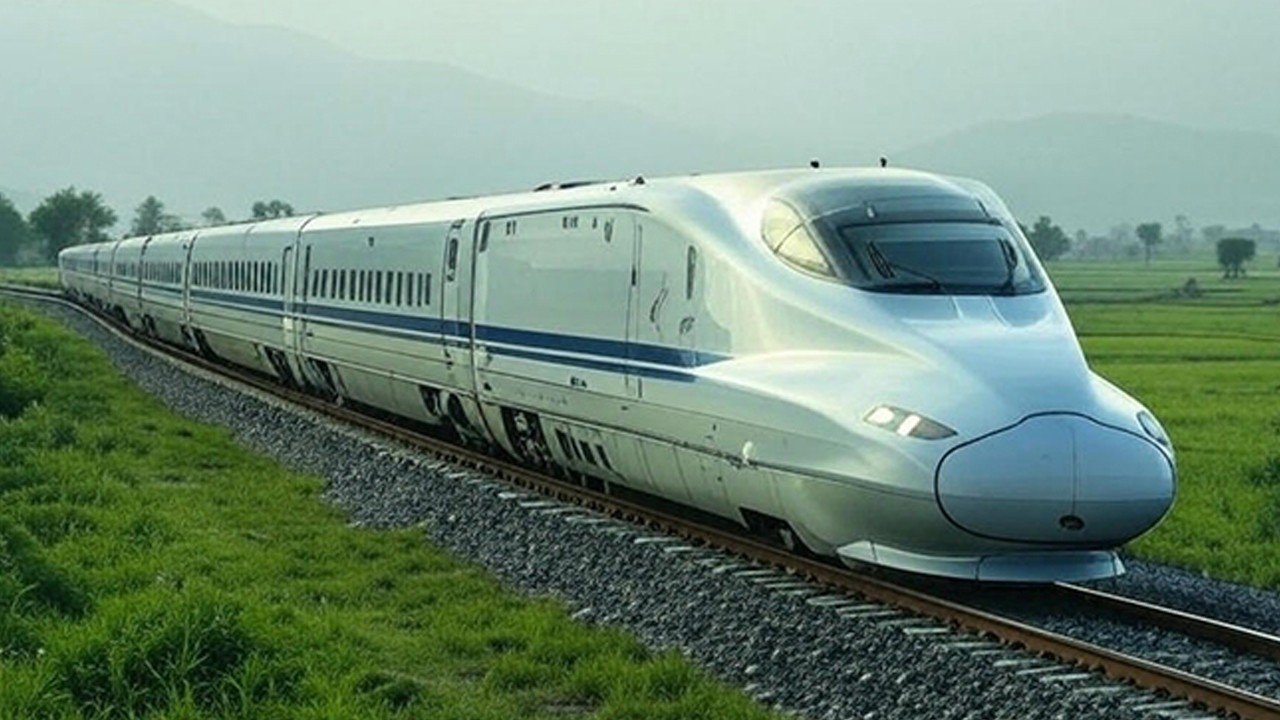

Pakistan’s First Bullet Train will Cut Karachi-Lahore Travel Time to 5 Hours: Read the timeline of the mega project
ISLAMABAD: Pakistan’s first bullet train will cut Karachi-Lahore travel time to five hours. Pakistan Railways has unveiled an ambitious plan to launch the country’s first bullet train, a project that will dramatically reduce travel time between Lahore and Karachi from nearly 20 hours to just five. The $6.8 billion initiative is part of the Main Line-1 (ML-1) upgrade under the China-Pakistan Economic Corridor (CPEC) and is being hailed as one of the most transformative transport projects in Pakistan’s history, according to a report published by Gulf News on Sunday.
The high-speed train will operate along a 1,215-kilometre route, with major stops in Hyderabad, Multan, and Sahiwal. Capable of speeds up to 250 km/h, the service will offer passengers a faster and more economical alternative to air travel. Ticket prices are expected to range between PKR 5,000 and 10,000—far below the average airfare of PKR 20,000–30,000—making it accessible for students, professionals, and families alike.
As part of the ML-1 upgrade, Pakistan will double railway tracks, reconstruct outdated bridges, and install modern signalling systems to replace its century-old infrastructure, which currently restricts trains to 60–105 km/h. Additionally, the Punjab government has greenlit a separate Lahore–Rawalpindi bullet train, reducing travel between the two cities to just two and a half hours.
According to the timeline, construction is set to begin in 2026, with trial runs expected in 2029 and full-scale operations commencing by 2030. Once operational, the bullet train is projected to make 10–15 trips per day, significantly improving connectivity.
Officials highlight that the project will generate thousands of jobs, enhance regional trade, and boost Pakistan’s freight rail share from 4% to 20% by 2030. It is also expected to reduce fuel imports by cutting reliance on road transport. Railways Minister Hanif Abbasi said the bullet train will not only transform passenger travel but also reshape Pakistan’s economic landscape by linking people and markets more efficiently.
