

A deadly drone attack on a commercial cargo ship near Romania has heightened concerns over Black Sea security. The incident killed one sailor, injured others, and left several crew members missing. Moreover, the sinking has renewed fears about the safety of merchant vessels operating near NATO territory.
The Comoros-flagged cargo ship Khoryv was struck by a drone on October 23, 2026. The vessel was reportedly heading towards Sulina when the attack occurred, approximately 13 nautical miles off Constanța. It later capsized and sank.
Romanian authorities launched rescue operations as rough seas complicated efforts to reach the crew. The incident has also intensified concerns about the growing risks facing commercial shipping across the Black Sea.
Cargo Ship Sinks After Drone Attack Near Constanța
The Khoryv carried 13 crew members, including 10 Ukrainians and three Azerbaijani nationals. Nine crew members survived and were rescued alive. However, one sailor died, while three others remained missing.
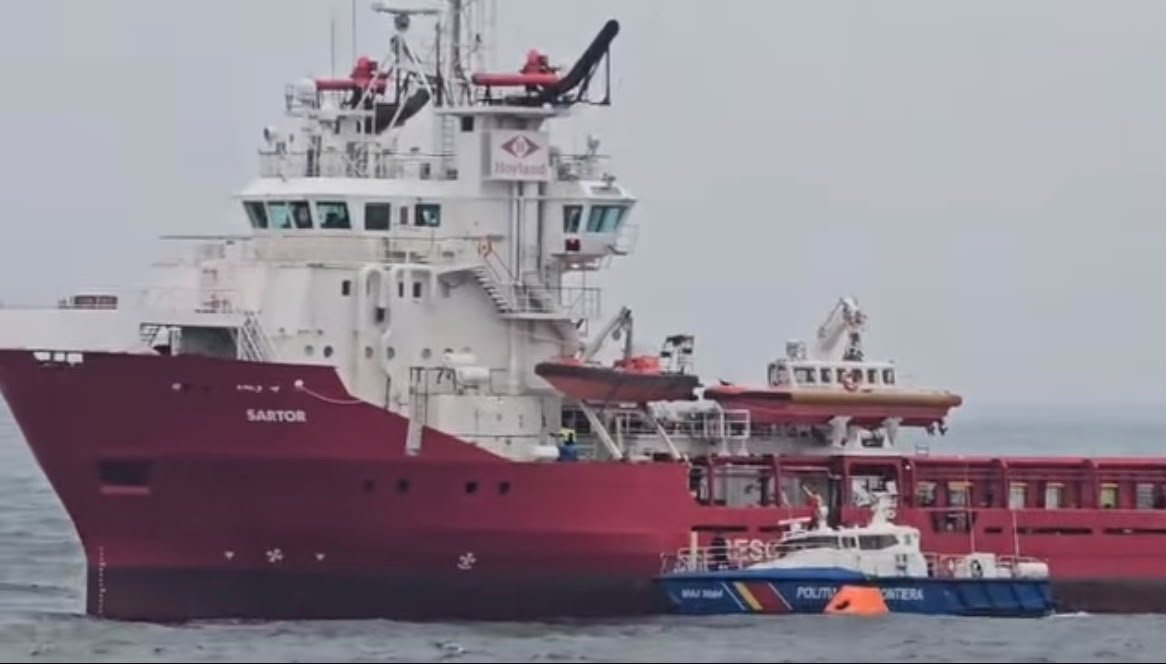
Romanian Coast Guard personnel continued rescue operations following the sinking. Meanwhile, footage released by Romania’s Interior Ministry showed the capsized vessel and rescue efforts in difficult sea conditions.
The attack occurred just outside Romania’s territorial waters, according to the reported location. Nevertheless, its proximity to the Romanian coast has raised serious maritime security concerns.
Romania Condemns Attack, Warns of Wider Security Threat
Romanian Foreign Minister Dan Neculǎescu condemned the deadly attack on the commercial vessel. He described the incident as a violation of international law and freedom of navigation.
“Today’s lethal attack on a commercial vessel just 13 nautical miles off Constanța – killing one sailor and injuring others – is a blatant violation of international law and freedom of navigation. Condolences to the victim’s family as Romanian Coast Guard rescue operations continue.
Russia’s illegal war of aggression against Ukraine is escalating and this directly affects merchant marine navigation in the Black Sea. This is a direct threat to both regional and global security. We are coordinating closely with #NATO Allies, including Bulgaria and Türkiye, to fast-track the additional surveillance capabilities agreed at the Oct 20 NAC.”
Romania’s President Nicușor Dan also attributed the attack to Russia. He described the incident as another escalation in Russia’s war against Ukraine.
Consequently, the sinking has added to regional concerns about the conflict’s expanding impact on civilian shipping. It has also renewed calls for stronger maritime monitoring and protection.
Why Black Sea Shipping Routes Matter
The Black Sea remains vital for regional trade and international maritime transport. In particular, its northern shipping routes provide access to the Danube and important export channels.
These routes have become increasingly significant for Ukrainian agricultural exports. Repeated Russian attacks on Ukraine’s Black Sea ports have further increased their importance.
However, attacks on merchant vessels threaten more than individual ships and their crews. They also raise shipping risks, disrupt trade confidence, and increase pressure on regional economies.
Furthermore, the growing danger to commercial navigation creates concerns beyond the immediate conflict zone. Civilian sailors face mounting risks while transporting goods through increasingly volatile waters.
NATO Moves to Strengthen Black Sea Surveillance
The latest incident follows other attacks on commercial shipping near Romania and Bulgaria. One such incident involved the Wine Trader, which came under attack near Sulina on October 15.
Together, these incidents have heightened concerns about maritime safety around NATO and European Union territory. They have also increased pressure on regional governments to improve surveillance capabilities.
Romania is coordinating with NATO allies, including Bulgaria and Türkiye, to strengthen maritime monitoring. The effort follows additional surveillance capabilities agreed upon at the October 20 North Atlantic Council meeting.
Moreover, improved surveillance could help regional allies monitor emerging threats across busy shipping corridors. However, the attacks underline the continuing challenges of protecting commercial vessels in the Black Sea.
Growing Risks for Civilian Crews and Regional Trade
The sinking of the Khoryv highlights the human cost of escalating maritime insecurity. One sailor lost his life, while others faced a dangerous rescue operation in rough seas.
At the same time, repeated attacks threaten commercial routes that support regional and international trade. Shipping companies must contend with greater uncertainty as security risks increase.
For Romania, Bulgaria, and their NATO allies, the challenge extends beyond monitoring territorial waters. They must also address the wider risks facing merchant vessels operating near the conflict.
As Russia’s war against Ukraine continues, the Black Sea remains a critical security flashpoint. The latest sinking has further demonstrated how the conflict can endanger civilian crews and commercial navigation far beyond Ukraine’s coastline.
For the latest updates, visit and follow The Truth International website (www.thetruthinternational.com) and subscribe to the YouTube Channel.

