

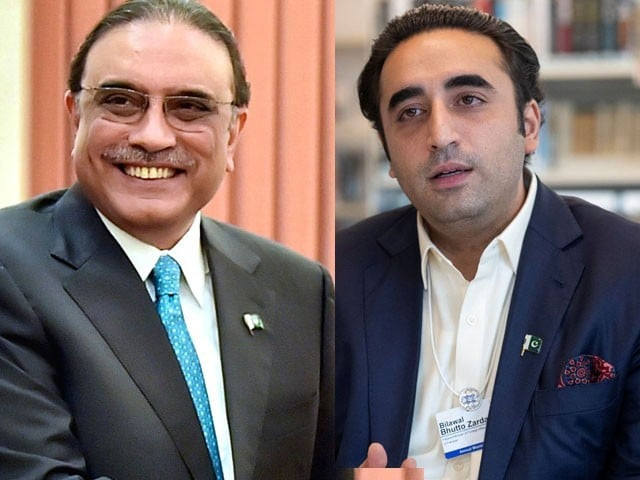

On Sunday, Bilawal Bhutto-Zardari, Chairman of the Pakistan Peoples Party, expressed his willingness to launch a protest if justice was not delivered regarding allegations of electoral rigging. During a rally in Thatta, he announced that Asif Zardari would be the party’s candidate for president, reciprocating support for the Pakistan Muslim League-Nawaz’s candidate for prime minister.
Bilawal clarified that his purpose in contesting elections was not merely to secure the prime minister’s position but to address the ongoing political and economic crisis in Pakistan. He stressed his commitment to discussing and resolving the people’s problems, particularly highlighting issues such as historic inflation.
Encouraging all political parties to prioritize the interests of the people over their own, Bilawal categorized parties into three types without explicitly naming them. He mentioned those who relied on rigging to win, those who couldn’t win even with rigging, and the third category, to which he claimed the PPP belonged, consisting of parties that managed to win despite rigging.
Bilawal asserted that the PPP had evidence of discrepancies in Form-45, where their candidates supposedly won but were not declared victorious. He expressed the party’s intention to approach appropriate forums with these complaints and suggested the possibility of public protests if justice was not served.
Hinting at rigging allegations made by a ‘pir’ and a ‘maulana,’ Bilawal emphasized the need for parties to unite against such practices. He clarified that the PPP’s focus was on addressing issues across all provinces and pledged not to vie for the prime minister’s position or ministries but to quell the prevailing challenges.
Bilawal criticized the Pakistan Democratic Movement (PDM) government led by Shehbaz Sharif, claiming unfulfilled promises. If the PPP chose to support them again, he stated that their demand would be for development rather than government positions.
Despite being offered the position of prime minister for the last two years of the next government, Bilawal asserted that he declined. He concluded by asserting his commitment to democracy and willingness to mobilize the public if it faced threats, drawing parallels with the historical support for Zulfiqar Ali Bhutto.
