
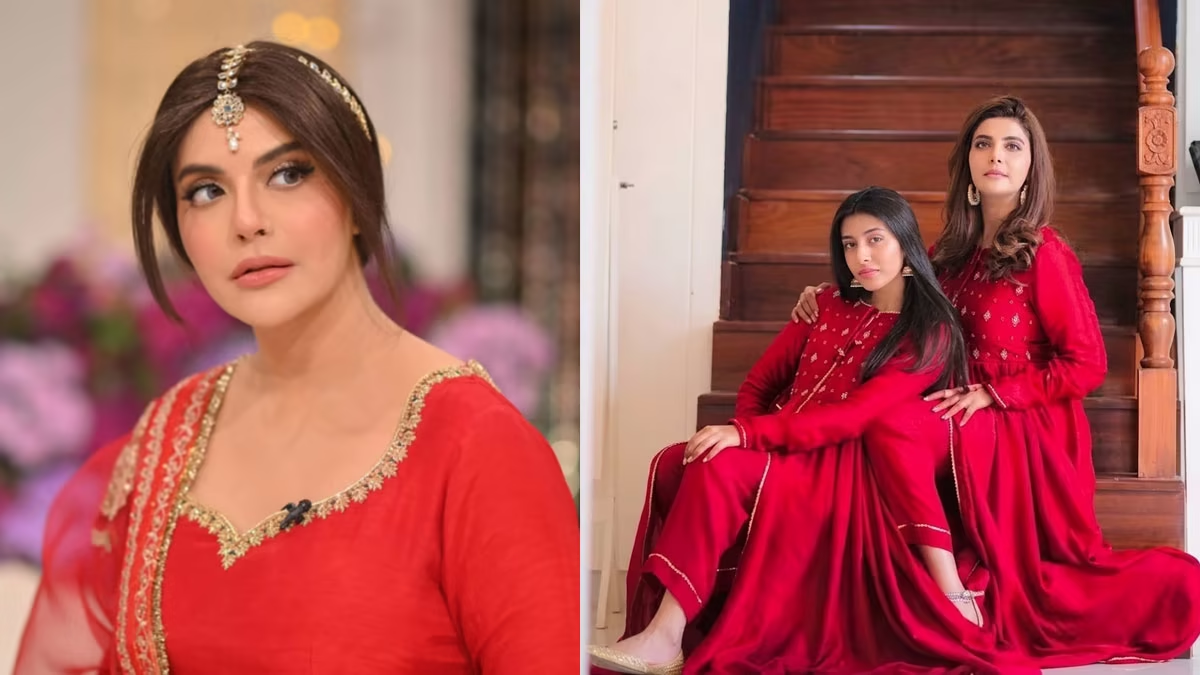

Silah Yasir, daughter of Pakistani celebrities Nida Yasir and Yasir Nawaz, has spoken out about privacy after claiming her mother was filmed without permission during a recent outing.
The young influencer took to Instagram to express her frustration with brands and strangers who allegedly recorded her family without consent. She stressed that being related to a public figure should not remove a person’s right to privacy or control over how their images are used.
Silah also acknowledged that brands may create promotional content involving celebrities. However, she argued that obtaining consent should remain a basic part of the process.
Silah Yasir Raises Privacy Concerns
Silah described the experience as one of her “worst experiences” while attending Locate this year.
She claimed that almost every brand her family visited recorded her mother without asking for permission. While she understood the promotional purpose behind some of the recordings, she said brands should still seek consent before filming.
“Being a public figure does not give anyone the right to record us without our consent or post videos of us without permission,” Silah began.
She further explained that promotional content can be understandable when public figures knowingly participate. Nevertheless, she believes consent should be requested before any footage is recorded or published.
“I went to Locate this year and honestly had one of the worst experiences when it came to this. Almost every brand we went to filmed my mom without her consent,” she wrote.
Brands Urged to Seek Consent
Silah made it clear that she was not objecting to every form of filming involving public figures.
She acknowledged that brands often create social media content featuring celebrities as part of their marketing campaigns. However, she said asking permission should become a normal practice.
“To an extent, I understand that brands create content for their own pages, but even then, asking for consent should be normalized,” she added.
Her comments highlight the difference between participating in promotional content and being recorded unexpectedly.
For Silah, the key issue is whether people have agreed to appear in videos before brands publish them online.
Silah Objects to Filming by Strangers
The influencer also raised concerns about people recording her family outside promotional settings.
According to Silah, strangers filmed the family while they were simply sitting and eating. She said the situation became particularly upsetting when the footage was later posted online with captions she considered derogatory.
“But when random people are recording us while we’re literally sitting and eating, and then posting it with a derogatory caption, that is something I will not tolerate,” Silah stated.
She argued that public visibility should not automatically mean that people can record someone whenever they want.
The comments come amid wider discussions about how celebrities and their families deal with constant attention in public spaces.
Public Figures Still Expect Personal Privacy
Silah further emphasised that being in a public place does not necessarily mean giving up every expectation of privacy.
“Being in public does not mean you lose your right to privacy or basic respect. We were simply trying to enjoy our time, and that should be respected,” she concluded.
Her statement also reflects a broader issue faced by public figures who frequently encounter cameras outside professional events.
While celebrities often appear in interviews, advertisements and social media content, their families may not always choose the same level of public exposure.
Silah Yasir’s Message Sparks Wider Discussion
Silah’s comments have brought attention to the boundaries between celebrity culture, social media and personal privacy.
For brands, recording public figures can form part of promotional campaigns. However, Silah’s remarks suggest that communication and consent remain important, particularly when individuals are not knowingly participating in promotional content.
At the same time, social media has made it increasingly easy for strangers to record and upload videos within seconds. Once published, such footage can spread widely and become difficult to control.
Silah’s message ultimately centres on a simple request: public recognition should not automatically remove the right to consent, dignity and personal space.
Her comments have therefore opened another conversation about how brands, content creators and members of the public should approach filming celebrities and their families in everyday situations.
For the latest updates, visit and follow The Truth International website (www.thetruthinternational.com) and subscribe to the YouTube Channel.

