

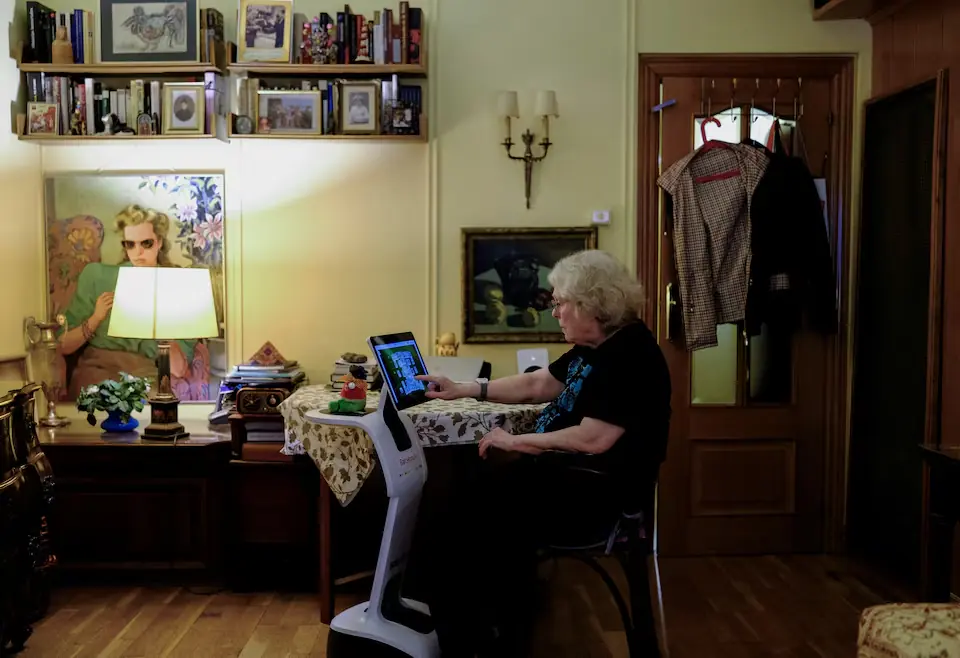

A dancing robot has changed daily life for 67-year-old Barcelona resident Irene Veglison. She had not danced in more than 20 years. That changed three months ago when a 1.35-metre-tall robot moved into her home.
Veglison received the device in November. It was part of a government-backed pilot project in Barcelona. The initiative aims to support people in the early stages of cognitive decline. The robot now plays a key role in her daily routine.
The project reflects a wider challenge facing Spain. The country has rising life expectancy and falling birth rates. This shift is increasing pressure on elderly care services. Technology is now stepping in to help bridge the gap.
EU-Backed Robot Program Expands Across Barcelona
Barcelona’s municipal council has deployed 600 robots in private homes and care centers. The program is supported by a 3.8 million euro grant from the European Union. Officials say the goal is to improve tele-assistance services.
Marta Villanueva Cendán, a city councillor, said the pilot project focuses on smarter remote care. In the future, robots could detect emergencies. They may alert professionals if a person falls and cannot respond. The technology is designed to enhance safety and independence.
The robots are built by Misty Robotics and distributed in Europe by Grup Saltó. The devices combine artificial intelligence with telehealth features. They are tailored to assist older adults living alone.
Nearly 2 million people over 65 live alone in Spain. Three-quarters of them are women. Experts estimate the country will need to double its long-term care workforce by 2030. However, low wages and an ageing workforce create staffing shortages. Technology is seen as part of the solution.
Smart Robots Offer Companionship and Emergency Support
Veglison named her robot Sandi. The device reminds her to take medication at 9 am. It alerts her about doctor appointments. It wakes her in the morning and says goodnight each evening. The robot helps structure her day.
In emergencies, Veglison can contact a social worker through the device. The robot has a built-in camera. It can be activated remotely to assess urgent situations. This feature offers peace of mind to both users and caregivers.
The robot also provides entertainment. It includes apps, a calendar, maps and expressive cartoon-like faces. Users can choose expressions such as “loving,” “surprised,” or “asleep” when the device is on standby.
One afternoon, Veglison scrolled through YouTube on the robot’s screen. She selected a French chanson. As the music played, she swayed gently. The robot tilted its screen in rhythm with her movements. For the first time in decades, she danced again.
She says the robot is more than a gadget. It represents a support network. Behind the device is a team monitoring users’ wellbeing. They check if someone has fallen or needs help.
Barcelona’s care robot initiative highlights a growing trend in Europe. Cities are exploring digital tools to support ageing populations. Smart robots may soon become common companions in elderly homes.
For Irene Veglison, the change is already clear. The robot brings structure, safety and even joy. It proves that technology can offer both practical help and human connection.
