
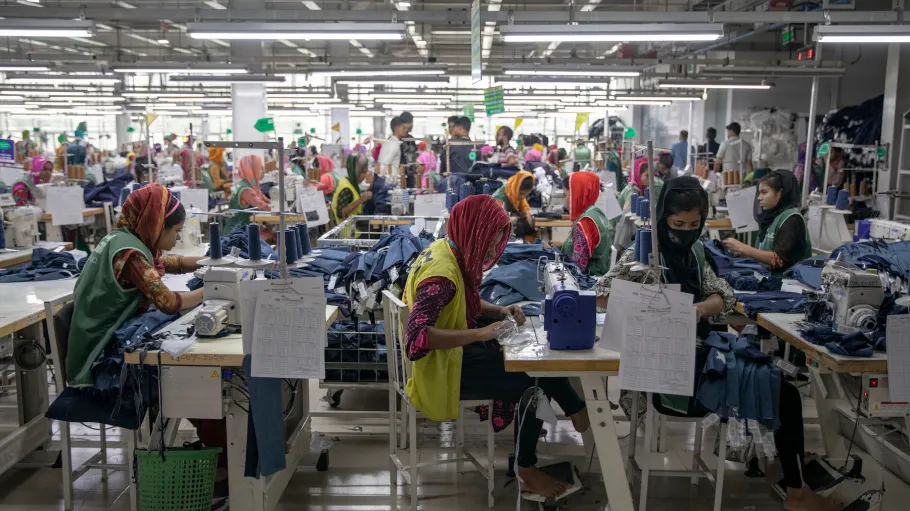

Bangladesh has approved a 36% increase in minimum wages for garment workers following weeks of protests demanding better pay and improved living conditions. The new minimum monthly wage will rise from 12,500 taka to 17,000 taka after prolonged negotiations between workers’ representatives and factory owners.
The decision came after nearly 12 hours of discussions involving the government-appointed wage board. However, workers had demanded significantly higher salaries to cope with rising living costs and inflation.
New Wage Structure Across Four Grades
The revised wage structure will introduce four salary grades across the garment industry. Grade Four workers will receive 17,000 taka monthly, while Grade Three employees will earn 19,200 taka.
Meanwhile, Grade Two workers will receive 20,000 taka, and Grade One employees will earn 21,500 taka. The new salaries will take effect from December 1, with workers expected to receive revised payments in January.
Nevertheless, the increase falls short of workers’ original demand for 30,000 taka monthly. Representatives had eventually lowered their demand to 18,000 taka during negotiations, but the board approved 17,000 taka through a majority vote.
Protests Disrupt Bangladesh’s Garment Industry
Workers launched demonstrations across major industrial areas, demanding higher salaries as inflation continued to increase household expenses. Consequently, protests disrupted factory operations, blocked highways and triggered clashes with police.
The unrest also affected production and export orders, creating financial pressure on manufacturers. Bangladesh’s garment industry employs more than four million workers and generates over 80% of the country’s export earnings.
Factory owners warned that higher wages could increase production costs and weaken competitiveness. However, workers maintain that the revised salaries remain insufficient to meet basic living expenses.
The latest increase represents the smallest percentage wage hike in more than a decade. Nevertheless, the decision could provide temporary relief to workers while authorities attempt to restore stability across the country’s garment manufacturing sector.
For the latest updates, visit and follow The Truth International website (www.thetruthinternational.com) and subscribe to the YouTube Channel.

