
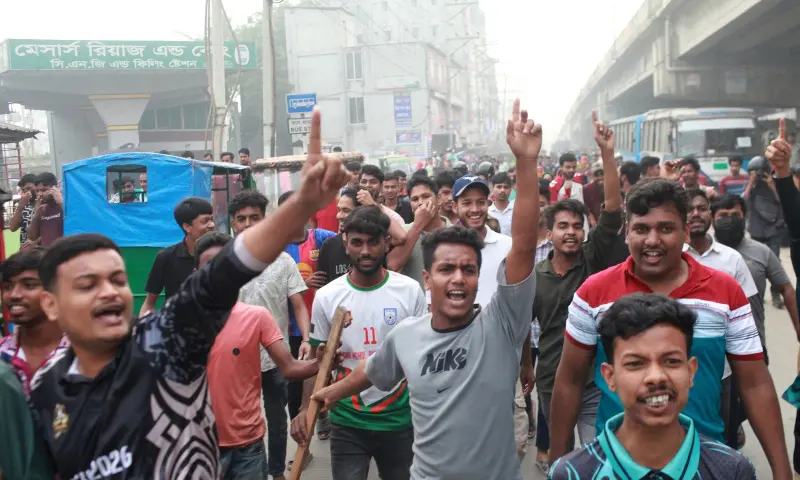

Thousands of garment workers clashed with police in Bangladesh on Tuesday as protests demanding higher wages intensified.
Police fired tear gas and stun grenades to disperse demonstrators after a key wage board meeting was postponed. Meanwhile, protesters threw bricks, set vehicles on fire and blocked a major highway connecting Dhaka with Mymensingh.
The fresh unrest has raised concerns about disruptions to Bangladesh’s vital garment industry.
Workers Demand 140% Minimum Wage Increase
Garment workers are demanding a minimum monthly wage of 30,000 taka, equivalent to around $240.
This represents a 140 percent increase from the current minimum wage of 12,500 taka. Workers say their existing salaries cannot cover rising expenses for food, housing, transport and healthcare.
The protests began in October and have continued across major industrial areas, including Gazipur, Savar and Ashulia.
Wage Board Delay Triggers Fresh Anger
The government established a wage board earlier this month to negotiate a revised pay structure.
However, a meeting scheduled for Monday was postponed after the workers’ representative reportedly fell ill. The board has now scheduled its next meeting for November 23.
Workers fear that delays could weaken their chances of securing better wages.
In response, the Bangladesh Garment Manufacturers and Exporters Association and the Bangladesh Knitwear Manufacturers and Exporters Association called for negotiations to resume quickly.
Factory Closures Threaten Export Industry
The unrest has also affected factory operations across the country. According to sources cited by AFP, around 500 of Bangladesh’s 4,500 garment factories have shut down.
The industry generates approximately $38 billion annually and employs more than four million people. Bangladesh is also the world’s second-largest garment exporter after China.
Furthermore, the protests come during the busy Christmas export season, raising concerns about production delays and international orders.
The next wage board meeting on November 23 could prove crucial in resolving the dispute. Until then, workers and factory owners face continued uncertainty.
For the latest updates, visit and follow The Truth International website (www.thetruthinternational.com) and subscribe to the YouTube Channel.

