


India Accused of Sponsoring Coordinated Terror Attacks
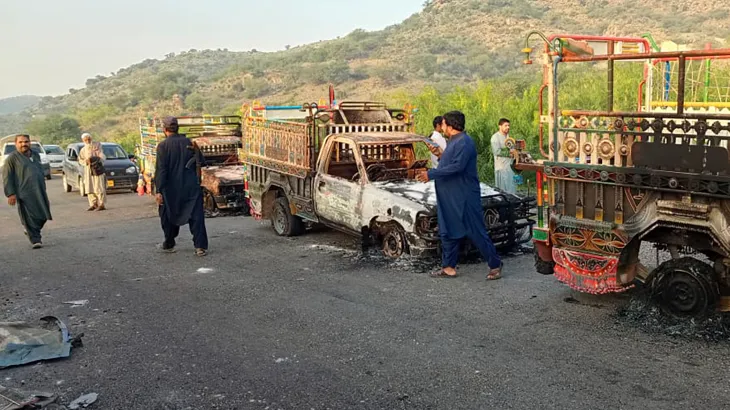
Interior Minister Mohsin Naqvi on Saturday held India responsible for a fresh wave of terrorist attacks in Balochistan. He said the incidents were not isolated acts of violence. He described them as coordinated attacks planned with foreign backing. Speaking alongside Balochistan Chief Minister Sarfraz Bugti in Quetta, Naqvi said India was directly involved in financing, planning, and directing the assaults.
Naqvi stated that the attackers were not ordinary militants. He alleged they were acting under the guidance of Indian handlers. He said Pakistan would pursue not only the attackers but also those who masterminded the violence. He added that Pakistan would expose India’s role at international forums. He accused India of showing one face to the world while supporting terrorism behind the scenes.
Chief Minister Bugti thanked Naqvi for immediately visiting Quetta. He said a high-level security meeting was held. Officials also visited the injured at the Combined Military Hospital. Bugti said the operation against terrorists was nearing completion. He strongly condemned the killing of women and children belonging to a Baloch family in Gwadar’s labour colony.
Bugti praised security forces for their swift response. He said the attackers wanted to boost their declining morale. He added that the attack failed to achieve its objective. He stressed that the state’s resolve remained strong and unshaken.
ISPR Says 92 Terrorists Killed in Clearance Operations
The military’s media wing, Inter-Services Public Relations, said terrorists linked to Indian-sponsored Fitna-al-Hindustan launched attacks across multiple districts. These included Quetta, Mastung, Nushki, Panjgur, Gwadar, Pasni, and Kharan. ISPR said the goal was to disrupt peace and development in Balochistan.
According to ISPR, terrorists targeted civilians in Gwadar and Kharan. Women, children, elderly people, and labourers were among the victims. At least 18 civilians were killed. Security forces responded immediately. ISPR said troops conducted intense and daring clearance operations.
The statement confirmed that 92 terrorists were killed, including three suicide bombers. Fifteen security personnel embraced martyrdom during the operations. ISPR said intelligence reports proved the attacks were directed by ring leaders operating from outside Pakistan. These handlers remained in contact with militants during the assaults.
ISPR added that 41 militants were killed earlier in Panjgur and Harnai on January 30. This brought the total number of militants killed in recent operations to 133. Sanitisation operations are still ongoing, it said.
Government Vows No Compromise on Security and Peace
Information Minister Attaullah Tarar described the attacks as a desperate move. He said terrorists acted because security forces were close to defeating them. He said forces were alert at all locations. He praised their bravery and preparedness. Tarar confirmed that Prime Minister Shehbaz Sharif was monitoring the situation closely.
Defence Minister Khawaja Asif said the attacks were driven by foreign patronage. He said terrorists targeted development projects and ordinary citizens. He warned that groups like the Baloch Liberation Army wanted to sabotage the China-Pakistan Economic Corridor. He added that terrorists used criminal networks, smuggling, and drugs to fund activities.
CM Bugti later visited the Quetta blast site. He praised police and CTD actions. Interior Minister Naqvi also visited the Corps Headquarters in Quetta. He paid tribute to martyrs and vowed to continue the fight against terrorism.
Emergency was imposed in all government hospitals across Balochistan. Doctors and operating theatres were placed on high alert. Separately, police neutralised an IED planted on railway tracks in Nasirabad, averting another major attack.
President Asif Ali Zardari and Prime Minister Shehbaz Sharif praised security forces. Both reaffirmed that Pakistan will continue operations until terrorism is completely eradicated.
