
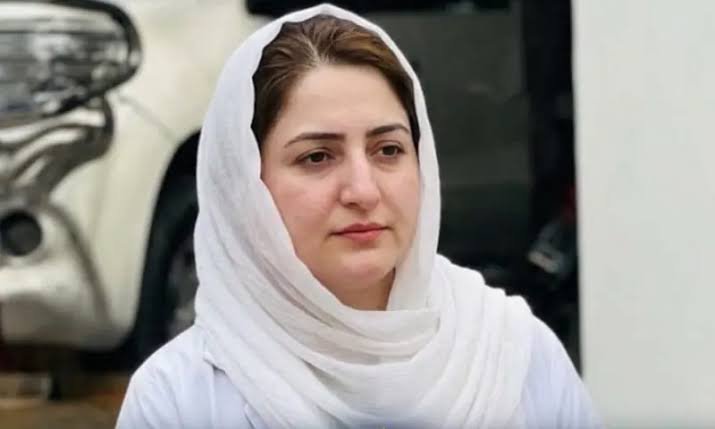

Balochistan Government Pays Tribute to Dr Mahnoor’s Courage
Balochistan Chief Minister Mir Sarfraz Bugti has announced that a road in Duki district will be renamed after Dr Mahnoor Nasir, the young doctor who survived a horrific acid attack at Civil Hospital Quetta earlier this year.
The provincial government said the decision was taken to recognise Dr Mahnoor’s bravery, resilience and services as a medical professional following the attack that left her with serious burn injuries.
According to the official notification shared by Chief Minister Bugti, Haji Amanullah Masjid Road, located adjacent to Damani Chowk in Duki, will now carry Dr Mahnoor’s name.
The renaming has taken effect immediately.
Bugti praised Dr Mahnoor for the courage and determination she displayed following the attack and described her resilience as an example for women across Balochistan.
The chief minister said recognising courageous and duty-bound citizens and encouraging their contributions was a responsibility of the government.
The move is intended not only as a personal tribute to Dr Mahnoor but also as public recognition of a woman who continued to inspire people despite suffering life-changing injuries.
Dr Mahnoor Suffered Severe Burns in Quetta Acid Attack
Dr Mahnoor Nasir, 29, was working as a doctor at Civil Hospital Quetta when she was attacked with acid in June 2026.
According to police and media reports, a hospital employee allegedly threw acid on her inside the medical facility.
She suffered serious burns to her face, chest, legs and other parts of her body and required specialist treatment.
Following initial treatment in Quetta, she was shifted to Karachi for advanced medical care.
Her treatment has included surgeries and skin-grafting procedures because of the severity of her injuries.
Her first major procedure reportedly lasted more than eight hours and involved removing damaged tissue and beginning reconstructive treatment.
Police identified the alleged attacker as Humayun Shah, an employee of the hospital.
Authorities said he fled after the attack and was later traced while attempting to leave Quetta on a bus.
Police subsequently said he was killed during an encounter with law enforcement personnel.
Because the suspect died before facing trial, the circumstances surrounding the attack could not be tested through a criminal prosecution against him.
The incident triggered widespread outrage across Balochistan and the rest of Pakistan.
Doctors in Quetta suspended non-emergency medical services in protest and demanded a thorough investigation as well as stronger security for healthcare professionals.
The attack also drew condemnation from government officials, medical associations and civil society.
Supreme Court Called Acid Attacks More Heinous Than Homicide
Dr Mahnoor’s case emerged at the same time as a major Supreme Court judgment addressing acid violence in Pakistan.
Only days after the Quetta attack, the Supreme Court ruled that vitriolage, or acid violence, is an offence more heinous than homicide, highlighting the permanent physical, psychological and social consequences suffered by survivors.
The ruling came in a separate case involving a man convicted of carrying out an acid attack in Faisalabad.
A three-member Supreme Court bench upheld the convict’s life imprisonment and Rs1 million fine.
The court said acid violence can force victims to endure lifelong physical and psychological suffering and described such attacks as deeply linked to gender-based violence and patriarchal aggression.
The Supreme Court also recommended stronger measures to support survivors.
These included considering acid attack victims for disability quotas and establishing a National Acid Survivors’ Rehabilitation Fund to support reconstructive surgery, physical therapy and psychological treatment.
The court further recommended tighter regulation of acid sales, including restrictions on sales to private individuals and the creation of a centralised digital monitoring system for authorised purchases.
The judgment highlighted the wider national debate over preventing acid attacks and ensuring long-term support for survivors.
Government Also Recognised Men Who Helped Save Dr Mahnoor
The Balochistan government has previously recognised people who helped Dr Mahnoor immediately after the attack.
Earlier this month, Chief Minister Bugti announced government jobs for Abdul Razzaq Khilji and his brother in recognition of their actions following the incident.
Bugti said Abdul Razzaq had shown exceptional courage by helping the injured doctor without considering the danger to himself.
The government said citizens who step forward to protect lives and help people in emergencies should be publicly encouraged.
The decision to rename the Duki road now extends that recognition directly to Dr Mahnoor.
For the provincial government, the road is intended to become a lasting symbol of her resilience and professional commitment.
For many others, the tribute also serves as a reminder of the continuing challenge of acid violence and the need for stronger protection, rehabilitation and justice mechanisms for survivors.

