

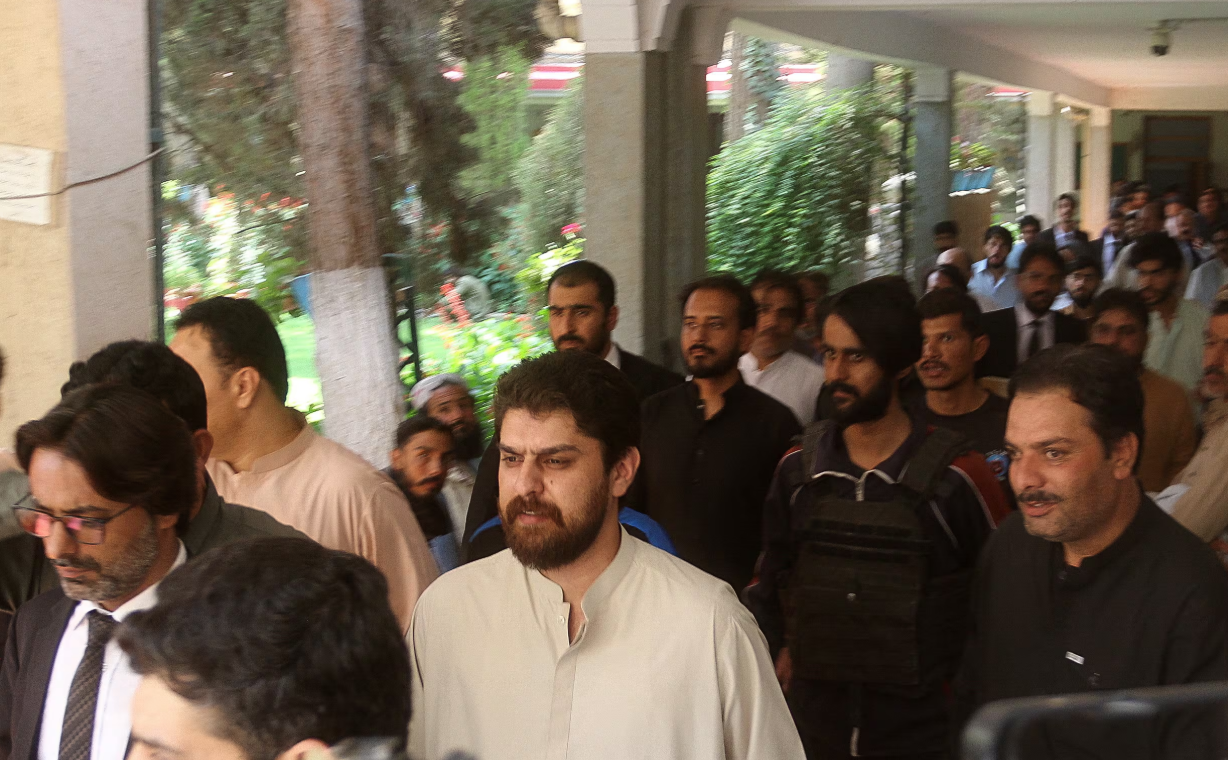

The Balochistan High Court has granted bail to tribal chief Sardar Sherbaz Satakzai, a key accused in the Degari honour killing case. The case involves the brutal murder of a couple allegedly carried out on the orders of a tribal jirga.
Justice Iqbal Kasi of the BHC approved Satakzai’s bail plea on Monday. The court directed him to submit surety bonds worth Rs 500,000 as a condition of release. This ruling came after a lower court had earlier rejected his bail request, prompting Satakzai to approach the high court for relief.
Details of the Incident
The case emerged after a disturbing video surfaced online, showing more than a dozen armed men gathered in a remote desert area near Degari, located on the outskirts of Quetta. In the footage, a woman was forced to face away from the group before being shot in the back. The same assailant then turned his weapon on a man, killing him instantly.
According to the police surgeon, the woman suffered seven gunshot wounds while the man was struck nine times. Authorities confirmed that the killings were carried out under the pretext of “honour,” allegedly sanctioned by a local jirga.
Family’s Role in the Killings
Investigations revealed the involvement of the victim woman’s family members. Her brother, Jalal Satakzai, was named among the prime suspects in the case. Another shocking revelation came when a video surfaced of the victim’s mother, Gul Jan. In the footage, she openly justified the killings, describing them as a matter of Baloch tribal customs. She further claimed that no unlawful action had been taken, insisting that the tribal elders bore no responsibility.
Government and Legal Response
The shocking video triggered nationwide outrage, with civil society groups and rights activists demanding strict action. The Balochistan government swiftly responded by registering a case under terrorism-related charges. Provincial Chief Minister Sarfraz Bugti strongly condemned the killings, labeling the act “heinous” and vowing to bring the perpetrators to justice.
The case has been registered under multiple provisions of the Pakistan Penal Code, including Section 302 for murder, Section 149 for unlawful assembly, Section 148 for rioting while armed, and Section 147 for rioting. Additionally, charges were filed under the Anti-Terrorism Act of 1997, underscoring the severity of the crime.
Broader Implications
The Degari honour killing case has sparked widespread debate on the persistence of tribal customs that violate human rights and the rule of law. Legal experts argue that granting bail to high-profile figures such as Satakzai raises concerns about the influence of tribal leaders in Pakistan’s justice system.
Human rights organizations have stressed that the killings highlight the urgent need for stronger legal reforms to curb the practice of honour-based violence. They argue that despite existing laws, enforcement remains inconsistent, often due to cultural and political pressures.
With the high court granting bail, the focus now shifts to the trial proceedings and whether justice will be delivered in this high-profile case. As public outrage continues, activists and legal observers stress the importance of ensuring accountability, regardless of tribal or political influence.
The Degari case stands as a stark reminder of the challenges Pakistan faces in eliminating honour-based violence. The upcoming hearings will be closely monitored as the nation awaits justice for the victims of this tragic incident.
