
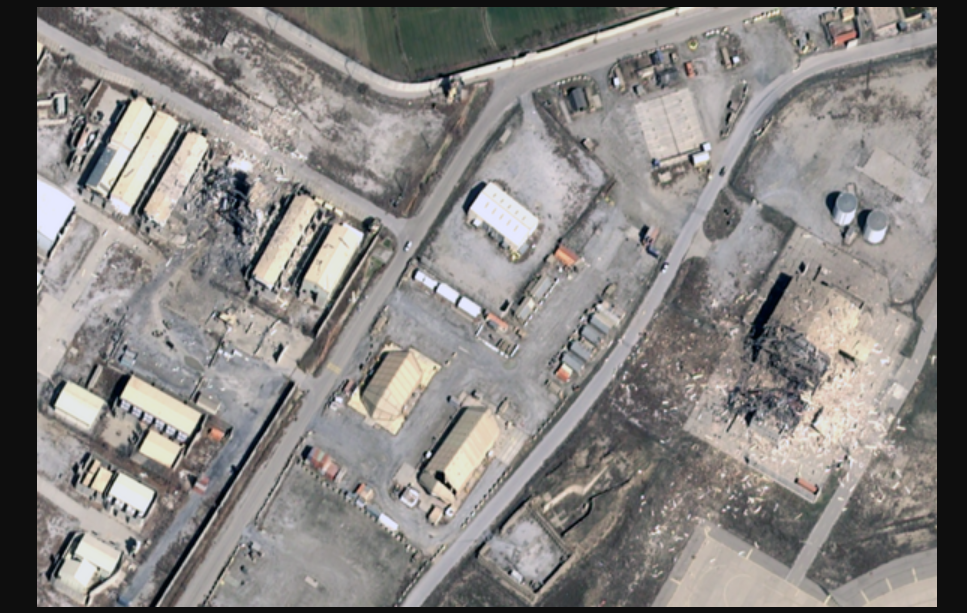

Afghanistan’s Ministry of Defense has confirmed significant damage following the Bagram Airbase airstrike, marking a serious escalation in regional tensions. Officials released a detailed assessment outlining losses at the former United States military installation.
According to authorities in Kabul, the attack caused extensive destruction inside the base. Several military assets were reportedly destroyed during the early morning strike. These included Black Hawk helicopters, a Hercules cargo aircraft, a Tucano aircraft, and multiple armored vehicles.
The incident reportedly occurred around 5 a.m. on Sunday. Afghan officials stated that Pakistani fighter jets entered Afghan airspace and targeted the facility. Initially, authorities claimed air defense systems had intercepted the attack. However, later assessments confirmed explosions and structural damage within the compound.
As a result, concerns have grown regarding Afghanistan’s already limited air capabilities.
Strategic Importance of Bagram Airbase
Bagram Airbase, located north of Kabul, once served as the central hub for American military operations in Afghanistan. After the withdrawal of US forces, Taliban authorities assumed control of the facility.
Security analysts believe the Bagram Airbase airstrike has weakened Afghanistan’s logistical and aerial capacity. Consequently, the loss of aircraft and equipment may affect operational readiness.
Moreover, the damage highlights the vulnerability of key military installations during escalating cross-border tensions. Observers say the strike represents one of the most significant incidents since relations between Pakistan and Afghanistan deteriorated.
Pakistan’s Position on the Strike
Pakistani officials defended the operation, describing it as part of a broader campaign targeting militant groups operating near the border. Authorities argued that cross-border attacks forced a military response.
Officials maintained that the operation focused on militant infrastructure rather than civilian targets. They linked the action to ongoing security measures against Tehreek-e-Taliban Pakistan (TTP) safe havens allegedly located inside Afghan territory.
Furthermore, Islamabad framed the strike within its wider counterterrorism strategy, emphasizing national security concerns.
Taliban Response and Rising Tensions
Taliban authorities strongly rejected Pakistan’s justification. They described the Bagram Airbase airstrike as an act of aggression and warned of possible retaliation.
The incident follows recent clashes along the Pakistan–Afghanistan frontier. Both sides have increasingly used strong rhetoric, signaling a shift toward open confrontation.
Afghan officials continue to deny accusations that militant groups operate freely within their territory. Meanwhile, tensions have intensified as military activities increased along border regions during the past week.
Regional Concerns and Diplomatic Calls for Restraint
International observers have urged restraint from both countries. Diplomatic voices warn that continued escalation could destabilize an already fragile region.
Additionally, analysts fear that sustained cross-border strikes may widen the conflict. Such developments could disrupt regional security and complicate diplomatic engagement efforts.
Despite these concerns, neither side has indicated willingness to step back. The absence of immediate dialogue has increased uncertainty about future developments.
A Turning Point in the Pakistan–Afghanistan Standoff
The Bagram Airbase airstrike now stands as a defining moment in the latest phase of tensions linked to militant activity and border security disputes. The confirmed losses underline the seriousness of the confrontation.
While Pakistan views the operation as a defensive measure, Afghan authorities interpret it as a violation of sovereignty. Therefore, the incident deepens mistrust between the two neighbors.
Whether this escalation leads to further conflict or renewed negotiations remains unclear. However, the strike has already reshaped the security landscape and raised urgent questions about regional stability.

