
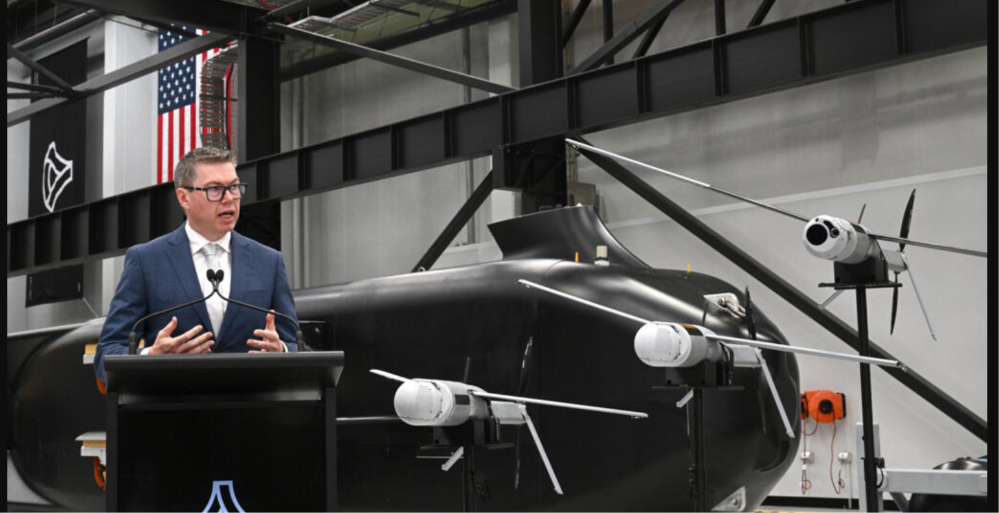

Australia is expanding the combat capabilities of its Ghost Shark autonomous submarines by equipping them with sea mines, special forces equipment and aerial drones. The upgrades aim to strengthen the country’s undersea warfare capabilities without placing human crews directly in danger.
Australia’s Defence Industry Minister Pat Conroy announced the development in Sydney on Monday. He said three payloads had received approval following classified trials, allowing the underwater drones to perform specialised military tasks.
The Ghost Shark is an extra-large autonomous submarine developed jointly by US defence technology company Anduril and Australian defence scientists. Under a contract worth AU$1.8 billion, Anduril is building a fleet for Australia.
What Weapons and Equipment Can Ghost Shark Carry?
The upgraded Ghost Shark will support three types of payloads, according to Conroy. These additions will allow the autonomous submarine to carry out different missions.
- Sea mines: Each Ghost Shark can carry up to 12 sea mines.
- Special forces equipment: The submarine can transport equipment intended to support special forces operations.
- Aerial drones: It can deploy Anduril’s Altius drones at sea, allowing them to operate in swarms for reconnaissance and strike missions.
Conroy said the new capabilities would allow the systems to “do things we don’t want humans to do”.
He also highlighted the potential for discreet deployment, suggesting that adversaries would need to consider whether shipping containers at Australian ports could conceal a Ghost Shark.
“Not only could there be Ghost Sharks in those shipping containers, but those Ghost Sharks now have teeth,” he said.
How Ghost Shark Fits Into Australia’s Defence Strategy
Australia is increasing its investment in autonomous military technology amid concerns about China’s expanding naval capabilities and tensions in the South China Sea.
The Ghost Shark can travel long distances and operate alongside Australia’s crewed submarine fleet, according to officials. Its autonomous design could therefore expand the range of missions available to the navy.
Meanwhile, Australia, the United Kingdom and the United States are working together under the AUKUS partnership. Earlier in 2026, the three countries pledged to develop interchangeable payloads for undersea warfare drones, alongside their cooperation on nuclear-powered submarines.
Conroy also said several other countries had expressed interest in acquiring the Ghost Shark.
Anduril’s Expanding Role in Submarine Technology
Anduril is also expanding its involvement in the US submarine industry. Earlier this month, the company secured a US$2.9 billion US Navy contract to build components for Virginia-class submarines.
The company also announced plans to establish a new submarine shipyard in the United States. Meanwhile, Washington is seeking to accelerate submarine production to support planned sales to Australia under the AUKUS agreement.
The United States is also monitoring China’s development of undersea sensors, weapons and autonomous vehicles designed to counter American submarines. The US Navy’s intelligence director discussed these capabilities before a government committee in May.
Australia’s Ghost Shark programme reflects a broader shift towards autonomous systems in naval operations. By combining underwater drones with mines, specialised equipment and aerial swarms, Australia aims to expand its military options while supporting its existing submarine fleet.
For the latest updates, visit and follow The Truth International website (www.thetruthinternational.com) and subscribe to the YouTube Channel.

