
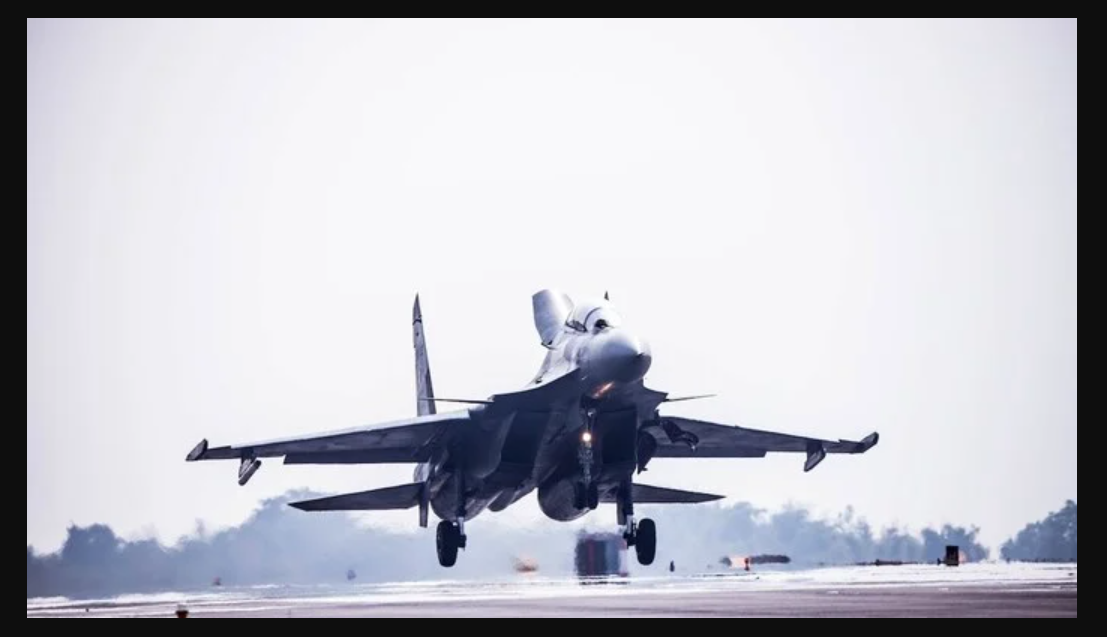

A tragic fighter jet crash in Assam has claimed the lives of two Indian Air Force pilots. The aircraft crashed during a routine training mission. The incident involved a Sukhoi Su-30MKI fighter jet. The aircraft went down in Assam’s Karbi Anglong district.
The jet had taken off from the Jorhat airbase earlier that evening. However, communication with the aircraft was suddenly lost. Officials confirmed that contact with the fighter jet ended around 7:42 pm. Soon afterward, search teams started looking for the missing aircraft.
Later, authorities confirmed that the jet had crashed in a remote hilly area. Unfortunately, both pilots died in the accident.
Crash Reported Near Karbi Anglong District
The crash occurred about 60 kilometres from the Jorhat airbase. The site lies in the mountainous region of Karbi Anglong district.
Local residents heard a loud explosion from a nearby hill. Shortly after, they saw flames rising from the crash site.
Witnesses also reported seeing a bright fireball in the sky. Therefore, many villagers quickly informed local authorities.
Rescue teams immediately rushed toward the location. However, the rough terrain made access difficult.
Emergency responders later confirmed the worst fears. Both pilots had died at the crash site.
Pilots Identified After the Tragic Accident
The Indian Air Force later identified the deceased pilots. They were Squadron Leader Anuj and Flight Lieutenant Purvesh Duragkar. Both officers were flying the aircraft during the training mission. Sadly, the routine sortie ended in tragedy.
Military officials expressed deep sorrow over the loss. They also offered condolences to the grieving families.
The Air Force community mourned the loss of the two officers. Meanwhile, tributes started appearing across the country.
India’s Defence Minister Rajnath Singh also reacted to the incident. He said he was deeply saddened by the tragic loss. He further acknowledged the dedication of the two pilots. Their service to the nation was widely respected.
About the Sukhoi Su-30MKI Fighter Aircraft
The Sukhoi Su-30MKI is one of the most powerful fighter jets in the Indian Air Force. It is a twin-seat, long-range multirole aircraft. The jet was originally designed by the Russian aerospace company Sukhoi. However, it is manufactured in India under license.
State-owned Hindustan Aeronautics Limited produces the aircraft domestically. This arrangement supports India’s defence industry. The Su-30MKI joined the Indian Air Force fleet in 1997. Since then, it has become a central part of India’s air power.
Currently, the Air Force operates more than 260 Su-30MKI jets. These aircraft handle air defence and strike missions.
Similar Fighter Jet Accidents in Recent Years
This is not the first accident involving the Su-30MKI aircraft. Several incidents have occurred during recent years. For instance, a Sukhoi fighter jet crashed in Nashik in June 2024. Another Su-30 aircraft crashed in January 2023.
That earlier accident happened shortly after takeoff from the Gwalior airbase. Such incidents often raise safety concerns. Military aviation remains one of the most dangerous professions. Training missions frequently involve complex flight maneuvers.
Therefore, strict investigations usually follow such crashes. Authorities study both technical and operational factors.
These reviews help prevent future accidents. Improving safety remains a constant priority for air forces worldwide.
Investigation Expected Into the Crash
Authorities are expected to conduct a detailed investigation into the crash. Experts will analyze technical and operational aspects. Investigators typically examine aircraft systems and maintenance records. They also review communication logs from the mission.
The aim is to understand exactly what went wrong. Such investigations may take weeks or months. Meanwhile, attention remains focused on honoring the fallen pilots. Their dedication and sacrifice are being remembered.
The tragedy highlights the risks faced by military aviators. Even routine training flights can become dangerous without warning.

