

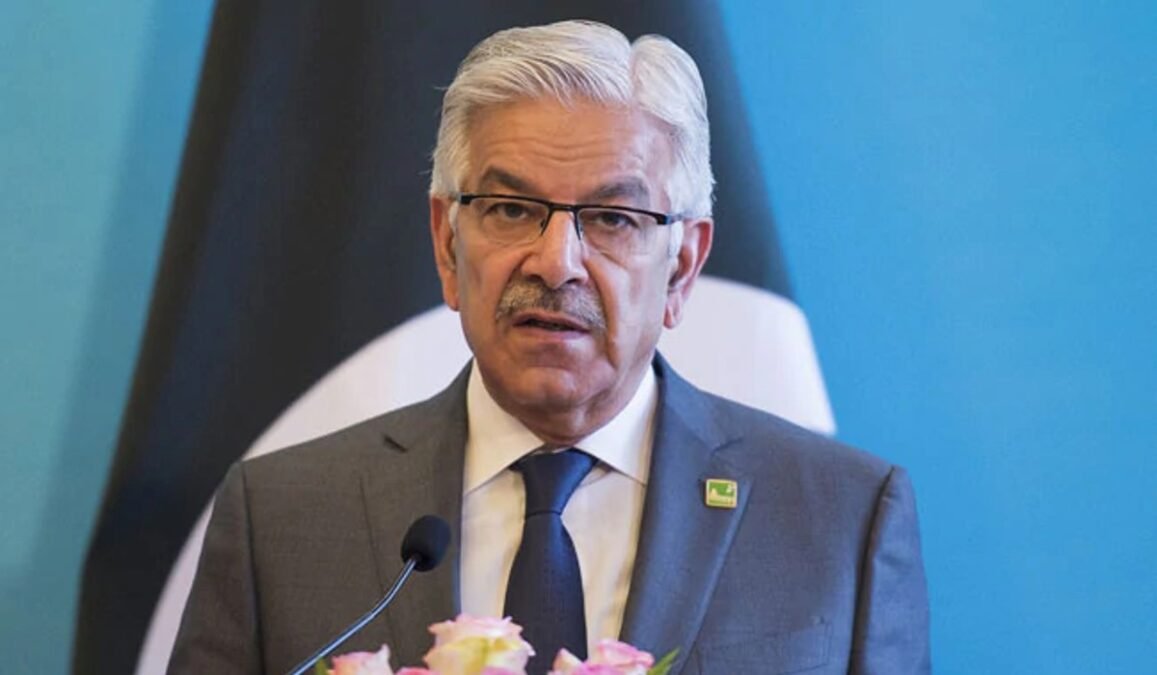

ISLAMABAD: Defence Minister Khawaja Asif reiterated his accusations towards Afghanistan, stating that they have not made sufficient efforts to eliminate terrorism. He emphasized the need for enhanced border security measures to minimize the associated risks.
Considering the rise in terrorist activities, there is a requirement for significant adjustments in border management. The root of terrorism in Pakistan lies in Afghanistan, and despite our attempts, Kabul has not shown any advancement in addressing this issue. This statement was shared by Mr. Asif on platform X, which was previously known as Twitter.
The minister lamented that even though the Taliban government knew the locations of terrorist hideouts, these individuals continued to act against Pakistan from their territory with impunity. He underscored the lack of cooperation from Kabul in addressing the terrorism threat.
His remarks emerged amidst a series of recent incidents, such as the assaults on the Gwadar Port Authority complex, a naval base in Turbat, and the tragic suicide bombing targeting a van carrying Chinese workers in Shangla.
Following a security meeting organized by Prime Minister Shehbaz Sharif, the minister shared his thoughts. These remarks seemed to echo the concerns discussed at the meeting, as the PMO statement on the security gathering highlighted worries about “safe havens for terrorists across borders” and advocated for a “regional strategy” to combat terrorism.
A recently viral video on social media featured an Afghan Taliban member, known as Yahya, aiding Pakistan-based terrorists operating in Afghanistan to strategize a cross-border assault on Pakistani forces stationed near the border.
The Defense Minister, while addressing the intricacy of the border security issue, highlighted that the Pakistan-Afghan border differs from conventional international boundaries. He emphasized the need for Pakistan to implement all international laws and customs along this border to halt terrorist activities. By doing so, both nations can strengthen their relations as good neighboring countries. Maintaining existing travel facilities through passports and visas can be achieved simultaneously.
Beginning November 1st, Pakistan implemented a new rule for Afghan citizens, requiring them to hold a valid passport and visa to enter the country. This change coincided with the adoption of a “one document regime” policy, which replaced the previous practice of granting special travel permits to individuals from tribes residing near the approximately 2,600-kilometer border between Afghanistan and Pakistan.
Nevertheless, it remains uncertain which specific actions the minister was referring to in order to strengthen control over cross-border movements.
