

Historic Lunar Journey Nears Dramatic End
Astronauts aboard NASA’s Artemis II mission are preparing for a high-speed and high-risk return to Earth. The four-member crew is set to re-enter the atmosphere in what they describe as a “fireball,” marking the final phase of their groundbreaking journey.
The astronauts have been traveling in the Orion spacecraft since launching from Florida last week. Their mission included a flyby of the Moon’s far side, making them the farthest-traveling humans in history. The crew is expected to splash down off the coast of Southern California on Friday evening, ending a nearly 10-day mission.
During re-entry, the spacecraft will reach speeds of up to 38,365 kilometers per hour. This phase will test Orion’s advanced heat shield as it faces intense friction and extreme temperatures. The astronauts acknowledged the risks but expressed confidence in the mission’s preparation and technology.
Emotional Reflections from Space Crew
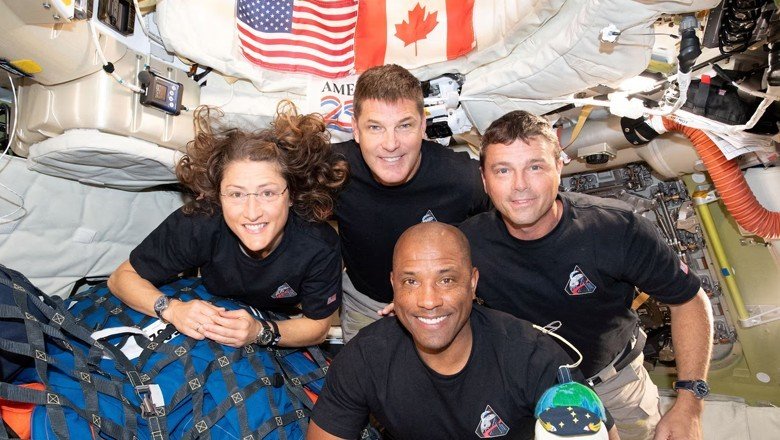
The Artemis II crew includes Victor Glover, Reid Wiseman, Christina Koch, and Jeremy Hansen. During their first press conference from space, they shared emotional reflections on their journey.
Pilot Victor Glover said he had been thinking about the re-entry since being assigned to the mission in 2023. He described the experience as profound and admitted he has yet to fully process the magnitude of the mission.
Commander Reid Wiseman highlighted the emotional connection with family during the mission. The crew had brief communications with loved ones, which brought moments of laughter and tears. These interactions reminded them of the importance of family even while traveling deep in space.
In a touching moment, Jeremy Hansen proposed naming a lunar crater in honor of Wiseman’s late wife, Carroll. The suggestion moved both the crew and mission control teams. Wiseman described it as deeply emotional and meaningful.
Mission Milestones and Future Lunar Plans
The Artemis II mission achieved several historic milestones. The astronauts traveled approximately 252,000 miles from Earth, surpassing the record set by the Apollo 13 crew more than five decades ago. They conducted a six-hour lunar flyby, providing valuable real-time observations of the Moon’s surface.
Scientists on Earth closely monitored the mission from Johnson Space Center. The crew’s observations are expected to contribute to understanding the Moon’s geology and the formation of the solar system. Christina Koch described the Moon as a “witness plate” that holds clues to cosmic history.
The mission is part of NASA’s broader Artemis program, which aims to return humans to the Moon and establish a long-term presence. The next mission, Artemis III, will test docking systems and prepare for future landings. Artemis IV is targeted to achieve the first crewed lunar landing since 1972.
As the crew prepares for re-entry, the world watches a defining moment in space exploration. The success of Artemis II will shape the future of human missions to the Moon and beyond, including potential journeys to Mars.

