

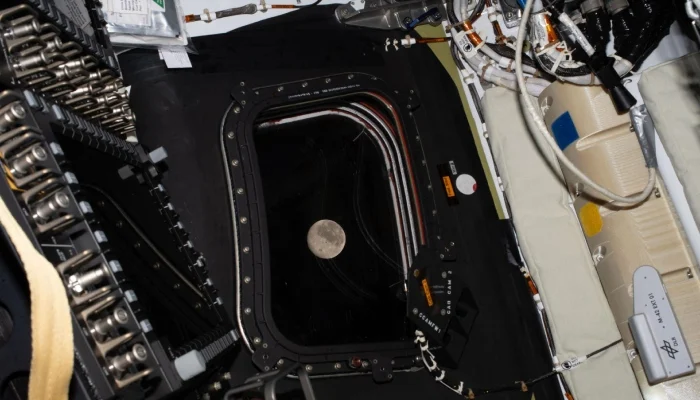
NASA’s Artemis II crew achieved a major milestone on Monday. The four astronauts aboard the Orion spacecraft broke the long-standing record for the farthest humans have ever travelled from Earth. They surpassed the mark set by the Apollo 13 mission in 1970 by about 4,105 miles.
Crew reaches record distance from Earth
The spacecraft reached a maximum distance of around 252,760 miles from Earth later on Monday. At that point, Orion entered the moon’s gravitational sphere of influence. This means lunar gravity now pulls stronger than Earth’s. The mission follows a free-return trajectory, so the capsule will swing around the moon and head back home without entering lunar orbit. The return journey will take about four days.
The crew includes mission commander Reid Wiseman, Victor Glover (the first person of colour to fly around the moon), Christina Koch (the first woman to do so), and Jeremy Hansen (the first non-American on such a mission). This marks the first crewed lunar flyby since 1972.
During the six-hour fly-by, the astronauts will carefully examine the lunar surface using their naked eyes. They will also take pictures of the far side of the moon, which has never been directly observed by any previous Apollo missions. In one image released so far, there was a massive crater at the Orientale Basin.
Preparations for future moon landings
According to NASA administrator Jared Isaacman, it was a historic moment that would help collect important information about future spaceflights. Artemis III will be launched in 2027, followed by a lunar touchdown on Artemis IV in 2028.
The commander of the late Apollo 13 mission, Jim Lovell, left a personal video message for the crew before he passed away. In his message, he greeted the astronauts in his “old neighbourhood” and advised them to admire the spectacular view.
In conclusion, this remarkable day has set a new record for NASA and brought the agency a step closer to landing astronauts on the moon’s surface again.

