

Paper straws are widely viewed as a greener alternative to plastic, but new research from South Korea challenges that assumption. A government-commissioned study found that paper straws may cause greater environmental harm than conventional plastic straws in several categories.
The research compared the environmental effects of different straw materials throughout their life cycles, from manufacturing to disposal. Its findings suggest that replacing plastic straws with paper alternatives does not automatically deliver better environmental outcomes.
Study Finds Higher Environmental Impacts From Paper Straws
Researchers compared four types of straws: conventional plastic, paper, biodegradable plastic and bio-based polyethylene (bio-PE). They assessed these materials across 16 environmental impact categories to examine their overall performance.
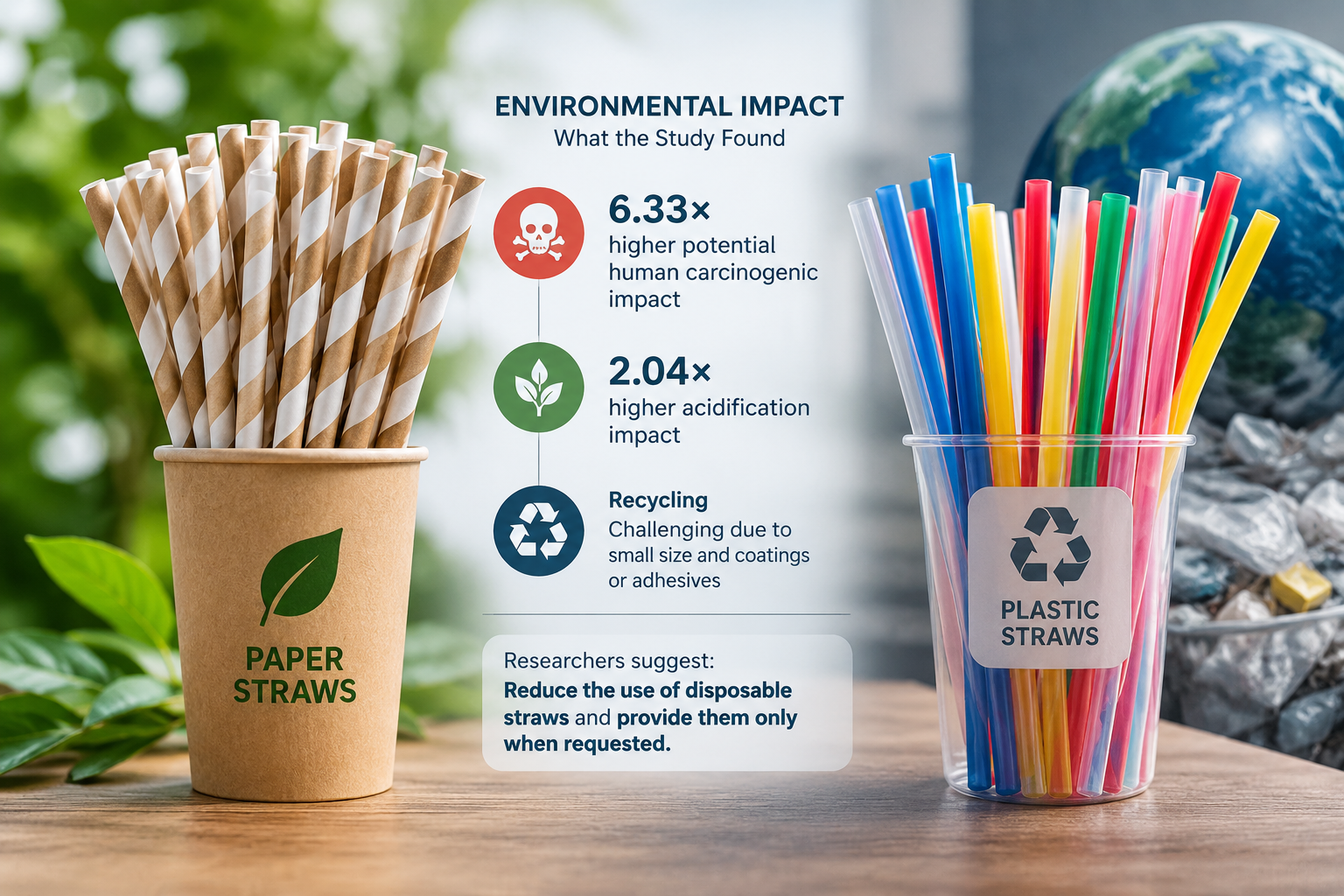
The study found that paper straws had 6.33 times the potential human carcinogenic impact of conventional plastic straws. They also recorded 2.04 times the acidification impact over their life cycles.
However, researchers clarified that the carcinogenic impact assessment measures potential environmental effects associated with a product’s life cycle. It does not indicate the direct cancer risk to consumers who use paper straws.
The findings highlight how environmental assessments can produce different results depending on the materials and impact categories examined.
Plastic Straws Performed Better in Several Categories
Conventional plastic straws recorded the lowest environmental impact in 10 of the study’s 16 categories. These included climate change, acidification, particulate matter and human toxicity.
However, this result does not mean plastic straws are environmentally harmless. Instead, it shows that the environmental performance of disposable products varies across different measures.
The comparison also included biodegradable plastic and bio-based polyethylene, demonstrating that alternative materials require careful evaluation. Their environmental benefits cannot be determined simply by describing them as biodegradable or plant-based.
A product’s overall impact depends on its entire life cycle, including production, use and disposal. Therefore, material substitutions alone may not solve the environmental problems associated with disposable products.
Why Recycling Straws Remains Difficult
The study also highlighted practical challenges in recycling disposable straws. Their small size makes them difficult for recycling facilities to sort and process efficiently.
Furthermore, coatings and adhesives used in some straws can complicate recycling. These factors may limit the benefits of choosing an alternative material when the product still becomes waste after use.
Consequently, assessing environmental performance requires more than examining whether a straw is made from paper or plastic. Researchers must also consider how manufacturers produce it and how waste management systems handle it.
Researchers Recommend Using Fewer Disposable Straws
Rather than simply replacing plastic straws with other materials, researchers recommended reducing the overall use of disposable straws. They also suggested that businesses provide straws only when customers request them.
This approach could help limit unnecessary consumption while avoiding the assumption that one replacement material is always better. It also places greater emphasis on reducing disposable waste instead of relying solely on material changes.
The findings challenge the widespread perception that paper straws are automatically the more environmentally friendly choice. Ultimately, reducing unnecessary use and considering the full life cycle of disposable products remain important when evaluating their environmental impact.
For the latest updates, visit and follow The Truth International website (www.thetruthinternational.com) and subscribe to the YouTube Channel.

