

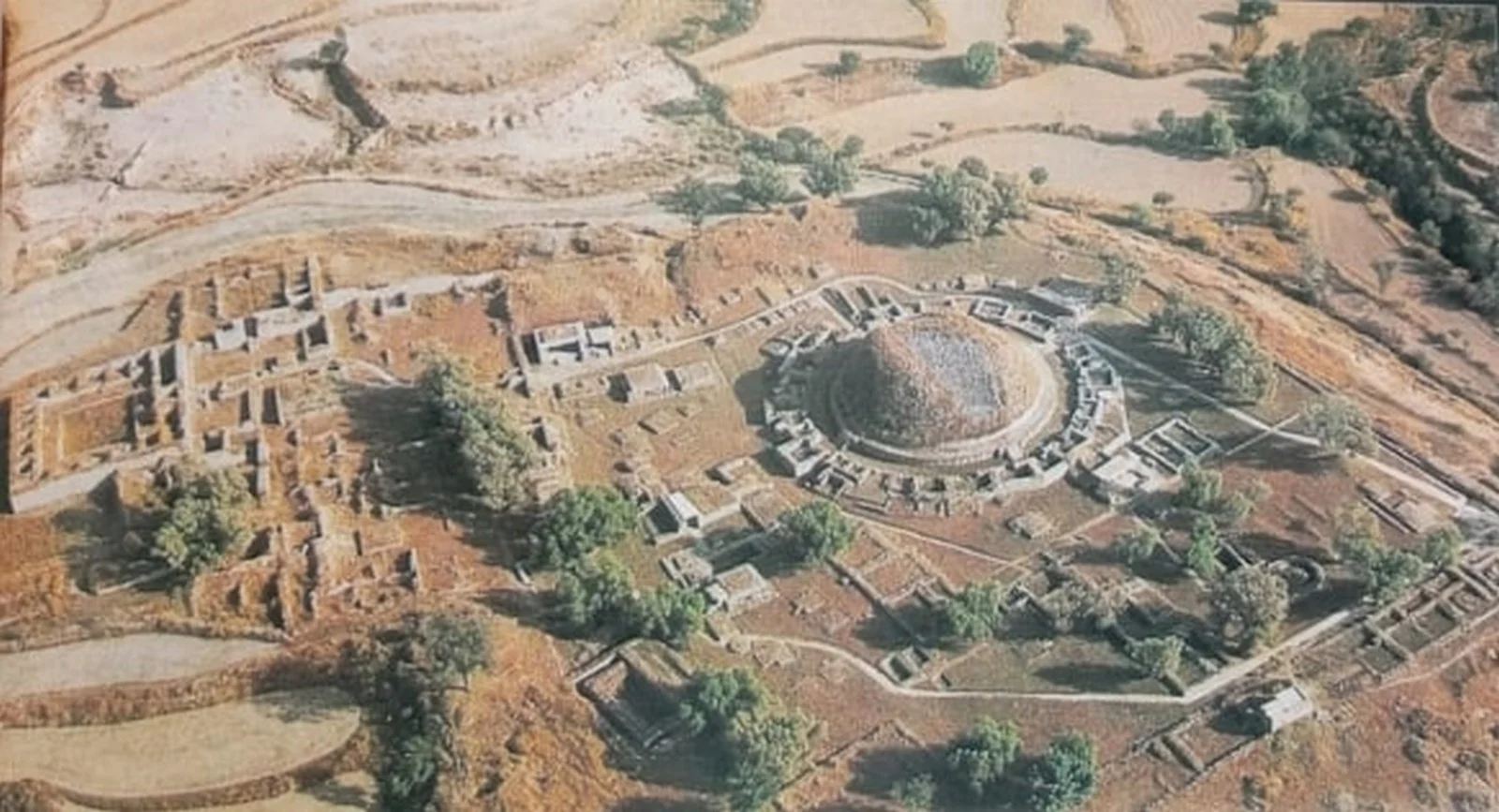

An excavation at Taxila’s Bhir Mound, the city’s earliest settlement, has revealed evidence of a sophisticated urban civilisation predating the sixth century BC.
Archaeologists from the Punjab Department of Archaeology uncovered stone and mud-brick walls, planned streets, and an advanced drainage system, indicating a well-organised city. The findings suggest Taxila was a thriving urban centre long before Achaemenid or Greek influence, potentially rewriting the region’s early history.
Deputy Director Aasim Dogar described the discovery as one of the most important in recent decades, noting continuous human habitation at the site. Stratigraphic layers reveal cultural deposits from the second, fourth, and sixth centuries BC, with deeper layers potentially pushing Taxila’s origins even further, drawing parallels with Harappa and Gandhara grave culture.
Artifacts recovered include intricately designed pottery, ancient coins, seals, and stone and metal tools, reflecting complex social, economic, and trade networks. The settlement also flourished during Achaemenid, Greek, and Mauryan influence, and was occupied during Alexander the Great’s arrival in 326 BC.
Historical excavations at Bhir Mound were initially conducted by Sir John Marshall (1918–1934) and later by Sir Mortimer Wheeler (1944–1945), whose stratigraphic methods shaped modern archaeology in the region.
After nearly two decades, the Punjab Department of Archaeology resumed work with cutting-edge technology, including GPS, drones, and geo-mapping, in collaboration with Japanese and Chinese experts.
Dogar emphasised that this breakthrough is likely to attract international scholarly attention and elevate Taxila’s profile globally. He added that the current findings are only the beginning, with many more layers of history expected to be uncovered beneath Bhir Mound, offering new insights into one of South Asia’s earliest urban centres.
