

Warming Glaciers May Reactivate Ancient Pollutants
Antarctica has stored toxic pollutants inside its ice for thousands of years.
Wind and ocean currents carried these substances to the frozen continent. They later became trapped beneath layers of snow and ice.
Scientists now warn that rising temperatures could release these pollutants back into the environment.
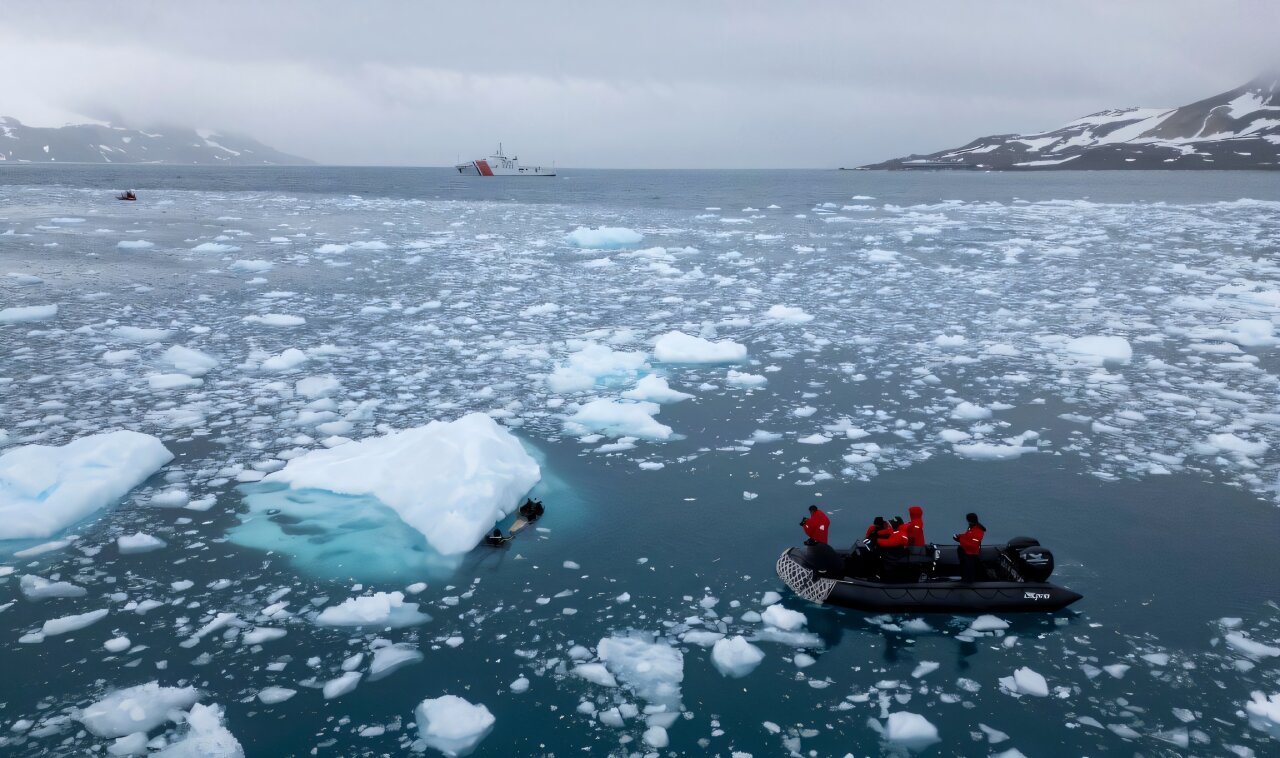
A University of Washington study examined mercury emissions from the Antarctic Peninsula. The region is among the fastest-warming places on Earth.
The research was published in the Proceedings of the National Academy of Sciences.
Researchers described a process known as the “mercury loop.”
This cycle connects the atmosphere, glaciers, exposed land and surrounding oceans.
As temperatures rise, glaciers melt faster. Stored mercury can then enter nearby soil, water and marine ecosystems.
Continued atmospheric pollution could make the problem worse. New mercury may combine with pollution already trapped inside the ice.
Scientists believe this could release more mercury than earlier estimates suggested.
Cold temperatures make the threat more serious. Pollutants often break down faster in warmer environments.
In Antarctica, they can remain stable and active for much longer periods.
Mercury Could Spread Through Antarctic Wildlife
Mercury does not easily disappear after entering an ecosystem.
It moves through the food chain and accumulates inside living organisms.
This process is known as bioaccumulation.
Small animals absorb mercury from water and food. Larger animals then consume them and receive higher pollutant concentrations.
The Southern Ocean food chain begins largely with krill.
These small crustaceans are a major food source for penguins, seals, whales and seabirds.
If krill absorb mercury released by melting glaciers, the pollutant can spread through the entire marine ecosystem.
Animals at higher levels of the food chain may carry the highest mercury concentrations.
This is the same process behind health warnings for large fish such as tuna and swordfish.
Researchers have already detected mercury in Antarctic wildlife.
Scientists have studied feathers from Adélie penguins and other seabirds since the early 2000s.
The feathers provide evidence of pollution levels because mercury collects inside birds as they feed.
Further glacier melting could create a continuous source of contamination.
Scientists do not expect a single temporary release.
Instead, mercury levels could rise gradually as more ice disappears.
Antarctic wildlife may be especially vulnerable.
Many species have historically lived far from major industrial activity.
Their ecosystems have experienced limited direct human pollution.
As a result, local animals may have little biological tolerance for increasing toxic exposure.
Pollution Could Travel Far Beyond Antarctica
The effects may not remain limited to the Southern Ocean.
Migrating seabirds can carry mercury between continents.
They may transport pollution from the Southern Hemisphere to northern habitats during seasonal movements.
Ocean currents can also move dissolved contaminants far from their original source.
This means mercury released near Antarctica could eventually affect distant marine ecosystems.
Scientists have identified a similar danger in the Arctic.
Thawing permafrost is releasing mercury that remained trapped in frozen ground for long periods.
Both polar regions follow the same pattern.
Global warming melts frozen storage systems. The melting then releases pollutants that had remained sealed away.
More warming causes more ice loss. More ice loss creates additional pollution.
This can produce a dangerous feedback cycle.
Antarctica has acted as one of Earth’s largest natural storage areas for hazardous substances.
Its ice has kept mercury and other pollutants locked away from active ecosystems.
Climate change is now weakening that protective barrier.
Scientists warn that humanity cannot fully control the speed or scale of future releases.
As Antarctic ice continues to melt, toxic materials could return to the environment after remaining frozen for centuries.
The result may be long-term contamination across marine food chains, wildlife populations and distant ocean systems.

