

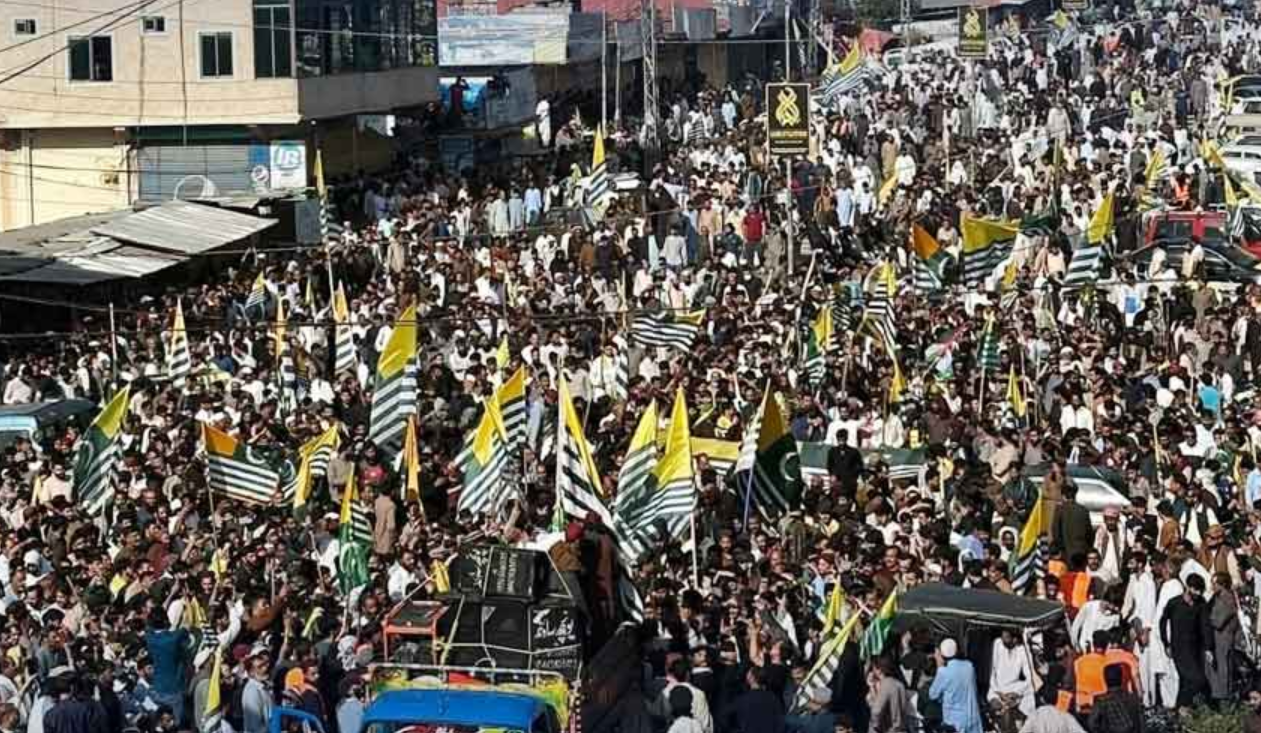

Normal Life Resumes Across Azad Kashmir Following Strikes and Shutdown
Life in Azad Jammu and Kashmir (AJK) has returned to normal after six days of intense protests and strikes. The unrest came to an end following successful negotiations between the federal government and the Joint Public Action Committee (JPAC), resulting in a sweeping agreement that promises reforms, accountability, and financial support.
Shops, markets, transport, and communication services have now reopened across Bhimber, Mirpur, Rawalakot, and other districts. Residents expressed relief as daily routines, disrupted by the shutdown, finally resumed.
Officials Accuse India of Exploiting Protests for Propaganda
Security officials cautioned that the recent unrest should not have escalated to such a level. They accused India of exploiting the protests for propaganda against Pakistan, emphasizing that Kashmiri people have always stood with the country.
Officials dismissed statements from Indian leaders, describing them as unreliable. They also warned that if India attempted operations similar to “Operation Sindoor,” Pakistan was fully prepared to respond. According to them, Pakistan is well aware of India’s growing weapon purchases and remains confident in its ability to counter them.
Government’s Agreement With Protest Leaders
The agreement signed between the government and JPAC addressed several long-standing issues. Key commitments included reforms in governance, healthcare, education, electricity, and accountability. Among the major points were:
-
Cabinet Restructuring: The AJK cabinet will be limited to 20 ministers and advisers.
-
Refugee Seats Review: A high-level committee will evaluate refugee seats in the assembly. All concessions and privileges remain suspended until the review is complete.
-
Healthcare Reforms: Health card funds will be released within 15 days. CT scan and MRI machines will be installed district by district.
-
Electricity Improvements: Rs10 billion will be allocated for electricity system upgrades.
-
Mangla Dam Victims: Land rights for affected families will be regularized within 30 days.
-
Education Expansion: Two new education boards will be set up in Muzaffarabad and Poonch, linked with the federal board.
-
Accountability Measures: The accountability and anti-corruption bureaus will merge, aligning laws with Pakistan’s NAB framework.
-
Infrastructure Development: Feasibility studies for two tunnels on Neelum Valley Road will begin. A timeline for Mirpur Airport will be announced this year.
-
Judicial Inquiry: A commission will investigate violent incidents in Banjosa, Muzaffarabad, and Dhirkot. Cases linked to deaths will be handled under the Anti-Terrorism Act.
-
Property Tax Adjustment: Property tax will be aligned with Punjab and KP rates within three months.
-
Compensation: Families of those killed in protests will receive financial aid and one government job per family. Injured protesters will receive Rs1 million each.
-
Release of Protesters: All detained protesters will be freed.
Reactions to the Agreement
National leaders welcomed the agreement as a step toward restoring peace. Speaker Raja Pervaiz Ashraf stressed that urgent measures were necessary to end the crisis, calling the bloodshed regrettable but highlighting the quick resolution.
Political figure Qamar Zaman Kaira also expressed regret over the violence but emphasized that the agreement ensures long-term relief and stability for the people of Azad Kashmir.
Relief for Residents
The reopening of shops, schools, transport, and communication services has provided much-needed relief to residents who endured days of uncertainty. With public confidence slowly returning, the agreement is seen as a critical step toward addressing AJK’s persistent governance, economic, and infrastructure challenges.
The developments mark the beginning of reforms aimed at bringing accountability, better services, and stability to the region, while also sending a strong signal to those attempting to exploit the unrest.
