
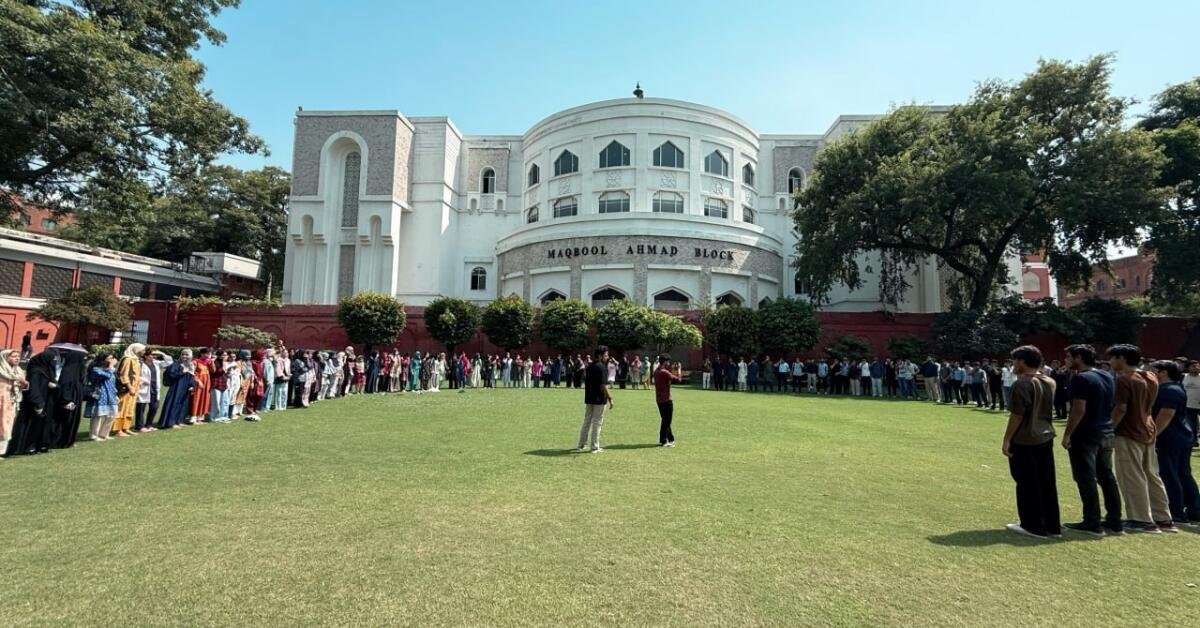

Dozens of Afghan students studying medicine in Pakistan are seeking court protection against an order requiring them to leave their colleges and return to Afghanistan.
The case is being heard in Lahore, where a court hearing on Friday could determine the future of several Afghan medical students.
PMDC Orders Afghan Students to Leave
Earlier this month, the Pakistan Medical and Dental Council (PMDC) directed educational institutions not to facilitate Afghan nationals during the current academic session.
The council also instructed that Afghan students already enrolled in medical and dental programmes in Pakistan should return to Afghanistan.
The letter, reviewed by AFP, said the matter was linked to “national policy directions” but did not identify the authority behind the decision.
The PMDC has not responded to AFP’s request for comment.
Students Challenge Expulsion in Court
The directive has triggered several legal petitions across Pakistan.
A court in Lahore suspended the expulsion order at the provincial level on September 11. However, some students say their university records have already been removed from online systems.
A similar petition was rejected in Balochistan, while another case remains pending in Sindh.
Lawyer Asad Jamal, who represents several students in Lahore, criticised the PMDC decision.
He said the students were not given an opportunity to present their case before the expulsion orders were issued.
Jamal said the students could approach Pakistan’s Federal Constitutional Court if the Lahore petition is unsuccessful.
Afghan Women Face Greater Uncertainty
The situation is particularly difficult for Afghan women studying medicine.
The Taliban authorities have banned women from attending universities in Afghanistan, leaving some female students with few options to continue their education.
One 23-year-old student involved in the Lahore case said she was only days away from completing her second year when she was told to leave Pakistan.
She had previously been forced to abandon her medical studies in Afghanistan after the university restrictions on women.
The student said she was among around 20 Afghan women selected for scholarships in Pakistan from approximately 30,000 applicants.
She requested anonymity because of security concerns.
“I will never give up,” she told AFP, describing her determination to complete her medical education.
Students Say Their Careers Are at Risk
Another Afghan student, 24-year-old Mubin Ulfati, said he was given only 24 hours to leave Pakistan after returning from a hospital shift.
He is a final-year medical student in Lahore.
Ulfati said the order felt like the loss of his hopes of becoming a doctor.
“We are clearly victims” of the political situation, he told AFP.
Other Afghan medical students have also faced visa-related difficulties.
One 33-year-old student specialising in ophthalmology said he had spent more than a year unsuccessfully trying to renew his visa.
He was eventually removed from Pakistan after being taken out of an operating theatre.
“We are only students. We are not political people,” he said.
He appealed for permission to complete his studies before returning home.
Rights Groups Criticise the Decision
Human Rights Watch has urged Pakistan to reverse the PMDC directive, particularly highlighting the impact on Afghan women who cannot currently pursue university education in Afghanistan.
Amnesty International described the measure as “discriminatory and arbitrary.”
The controversy comes amid worsening relations between Pakistan and Afghanistan.
More than 2.5 million Afghans have reportedly left or been expelled from Pakistan over the past three years, according to United Nations data.
The Lahore court hearing is expected to provide another important legal development for Afghan medical students seeking to remain in Pakistan and complete their education.

