

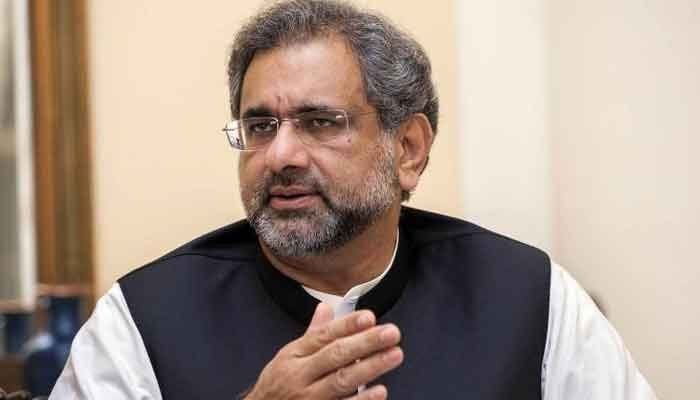

ISLAMABAD: PML-N leader Shahid Khaqan Abbasi reiterated the need for all stakeholders to convene and collectively determine the nation’s future, emphasizing the necessity to alter the course for the country’s development.
In an interview, he listed six influential figures in Pakistani politics: Mian Nawaz Sharif, Imran Khan, Asif Ali Zardari, Maulana Fazlur Rehman, the Chief Justice of Pakistan, and the Army Chief. He stressed their significant impact on the country’s political landscape.
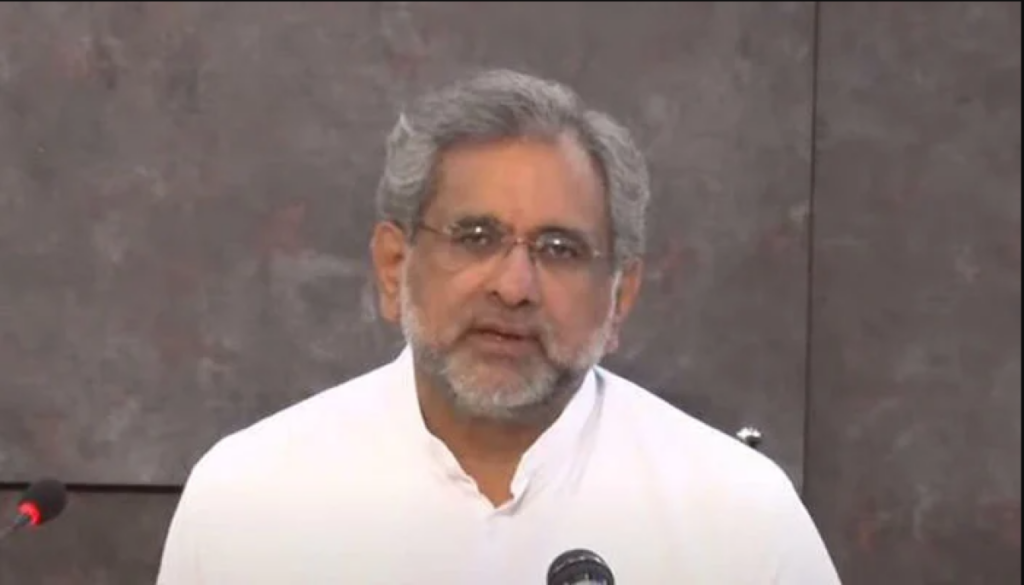
Abbasi had previously advocated for such a demand when discussing the persistent issues in Pakistan and the necessity for unity in finding solutions.
Although he recently met with Nawaz Sharif, amid reports of his visit to London to bid farewell to the PML-N leader, Abbasi did not officially join any new political party, contrary to what some expected following hints from his colleagues, Miftah Ismail and Mustafa Nawaz Khokhar, in TV interviews.
When questioned about whether the Army Chief or the Chief Justice violating their oath of office by interfering in politics, he questioned if it was explicitly prohibited in the Constitution for them to engage in matters of the country. When pressed further, Abbasi clarified that discussions could take place while upholding their oath of office, as the actions of the army and the judiciary significantly impact the country’s politics.
Abbasi Stresses Unity in Addressing Pakistan’s Political Landscape
He reiterated the need for all stakeholders to come together and decide the nation’s path, emphasizing the unusual circumstances at hand. He pointed out that regardless of their roles defined in the Constitution, the army and the judiciary wield influence in politics, asking if they should turn a blind eye to this fact.
Abbasi emphasized that rectifying the system’s collective failure would require the efforts of many, as no single individual could single-handedly resolve the issues and chart a path forward.
In response to a query, the PML-N leader expressed his belief that the military would withdraw from political involvement if politicians demanded more space.
He dismissed the notion that the United Arab Emirates and Saudi Arabia acted as guarantors whenever prominent leaders traveled to Pakistan through Gulf states.
Faizabad sit-in
Regarding the Faizabad sit-in, Abbasi welcomed the agreement reached with the protesters and revealed that he had advised the-then Interior Minister Ahsan Iqbal not to sign it. He disclosed that the-then Law Minister Zahid Hamid had already resigned from his post, underscoring the significant sacrifices made.
In response to a question, the PML-N leader called for clarity on the demands made by the protesters, particularly regarding the signatures of the people on the document. He also called for the establishment of a Truth Commission to identify those responsible for the Faizabad sit-in.
