


Rock died a long time ago. There are multiple theories behind its demise. From the 1960s it had rapidly evolved, branching out into numerous sub-genres: psychedelic rock, hard rock, progressive rock, punk rock, AOR (adult-oriented rock), heavy metal. Then there were also sub-genres of sub-genres. But by the 1990s, rock had clearly begun to eat itself.
In the early 1990s, the snarling and caustic bite of grunge put an end to it. Grunge was a reaction to what it believed had become bloated. And it made this statement by reviving the more ‘pure’ variations of rock of the 1960s/70s. Exciting as this was for those tired of MTV and ‘hair metal’, grunge was also one of the first signs that rock had begun to repeat itself.
Rock’s demise is most clearly alluded to on Radiohead’s Kid A (2000). It’s a haunting, yet quirky ‘rock’ album, noodling around with newer electronic goodies that were about to overwhelm the music scene. Outside, hip-hop had become king. Good rock was now ‘classic rock’, made by people in the past.
With the arrival of online streaming services, listening habits and rituals were changing. Albums became a rarity. Piracy became rampant. Sales nosedived. Eccentric music cliques and niches, mostly kitsch, were popping up on popular websites.
Aam Taateel’s strengths, as evidenced on their debut album Khudsar, are their vocals delivered in ghazal mode, mixed with jazzy interplays between the band’s talented musicians. They should abandon their attempts to flog the dead horse of heavy metal rock
Not that good music stopped being made. But it wasn’t rock. And when it was, it was an unintentional parody of itself. In the context of Pakistan, the pop/rock music scene that had begun to mushroom from 1988 onwards, had withered away by the early 2000s.
But it is baffling that, years later, when bands and acts once again began to appear, their musicianship was miles ahead of the musicians of the 1990s. It seems they had been learning their chops all on their own in the absence of any major platform. They are all there on Spotify now. Quality music performed by acts that have no corporate sponsors, no more concerts to play at, nothing.
The size of electronic music and rap artists outnumber the rockers. But then this is the way things are all over the world. Electronic music has branched out into some very interesting territories. So why play rock in an era where the genre really only exists in the shape of old albums and songs? Or in the shape of ‘new music’, which actually has nothing new to offer?
It’s a bold decision. Especially in Pakistan, where pop, rap or, to a certain extent, electronic music and, much earlier, disco, always had more traction than rock. Yet, rock bands continue to crop up. The musicianship is of high quality. And it’s nice to note that new rock artists have realised that one doesn’t really have to scream to sound ‘heavy.’
It is also encouraging to see that new acts are incorporating more challenging subjects in their lyrics. They do not want to sound cliched but this, in itself, has become a cliche. Rock music just can’t seem to escape the hold of its multifaceted past.
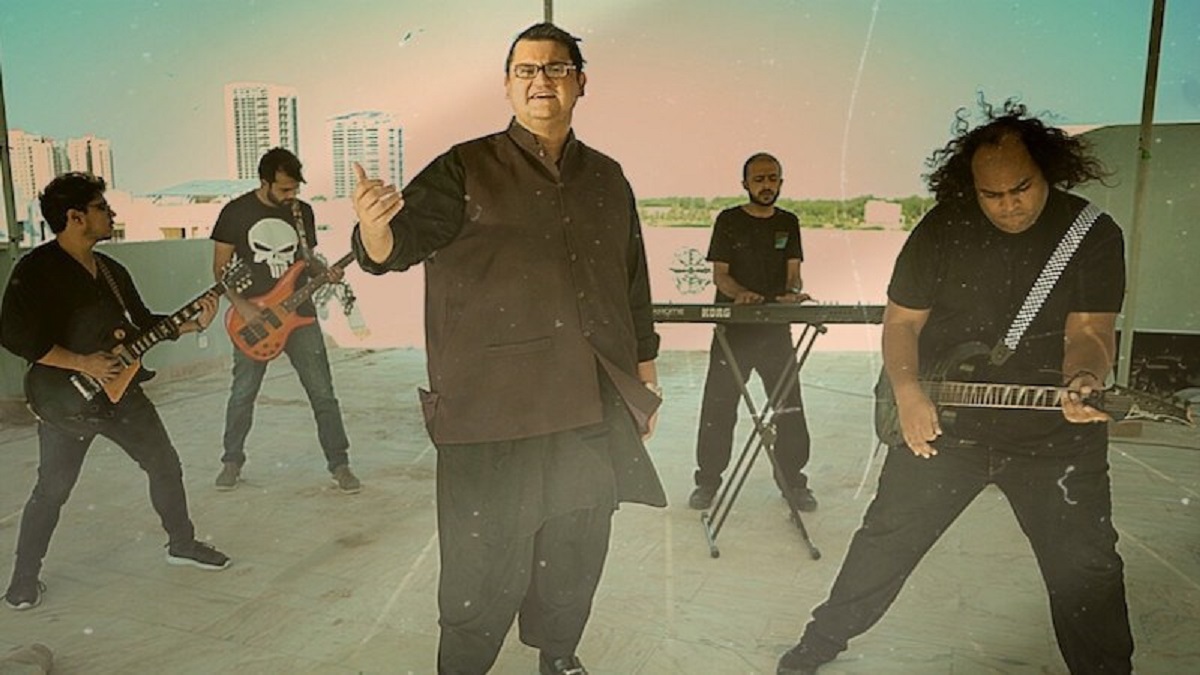
Take for instance, the debut album Khudsar by the band Aam Tateel which recently dropped on Spotify. First of all, kudos to the band for actually recording a whole album in this day and age. Gone are the days when bands had to release an album every year and constantly tour. This is what made them so good. It’s no easy task, though.
Secondly, once again, the musicianship is right up there. This generation of musicians is technically superior to whatever or whoever came before them (in Pakistan). Yet, this album too can’t break away from rock’s past.
Back in the day, some heavier rock bands such as Tool and Dream Theatre tried to avoid 1980s rock cliches by adopting the complex dynamics and weird time signatures of 1970s prog-rock acts such as Yes, Jethro Tull and King Crimson. In the process, they created ‘prog-metal,’ even though Rush had already done that.
But the difference between, say, Dream Theatre and Rush was that Rush, no matter how complex the structure of their songs, never lost sight of melody. The latter-day prog-metal acts got too involved in exhibiting their chops, giving birth to that horrendous genre called nu-metal. They also began to rap. The result was songs with prog pretensions, but which actually sounded like bad jazz on speed, with aimlessly growling rap routines and throaty emo nonsense.
When one listens to Aam Tateel, the first thing that comes to mind is Entity Paradigm (EP), the Pakistani rock band of the early 2000s. It had a sound that was unabashedly influenced by Tool and Dream Theatre, but also by those dreadful nu-metal outfits.
Like Aam Tateel, EP too was trying to offer something more meaningful through its lyrics. Something more real. But musically, it just couldn’t escape any of the prog-metal cliches milked to death by their influences. This is the troubling bit about Aam Tateel’s music as well.
On Khudsar, the band uses words from various sources, including the legendary Jaun Elia. Elia’s poem Beqarari is turned into a song carried by standard heavy-metal riffs and screeching lead guitar interludes. Nothing refreshing here. Standing out though, are the vocals. They remain in the ghazal mode, which makes this song’s otherwise predictable metallic trajectory somewhat interesting.
The Indian poet Rajender Krishan’s Kisi Ki Yaad is given a more suitable make-over. It is placed inside a ‘metal ballad’ edifice. If that’s what you like, then this will be up your alley — that is until, once again, standard metal riffs appear for no apparent reason whatsoever.
‘Yarro’, with lyrics by poet and journalist Peerzada Salman, thankfully sees the band realise the importance of melody. ‘Yarro’ is steady and consistent. Some wonderful interplay between piano, drums and the bass gives it a lounge jazz/ jazz-fusion feel. Here the drum sound is better produced than on any other song, where it remains muffled.
Virtuoso drum dynamics have to be at the core of music looking to transcend the expected. But for some odd reason, they remain buried in the mix on most songs on Khudsar.
‘Raat’ with lyrics by Waheed Noor is another stand-out song for me. The pace again is steady despite its prog-rock influences. The band never loses sight of melody. The change of dynamics are well paced (and not hurried) and, more importantly, keep returning to the main hook.
There is a lot more on this album that substantiates the band’s obvious talents as musicians who want to expand a genre that has already been stretched enough. My take is that Aam Tateel is trying to do a bit too much.
It needs to stick to its strengths. And one of these is their remarkable penchant to back vocals delivered in ghazal mode with some interestingly arranged jazzy interplays between the band’s instrumentalists.
The band does not really need to disturb such proceedings with throwaway riffs and rapid-fire leads. They do absolutely nothing for ears that have heard better.
