

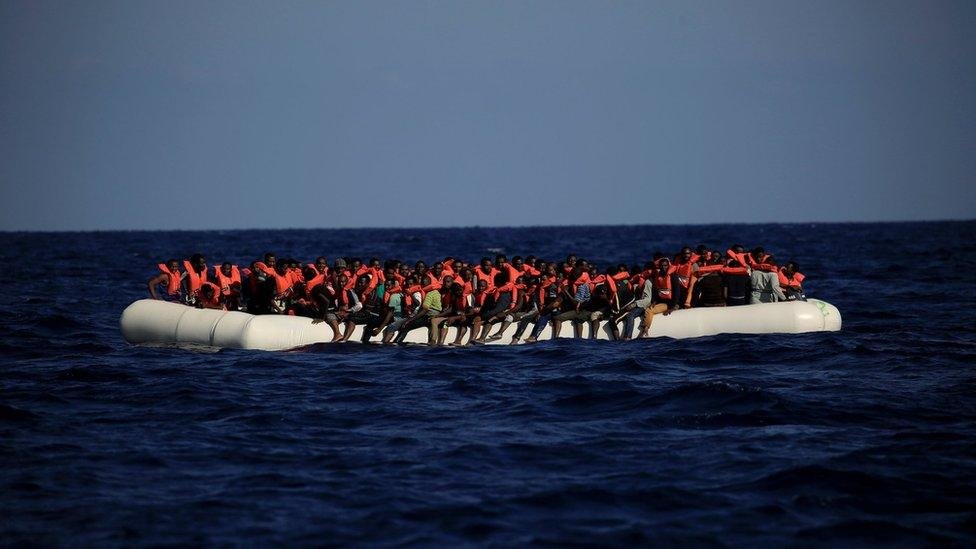

A rubber boat carrying 55 passengers, including two babies, capsized off Libya’s coast . Fortunately, Libyan authorities rescued two Nigerian women who survived the early-morning disaster.
The passengers were migrants and refugees from various African countries trying to reach Europe. Survivors told the International Organization for Migration (IOM) that the boat departed from al-Zawiya, a coastal city west of Tripoli, around 11 pm local time. Six hours later, the vessel sank north of Zuwara.
One survivor reported losing her husband, while the other said her two babies died in the incident. IOM teams immediately provided emergency medical care to both women.
Mounting Toll in the Mediterranean
This tragedy adds to a grim pattern in 2026. The IOM has documented nearly 500 migrants dead or missing while attempting the Mediterranean crossing from Libya so far this year. January alone saw at least 375 reported dead or missing after a series of unreported shipwrecks during severe winter storms. Experts fear the actual toll is much higher.
Despite the dangers, migrants continue to embark on the journey, driven by economic hardship, conflict, and instability. Many are desperate to escape dire conditions in Libya, where abuse and exploitation are widespread.
Dire Conditions in Libya and the Role of Smugglers
UN human rights officials have consistently warned that migrants in Libya face torture, trafficking, forced labor, extortion, and other abuses by both state and non-state actors, including armed militias. Traffickers exploit these vulnerabilities by cramming people onto overcrowded, unsafe vessels, significantly increasing the risk of death at sea.
The IOM stressed the urgent need for international cooperation to dismantle human smuggling networks. Officials also called for creating safe and legal migration routes to reduce fatalities. Many shipwrecks go unreported, leaving families without closure when loved ones vanish at sea.
Countries such as the UK, Spain, Norway, and Sierra Leone are pressuring Libya to shut down detention centers where authorities reportedly torture, abuse, and even kill migrants. Meanwhile, humanitarian agencies continue to push for urgent reforms to save lives.
This latest tragedy clearly shows the severe dangers migrants face in the central Mediterranean. It also emphasizes the global responsibility to dismantle smuggling networks, strengthen safety measures, and protect vulnerable populations.
