

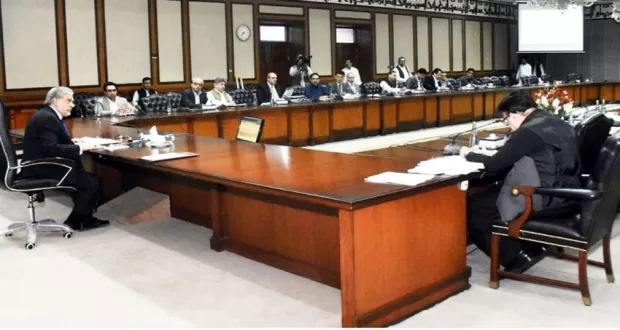

In a significant development, the Cabinet Committee on Privatisation (CCOP) has granted initial approval for the privatization of 24 major government institutions over the next five years, in a phased approach.
Chaired by Deputy Prime Minister and Foreign Minister Mohammad Ishaq Dar, the committee reviewed the Privatisation Programme (2024-29) presented by the Ministry of Privatisation, based on recommendations from the PC Board.
Attendees included Minister for Finance Muhammad Aurangzeb, Minister for Commerce Jam Kamal Khan, Minister for Privatisation Abdul Aleem Khan, Minister for Industries and Production Rana Tanveer Hussain, Governor State Bank of Pakistan Jameel Ahmed, SECP Chairman Akif Saeed, and federal secretaries from various ministries.
The approved comprehensive privatization program, to be finalized in the next meeting, aims to transfer state-owned institutions to private investors, with the goal of enhancing efficiency and reducing the government’s financial burden.
Priority has been given to Pakistan International Airlines (PIA), followed by entities like Utility Stores Corporation, Agricultural Development Bank, and several power distribution companies.
Other institutions marked for privatization include Genco One, Genco Two, Genco Three, Genco Four, Roosevelt Hotel Corporation Limited, Pakistan Reinsurance Company Limited, First Women Bank Limited, House Building Finance Corporation, and Pakistan Engineering Company.
The phased privatization process will involve consultations with relevant ministries to ensure a smooth transition. Additionally, preparations are in progress to finalize the comprehensive privatization program in the upcoming meeting.
Meanwhile, an additional 40 strategic or essential institutions are under review, with their future to be determined by the Cabinet Committee for Government-Owned Institutions.
The committee has instructed the Ministry of Privatisation to discuss the rationale provided by respective ministries for not including 18 SOEs in consultations, and proposals regarding each will be submitted to CCOP in its next meeting.
This privatization initiative is expected to yield significant revenue for the government, which will be utilized to repay debts and finance development projects. It is also anticipated to enhance the country’s economic well-being by fostering private sector growth and competition.
