

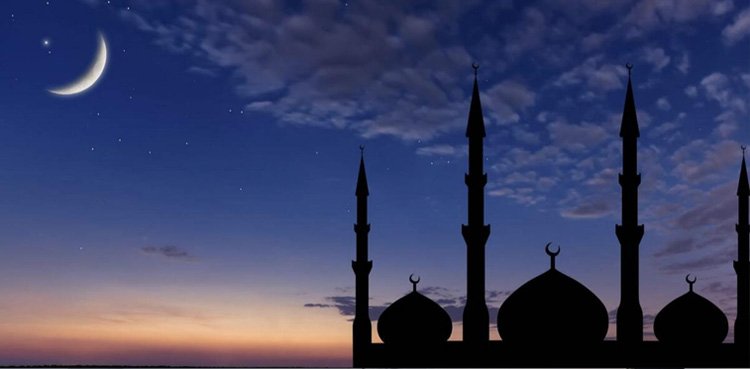

Ramadan Moon
On Sunday, Saudi Arabia officially announced the sighting of the crescent moon, marking the commencement of the holy month of Ramadan in the kingdom.
The news was confirmed by the social media handle responsible for updates on the two holy mosques, the Grand Mosque of Makkah and the Prophet’s Mosque in Madina, referencing the nation’s moon-sighting committee.
The Saudi Supreme Court affirmed that the crescent was sighted on Sunday evening, designating Monday as the first day of fasting for the people in Saudi Arabia.
Simultaneously, the United Arab Emirates (UAE) also reported the sighting of the Ramadan moon shortly after Saudi Arabia’s announcement.
Both the apex court of Saudi Arabia and the moon-sighting committee in the UAE had earlier declared Sunday evening as the expected date for the sighting of the Ramadan moon, urging residents to observe and report their findings.
Saudi Arabia traditionally leads the way in sighting the moon for Islamic months, setting the precedent for other Arab, Middle Eastern, and Western countries, as well as certain parts of India.
However, countries like Pakistan, the rest of India, Bangladesh, and other Asian nations typically commence the holy month a day later.
Ramadan holds immense significance in the Muslim world, with over a billion believers participating in fasting to cultivate patience and self-control. Additionally, the month emphasizes charity and welfare, reinforcing the core values of Islam.
The Islamic calendar, consisting of 29 or 30 days in each month, determines the start and end of Ramadan based on the appearance of the crescent moon.
This lunar-based system, as opposed to the Gregorian calendar, results in Ramadan occurring at varying times each year.
The ninth month in the Islamic calendar, Ramadan plays a pivotal role in the religious practices and cultural traditions of the global Muslim community.
