

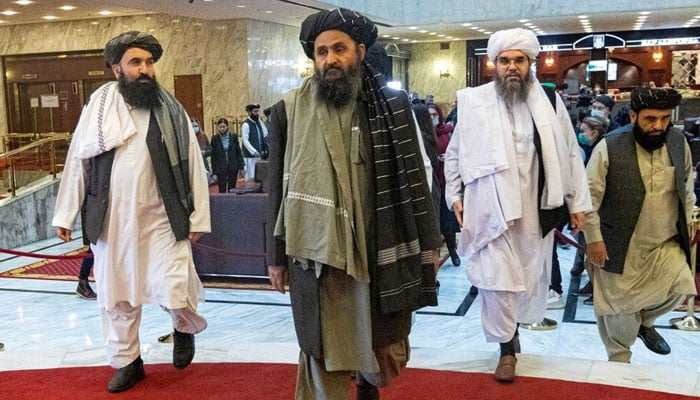

The Taliban government has issued a stern warning to the Tehreek-e-Taliban Pakistan (TTP) leadership, cautioning against using Afghan soil for attacks inside Pakistan. The warning emphasizes that such actions have strained relations between the two nations.
The message was conveyed during a visit to Kabul by a delegation led by Maulana Hamid-ul-Haq of Jamiat Ulema-e-Islam (Sami). The delegation was coordinated by Asrar Madani, the head of the International Research Council for Religious Affairs.
Taliban leaders informed the visiting delegates that a meeting held four weeks ago included TTP leaders like Mufti Noor Wali Mehsud and Hafiz Gul Bahadur. During the meeting, the TTP leadership was unequivocally told that attacks inside Pakistan have damaged relations with the Pakistani people and government.
While relations have seen some improvement since that meeting, the Taliban government, particularly the Haqqani network, believes that resuming dialogue with the TTP could further enhance relations.
However, Pakistani officials are wary of this approach due to past instances where TTP secured concessions, including the release of their prisoners who did not remain peaceful upon return.
The Taliban government has also expressed concern about Pakistan’s rapid repatriation of Afghan refugees, emphasizing that returning individuals, after decades abroad, struggle to settle in changed landscapes. The Taliban suggest that Pakistan could have waited longer or at least consulted with the Afghan government before implementing the repatriation policy.
It’s worth noting that many in the Taliban leadership, including Mulla Haibatullah, Maulana Abdul Hakeem Haqqani, Amir Khan Muttaqi, and Khalil-ul-Rehman Haqqani, have spent significant time as refugees in Pakistan. Pakistan’s repatriation policy is stated to be primarily aimed at combating terrorism, with Afghan nationals allegedly involved in attacks against the Pakistani government and military.
Interim Prime Minister Anwaar-ul-Haq Kakar highlighted in November 2023 that a significant portion of those engaged in criminal and terrorist activities were among illegal immigrants.
