

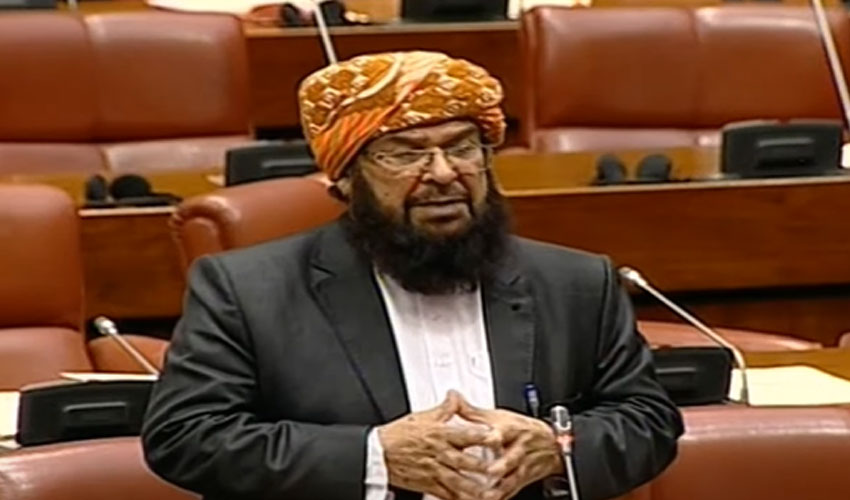

In a significant development, Maulana Abdul Ghafoor Haideri, the General Secretary of Jamiat Ulema-e-Islam-Fazl (JUI-F), has chosen to resign from his position in the Senate. This decision comes on the heels of his triumphant performance in the general elections for the National Assembly, which transpired on February 8.
The seasoned leader took the formal step of submitting his resignation to Senate Chairman Sadiq Sanjrani, and the chairman duly accepted the resignation, marking the end of Maulana Abdul Ghafoor Haideri’s tenure in the Senate.
As part of the political protocol, Maulana Abdul Ghafoor Haideri is now poised to take the oath as a member of the National Assembly, where he is expected to continue his political endeavors. This move echoes the actions of Senators Sarfraz Bugti and Prince Umar Ahmedzai, who also opted to relinquish their Senate positions after emerging victorious in the Balochistan Assembly constituencies during the same round of general elections on February 8.
Sarfraz Bugti, a former caretaker Federal Interior Minister, formally tendered his resignation to Senate Chairman Sadiq Sanjrani, and it was duly accepted. Likewise, Senator Prince Umar Ahmedzai, representing the Balochistan Awami Party, followed suit by resigning from the Senate in light of his success in securing the provincial assembly seat.
This series of resignations reflects the dynamic interplay between national and regional politics, as elected officials navigate multiple roles and responsibilities. As Maulana Abdul Ghafoor Haideri prepares to embark on his new role in the National Assembly, the political landscape in Pakistan continues to evolve, with each elected representative contributing to the broader narrative of governance and representation in the country.
