

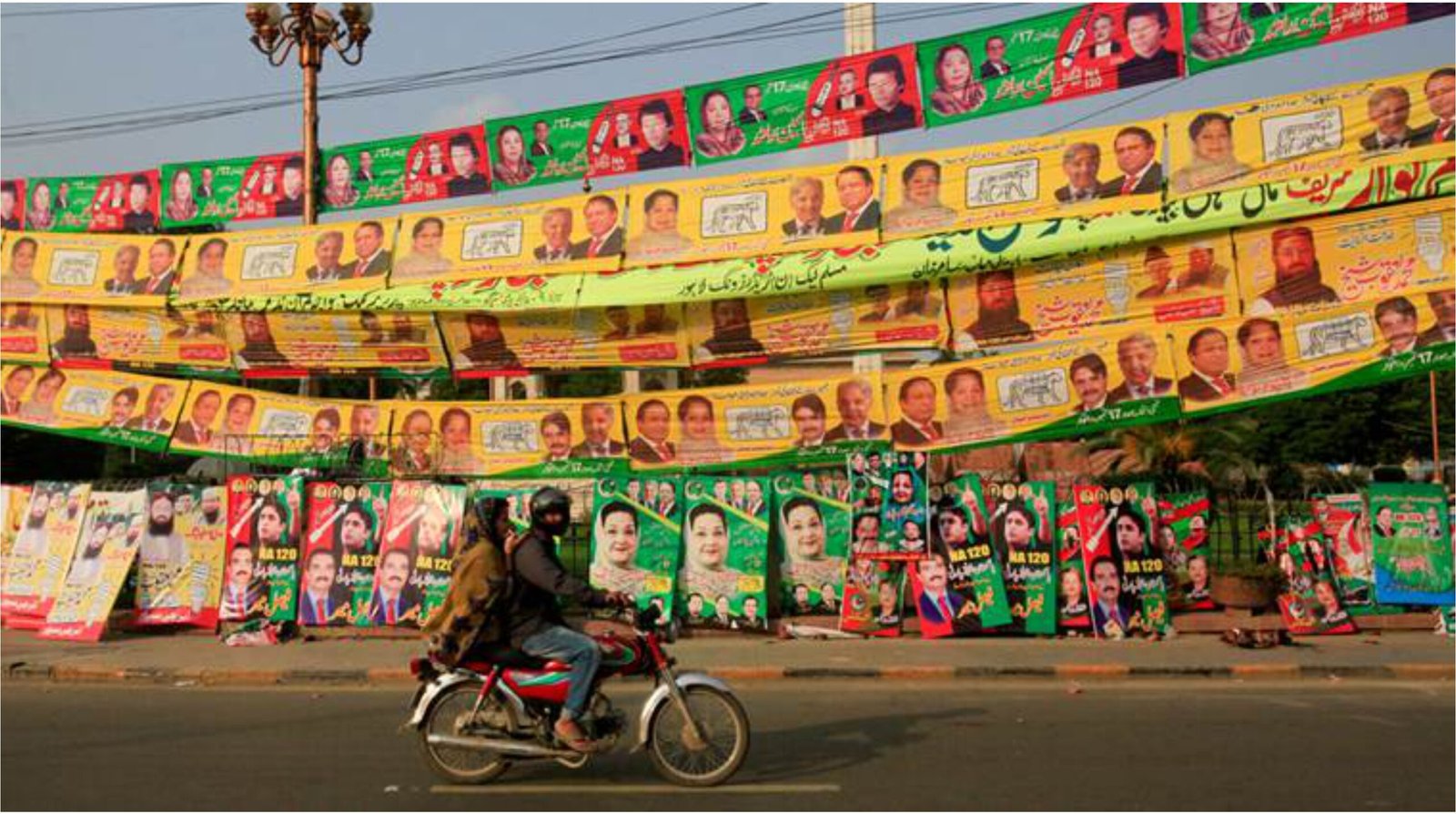

During the 12th general elections in Pakistan held on February 8, approximately 60.6 million citizens exercised their voting rights, indicating an increase from the 2018 elections, where about 54.8 million participated, reflecting a surge of at least 5.8 million voters, as per the Free and Fair Election Network (Fafen) post-election analysis report.
However, despite the number of registered voters escalating from 106 million in 2018 to 128.6 million in 2024, the voter turnout declined. The 2024 polls recorded a 47.6% turnout compared to 52.1% in 2018, with factors such as severe winter conditions in certain regions, security concerns in Khyber Pakhtunkhwa and Balochistan, and uncertainty surrounding election conduct contributing to the reduced participation, as outlined in the report.
Based on Form 47 data from 264 National Assembly constituencies, the analysis highlighted Khyber Pakhtunkhwa’s lowest turnout and a varied pattern across regions, with the highest turnout observed in the Islamabad Capital Territory (ICT).
Regional turnouts declined in 2018, notably in Khyber Pakhtunkhwa, ICT, Punjab, Sindh, and Balochistan, with the most significant drop occurring in Punjab, followed by Khyber Pakhtunkhwa.
Gender-disaggregated data revealed a 51.6% male voter turnout compared to a 42.6% female turnout. While 24.05 million women voted across 254 NA constituencies, 34.02 million men voted in the same constituencies.
Interestingly, the increase in women’s voter turnout in 2024 exceeded that of men, with 2.3 million more women voting compared to 2018, compared to 1.09 million more men.
Constituencies witnessed varying turnout rates, with NA-214 Tharparkar-I recording the highest (70.9%) and NA-42 South Waziristan Upper-cum-South Waziristan Lower the lowest (16.3%).
The analysis also noted constituencies with turnouts ranging from above 60% to below 30%, with none recording female turnout below 10%, a significant departure from 2018, where such occurrences were observed.
