

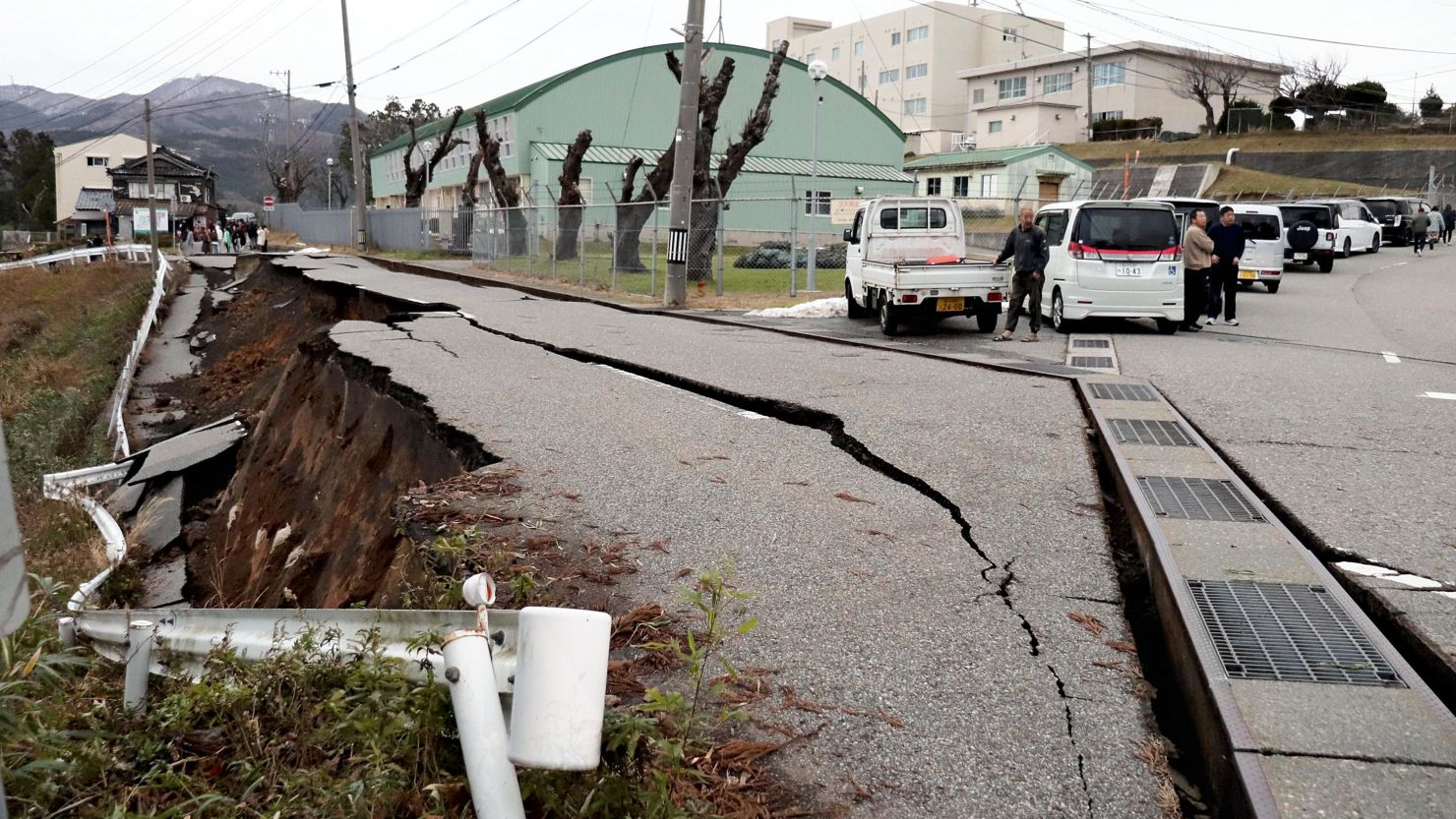

More than 40 people lost their lives in Japan after a powerful 7.6-magnitude earthquake struck on New Year’s Day.
The quake, which hit in the afternoon, triggered tsunami waves along Japan’s west coast, causing residents in coastal areas to seek higher ground. The waves swept cars and houses into the sea.
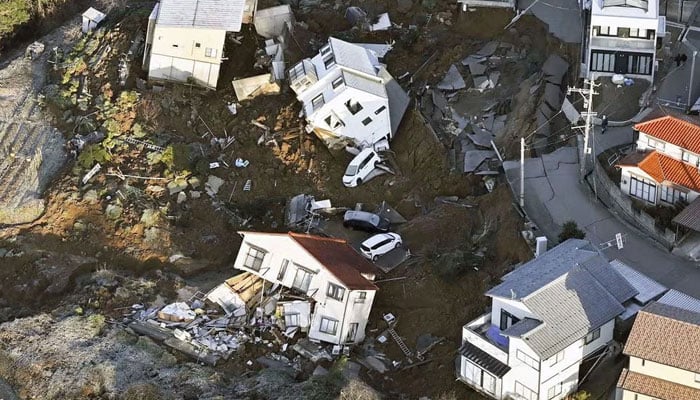
Rescue teams are facing challenges reaching remote locations where buildings collapsed, hindering efforts to search for survivors.
Thousands of army personnel, firefighters, and police officers have been deployed to the devastated Noto peninsula in Ishikawa prefecture. Damaged roads and difficulties in assessing the full extent of the aftermath are impeding rescue operations.
Rail services, ferries, and flights to the affected area have been suspended, with Noto Airport closed due to damage. Prime Minister Fumio Kishida described the search and rescue efforts as a “battle against time,” noting widespread damage to buildings and infrastructure discovered through helicopter surveys.
Authorities in Ishikawa confirmed 45 deaths from the earthquake, with half of them in the hard-hit Wajima city near the quake’s epicenter.
Firefighters are battling blazes in several cities and working to free people trapped in collapsed buildings. The Japan Meteorological Agency has detected over 140 tremors since the initial quake, warning of the potential for more strong shocks.
Many world leaders expressed condolences, with U.S. President Joe Biden offering assistance.
The Japanese government evacuated around 100,000 people to sports halls and school gymnasiums, and while many have returned home, 33,000 households in Ishikawa prefecture remain without power. Additionally, most areas in the northern Noto peninsula are lacking a water supply.
