

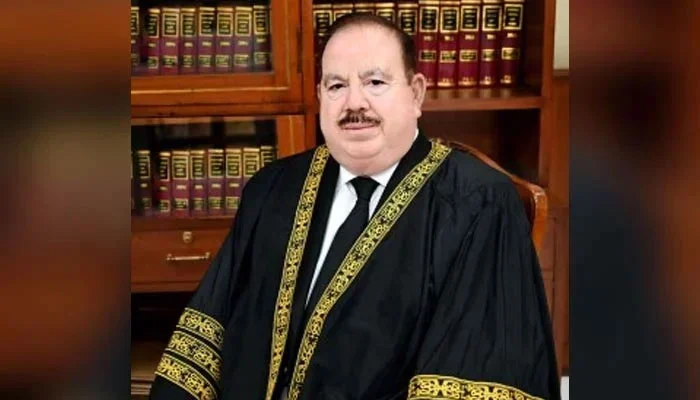

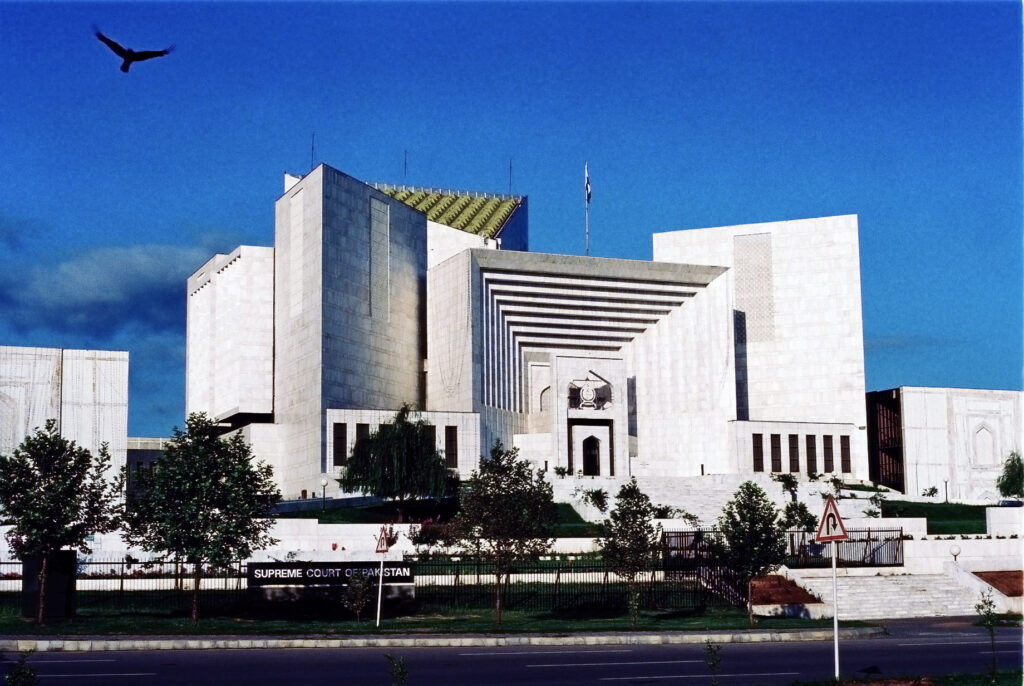
ISLAMABAD: A petition was submitted to the Supreme Court of Pakistan (SC) challenging the inclusion of Justice Tariq Masood in the bench assigned to hear intra-court appeals against the top court’s decision nullifying civilian trials in military courts.
Justice Tariq Masood leads the six-member SC bench scheduled to address various pleas filed by the federal government, Ministry of Defence, and provincial governments of Punjab, Khyber Pakhtunkhwa, and Balochistan on December 13. These pleas oppose the SC ruling that deemed the trials of civilians in military courts as “null and void.”
In the aftermath of the May 9 riots triggered by the arrest of then-Pakistan Tehreek-e-Insaf (PTI) chairman Imran Khan, where military installations were vandalized nationwide, the federal government announced military trials for those allegedly involved in the riots.
However, several petitions were submitted to the SC by Imran Khan, Aitzaz Ahsan, Pakistan Institute of Labour Education and Research (Piler) Executive Director Karamat Ali, and former Chief Justice of Pakistan Jawwad S Khawaja opposing the military trials of civilians.
On October 23, a five-member apex court bench, presided over by Justice Ijaz Ul Ahsan, unanimously accepted these pleas and invalidated the government’s decision to try civilians in military courts. Subsequently, federal and provincial governments and the defense ministry filed intra-court appeals (ICAs) against this verdict.
In the recent petition, ex-Justice Khawaja argues that Justice Masood has already expressed his views on the matter, specifically the non-maintainability of petitions against civilians’ military trials, through a written note. Therefore, Khawaja asserts that Justice Masood should recuse himself from the bench handling the appeals against the SC verdict.
Khawaja’s petition further contends that Justice Masood’s consideration of the petitions as “unusual” indicates a predisposition that compromises independent and unbiased adjudication, substantively and perceptually. It emphasizes that, according to Justice Masood’s note, each case must be evaluated on its merits, concluding that the petitions against civilians’ military trials are not maintainable under Article 184(3) of the Constitution.
The petition stresses that a judge who has publicly and in writing made findings on a specific issue between the parties, without hearing them, should not preside over the matter. It calls for Justice Masood to recuse himself from the case, not lead the bench in the interest of justice, and refer the matter back to the committee established under the Supreme Court Practice and Procedure Act 2023 for the reconstitution of the bench handling the ICAs.
