



Forced Afghan Repatriation
The European Union has expressed concerns regarding the repatriation of Afghan nationals from Pakistan, stating that Pakistan’s actions are not consistent with its international commitments.
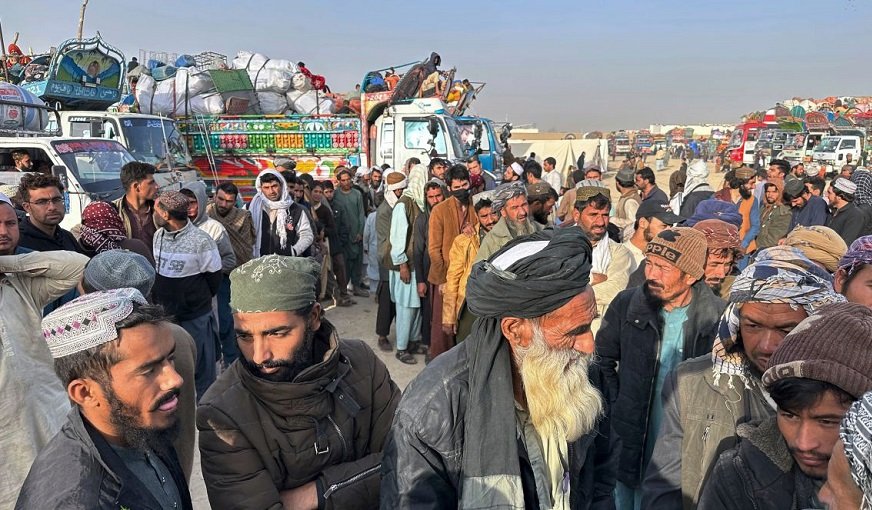
More than 200,000 people have left Pakistan in response to the government’s orders to deport up to 1.7 million illegal migrants. The government had given these undocumented foreigners an ultimatum, warning of arrest and expulsion after November 1.
Pakistan has justified these deportations as necessary to protect its welfare and security, citing a rise in attacks that the government attributes to militants operating from Afghanistan.
During a mid-day briefing, Peter Stano, a spokesperson for the European External Action Service, indicated that they are closely monitoring the situation and are in communication not only with Pakistan’s authorities but also with international aid agencies operating in Pakistan and Afghanistan. Stano expressed concerns about the repatriation of one million illegal Afghan immigrants from Pakistan, particularly given the diverse ethnic backgrounds of these individuals.
He stated that the EU’s general position is that Pakistan’s actions are not in line with its international legal commitments, especially in light of the situation in Afghanistan, where the Taliban government has raised concerns about women’s rights and the treatment of various ethnic groups.
The EU has conveyed these concerns to the Pakistani government, emphasizing that forcibly repatriated immigrants may face increased danger when trying to return to Pakistan due to unfavorable circumstances in Afghanistan.
Stano concluded by stating that this issue is a matter of concern, and they are in contact with their partners and the Pakistani government to address the situation.
Afghan Returns from Iran Surge Amid Unofficial Deportations
Meanwhile, there has been a significant increase in the number of Afghans returning from Iran. Iranian officials have not officially announced mass deportations, but Afghans arriving at the Islam Qala border crossing near Herat report being detained and deported, even if they possess documents allowing them to stay in Iran.
Iran hosts one of the world’s largest refugee populations, mainly comprised of Afghans who have arrived over the past four decades. It is estimated that there are approximately 4.5 million Afghans living in Iran, according to the International Organization for Migration, although Tehran suggests the number is even higher, exceeding five million.
