

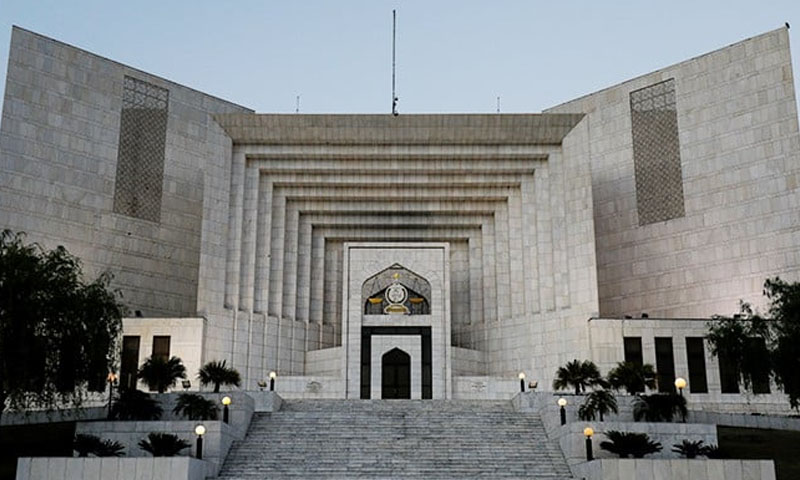

ISLAMABAD: The Intelligence Bureau (IB) has decided to withdraw its review petition in the Supreme Court’s verdict in the Faizabad dharna case.
The bureau has requested permission from the apex court to withdraw the petition and has filed a miscellaneous petition for this purpose.
According to the petition, the review of the Faizabad dharna case was scheduled for a hearing on September 28. The IB expressed its desire to withdraw the review petition, indicating that it does not wish to defend it any longer.
Petitioner Sheikh Rashid’s lawyer, Amanullah Kanrani, appealed to the court to postpone the case hearing. He has taken on the role of caretaker law minister in Balochistan and, as a result, could not appear in the Supreme Court as a lawyer.

Only a week into his term, Chief Justice of Pakistan Qazi Faez Isa had scheduled a hearing for the review petitions against the Supreme Court’s verdict on the Faizabad dharna case. This verdict had directed the premier intelligence agencies – ISI, IB, and MI – to adhere to their constitutional limits. A three-judge bench led by the CJP had set the review petitions for a hearing on September 28.
Key points of Faizabad dharna case verdict
The two-judge bench, composed of Justice Qazi Faez Isa and Justice Mushir Alam, articulated several critical points in their stance against the Tehreek-e-Labbaik Pakistan’s (TLP) Faizabad dharna. Firstly, they emphasized that citizens have the right to form and participate in political parties, provided reasonable legal restrictions are respected.
Additionally, they upheld the right to assemble and protest as long as these activities remain peaceful and within the bounds of legal regulations. The bench also underlined that protestors who obstruct the rights of others or damage property should be subject to legal consequences, ensuring accountability.
Furthermore, the bench stressed that political parties must adhere to the law and transparently account for their sources of funding, promoting greater transparency within the political landscape. They emphasized that the State should act impartially and fairly, with the law applicable to all, regardless of their position in government. This fair and unbiased application of the law extended to individuals issuing edicts or fatwas that put others in harm’s way, warranting criminal prosecution. Relevant laws hold broadcasters accountable for inciting criminal offenses through their messages, with PEMRA taking action against them.
In addition, the bench insisted that intelligence agencies, including ISI, IB, and MI, should operate within their prescribed mandates, refraining from curtailing freedom of speech or interfering with broadcasts and publications. Their role should primarily focus on monitoring activities that threaten the country’s territorial integrity and undermine the security of the people and the State.
The bench also made it clear that the Constitution expressly forbids members of the Armed Forces from participating in political activities.The bench directed the government and the respective Chiefs of the Army, Navy, and Air Force to initiate action against any personnel discovered violating this oath.
Finally, the bench instructed the police and other law enforcement agencies to develop standard plans and procedures for managing rallies, protests, and dharnas. These plans should adapt to various situations to ensure the effective and responsible management of such events. These points collectively outlined the bench’s comprehensive approach to addressing various aspects of the Faizabad dharna and related issues.
