


Physical remand
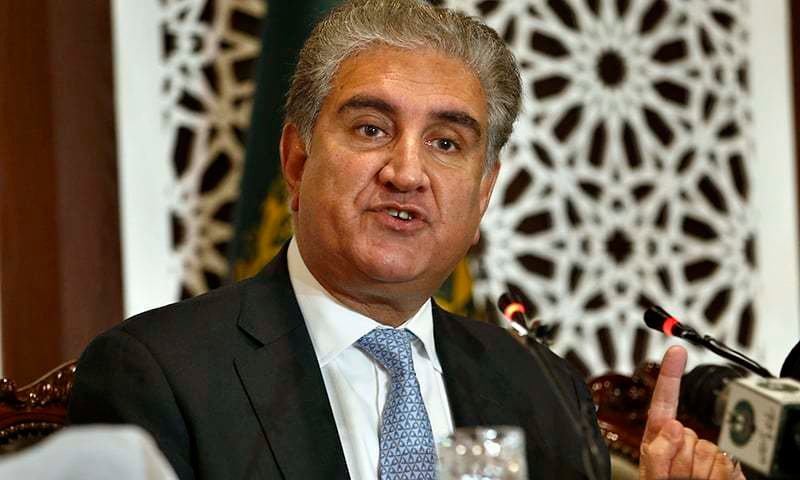
ISLAMABAD: The special court judge granted four-day physical remand of PTI’s vice-chairman Shah Mahmood Qureshi to the FIA. The court granted remand in the cipher case investigation.
The special court judge Abual Hasnat gave the remand and Qureshi was handed over to the FIA for interrogation.
On Monday, the government established the special court to deal with the Official Secrets Act cases. And the same day (Aug 21), the judge gave the physical remand of vice-chairman of PTI Shah Mahmood Qureshi.
Islamabad police arrested Shah Mahmood Qureshi on Sunday in the cipher case. Police presented Qureshi in before the special court judge Abual Hasnat on Monday.
On Monday, an Islamabad special court began hearing cases under the Official Secrets Act.
Shah Mehmood Qureshi, PTI Vice Chairman, presented before the court. Judge Abual Hasnat, an ATC judge, presides over the case against him.
The court proceedings will be private as per the law. The court’s establishment follows controversy over the Act’s approval by President Arif Alvi.
On Sunday, President Alvi disclosed that he did not sign the Officials Secrets Act and Pakistan Army Act (Amendment) Bills. He said his staff defied his orders and did not return the bills.
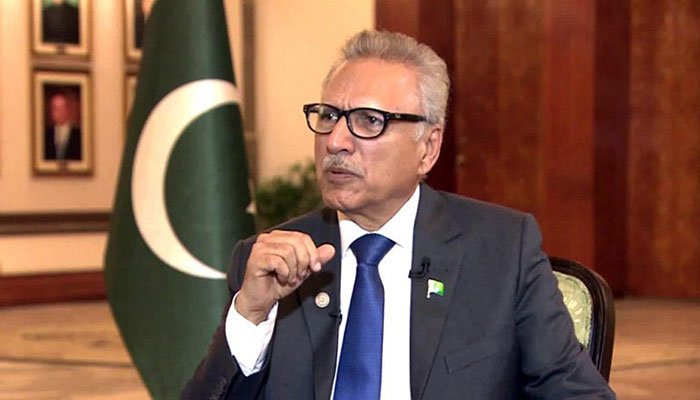
File photo of President Alvi who said he did not sign the Bills.
Meanwhile, PTI leaders Imran Khan and Qureshi are facing charges for misusing diplomatic cipher.
The FIR alleges they revealed classified information for personal gain, harming state security.
Qureshi was arrested on August 19, while a case against Khan was filed on August 15 under Section 5 of the Official Secrets Act 1923 by the FIA.
Ministers contradict President Alvi’s stance on Bills
Meanwhile, Interim Law Minister Ahmed Irfan Aslam and Information Minister Murtaza Solangi contradicted the president’s claim that he was unaware of whether the bills had been returned or not.
Law Minister provided the legal and constitutional standpoint regarding the two bills, stating that the government had not received either of the two bills from the presidency. Consequently, both bills have now transformed into laws.
Moreover, “Under Article 75 of the Constitution, the president only has two options: either to sign a bill or reject it. In case of rejection, he has to give reasons for returning the bills unsigned,” he said.
He further added that in case the president does not exercise either of the two options, a bill automatically becomes law after ten days.
As per the interim law minister, the president had refrained from utilizing these options. He had held the bills in a pending state at the Presidency. This action implied that once 10 days had transpired, the bills would automatically attain the status of laws.
The minister pointed out that previously, President Alvi had chosen one of the two options, but there had been no instance of allowing any bills to remain unsigned for a ten-day period and obstructing their progress.
In response to a question, Information Minister Solangi dismissed the possibility of taking any action against the president. “The sanctity and respect of the president’s office do not allow us to make any such move. No action can be taken against him till he is in his office,” the minister added.
