

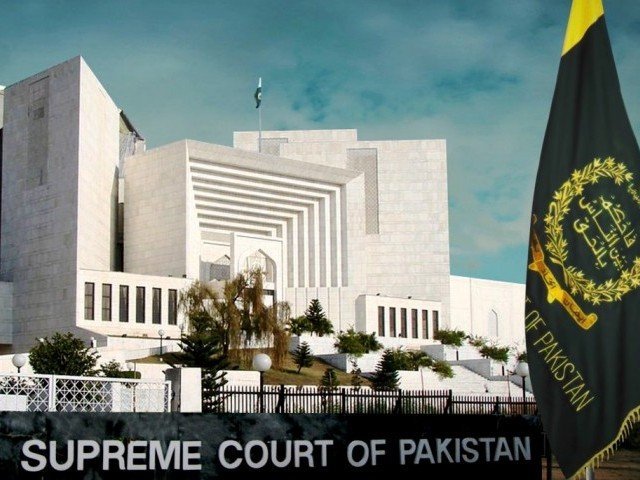

ISLAMABAD: According to Pakistan’s Supreme Court, the goal of establishing sections 31-C and 31-D of the NAB Ordinance is to ensure the stability of the country’s economic, banking and fiscal governance through the State Bank of Pakistan’s (SBP) financial decisions.
A seven-page ruling by Justice Syed Mansoor Ali explains that “the significance of these clauses must be interpreted in this wider constitutional perspective and legislative intent, purpose and intention, not by delving into the technicalities of the financial terminology employed in sections 31-C and 31-D of the NAB Ordinance, which have not been assigned any specific meaning under the NAB Ordinance and may safely be considered generic financial terms as known in common language.”
According to Section 31-C of the NAB Ordinance, the accountability court cannot take cognisance of an offence against an officer or employee of a bank or financial institution for writing off, waiving, restructuring or refinancing any financial facility, interest or mark-up without prior approval from the SBP, according to the three-judge bench led by Chief Justice Umar Ata Bandial.
If the SBP governor has not been consulted about a potential investigation of a company’s defaulted or rescheduled loan under Section 31-D of the Banking Act, NAB cannot begin or carry out any such investigation.
Section 31-C, on the other hand, only applies to offences that have been reported to the appropriate authorities.
Courts can use Section 31-D to shield individuals and businesses from being subjected to investigations or legal action because of reckless lending, defaulted debts, or even rescheduled debt. Because of this, Section 31-D’s coverage is much larger and more expansive.
Although Azgard Nine Limited (ANL) had defaulted on multiple financial institutions’ loans, the ANL entered Debt Swap and Master Restructuring Agreements, under which the loans were restructured and as a result, the servicing of debt to the financial institutions stood rescheduled.
The court emphasised that “the legislative intent, purpose, and aim of enacting sections 31-C and 31-D of NAB Ordinance, to elaborate on cases, where NAB may not proceed, or the accountability court may not take cognisance unless there is a permission or approval of the SBP.”
A person, a corporation, or a financial institution may get their debts restructured and their default repaired through the SBP, the supreme fiscal authority in their nation. This means that the SBP’s approval or agreement is required for this process to go through. “
In the event of a complete default on the obligation, financial institutions will accept a financial arrangement or settlement like this.
There was no other way to challenge, dispute, or disobey the SBP-approved financial arrangement between the parties but to seek permission from the SBP directly.
“Any unilateral action by NAB in restructured and rescheduled loans would significantly damage the authority of the SBP. As a result, the SBP’s financial settlement with the business community would be rendered worthless, leading to distrust and loss of faith and confidence.
“Any such lack of trust might be dangerous and lead to economic instability. Such an action would likewise violate economic fairness and the fundamental freedom to trade and enterprise.”
The court further stated that the petitioners’ firm, the ANL, failed on multiple loans, and as a result, its responsibility was reorganised and rescheduled under several financial arrangements.
This petitioner has yet to get any opposition from a financial institution. ” It is generally widely accepted that the parties have fulfilled their obligations under the agreements in question. The knowledgeable NAB special prosecutor has also openly admitted that the SBP governor’s authorisation was never sought or mentioned. We, however, conclude that no investigation, research, or actions against the petitioners could have taken place without a referral from the SBP governor under Section 31-D of the Ordinance.”
