


ISLAMABAD: The International Monetary Fund (IMF) will review the relief package announced by Prime Minister Imran Khan regarding reduction in POL and electricity prices from March 1, 2022, to provide relief to masses.
Officials said that the IMF team will initiate virtual discussion with Pakistani authorities on March 4, 2022, and these talks will continue for two weeks for the completion of the 7th Review under the $6 billion Extended Fund Facility (EFF) program.
Esther Perez Ruiz, IMF’s Resident Chief in Pakistan, said that Pakistani authorities and the IMF would discuss during the upcoming 7th review of the EFF the merits of the recently-adopted relief package and other measures to promote macroeconomic stability amidst a challenging external environment.
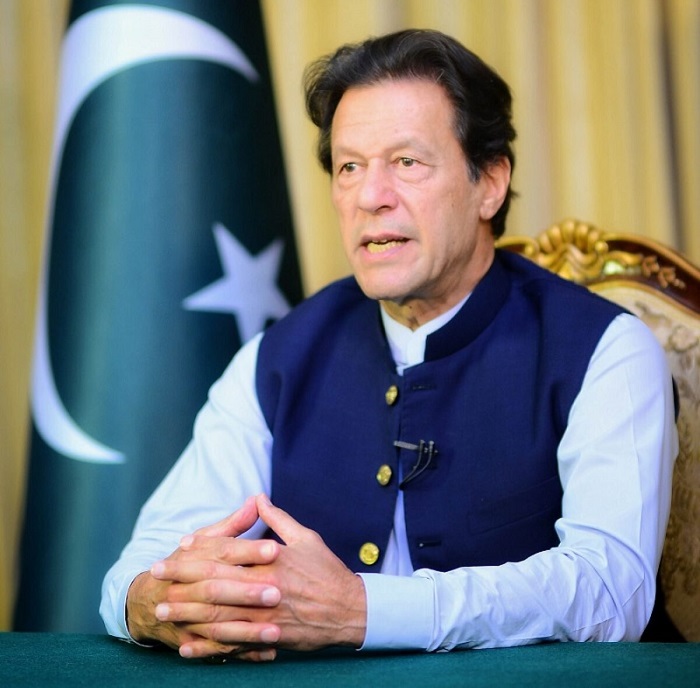
On Feb 28, 2022, Prime Minister Imran Khan reduced petrol and diesel prices by Rs10 per litre and the electricity tariff by Rs5 per unit. It is believed that the government will bear burden of Rs 360 billion on these two fronts of POL and electricity during the remaining four-month (March-June) period of the current fiscal year, according to Geo.TV.
During the current fiscal year, the government will provide a direct subsidy of Rs200 billion on electricity and Rs160 billion on POL prices.The PTI-led government is going to replicate one old program, first introduced during the Musharraf government and later on during the PPP-led government in 2008 and 2009, which was known as Price Differential Claims (PDCs), to reduce the prices of POL products. However, these claims were largely never reimbursed to Pakistan State Oil (PSO) and the amount was still due after a 12-year period. With these measures, it seems that the government has entered into election mode. It is yet to be seen how the IMF will respond to this massive doled out package, as apparently it seems like a total reversal of the Fund-sponsored program. The initial estimates suggested that the cost of other measures such as the internship programme for almost 150,000 graduates with a monthly stipend of Rs30,000 and the doling of interest-free loans under the much-hyped Kamyab Pakistan Program were not included in the cost estimation of the relief package announced by the PM in his televised speech on Monday night.
Economist and ex-Advisor to Finance Ministry Dr Ashfaque Hassan Khan said the relief package was discussed in detail in the last two months. He claimed that it would have no negative impact on the budget deficit nor the ongoing IMF program. He said that the relief package was fully financed and that savings would be utilised to finance the relief package.
The IMF provided $1 billion for COVID-19, which would be diverted towards the relief package. A second unnecessary development project-related allocation would be provided for execution of the package. Thirdly, he said that the BISP money would be fully utilised, and fourthly, the FBR’s increased collection of Rs281 billion would be utilised for this package. He said that there were some suggestions to provide targeted subsidies during the Macro Economic Group meeting, but he had asked for a general subsidy by reducing the prices for all because the government did not have the capacity to provide targeted subsidies.
When contacted, Dr. Khaqan Najeeb, former Director-General, Economic Reform Unit, Ministry of Finance, said general subsidies are less welfare-enhancing for the vulnerable, and that is the reason governments should always promote targeted subsidy regimes. Pakistan has just completed a National Socio-Economic Registry in June 2021 with a door-to-door survey of 33 million households. A good initiative indeed. This should be the right data to use for any future subsidy targeting.
Dr. Khaqan emphasised that a general subsidy on fuel and electricity can have substantive fiscal implications. Electricity consumption in the summers (March to June) is the highest during the year. The Rs5 subsidy will be used to adjust the fuel price adjustment monthly for residential and commercial consumers. In a sense, the government has temporarily abolished the fuel price adjustment for four months.
Assuming a sale of 40 billion GWh of electricity in four months, this can translate into a subsidy of Rs200 billion. If not paid for, this would be taken as a prior year adjustment in the next year’s electricity tariff, thereby increasing it further. He concluded that if there was a reduction in the price of oil, its consumption could further impact the high $7MFY22 $11.6 bn current account deficit, which the government has been trying to curtail through various measures. In the short run, the government can reduce the Petroleum Development Levy for the Rs10 reduction. However, a funded subsidy from the current budget would have to be created to fund this.
