

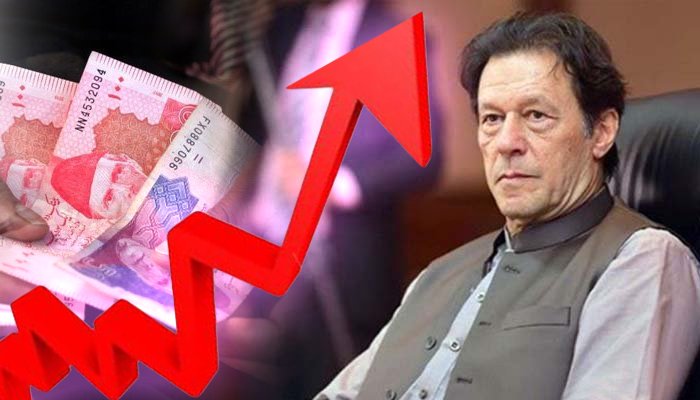

ISLAMABAD: The federal government has presented the mini-budget (supplementary finance bill) 2021 in the National Assembly this Thursday afternoon amid a hue and cry by the opposition parties in the parliament.
Finance Minister Shaukat Tarin presented the mini-budget in the House to generate over 350 billion rupees tax revenue from 150 items. The tax exemptions abolition on food sector will alone generate more than 215 billion rupees tax revenue. Also, 17% GST will be applicable on jewelry and ornaments as against existing rate of one percent tax.
Withdrawal of tax/subsidies exemptions and tax rate change are below:
- The income tax rate on mobile phone calls will increase from 10% to 15%.
- Imported meat and poultry items would also be taxed.
- Meanwhile, the GST rate on cars above 1,000cc will go up to 17% and the tax on the import of electric vehicles in CBU conditions will increase from 5% to 17%.
- Zero-rating available on supplies of raw materials for imported milk would be withdrawn and be taxed at 17%.
- Duty-free shops will be taxed at 17%. As they will be taxed for the first time, there are no revenue estimates.
- The finance bill also proposes that bread prepared in bakeries, restaurants, food chains and shops be taxed at a 17% rate.
- Sales tax on prepared foodstuff and sweetmeats supplied by restaurants, bakeries, and sweet shops will increase to 17%.
- Goods received as gifts from a foreign government or organisation will be taxed at 17%.
- Cottonseed is proposed to be taxed at 17% GST. Meanwhile, the bill proposed increasing the tax on machinery for the poultry sector from 7% to 17%.
- The GST on silver and gold will increase from 1% to 17%, while tax will be imposed on computers and laptops.
- Raw material for medicines will be taxed at 17% GST.
Earlier, the federal cabinet today approved the mini-budget paving the way for increase in the General Sales Tax (GST) rate to 17 percent on 150 items including computers and smartphones, imported 1000cc and above capacity cars while advance income tax will also be imposed on the imported movies and TV series.
The mini-budget and the State Bank of Pakistan (SBP) Autonomy bills were presented in the National Assembly amid tension and protests of the opposition.
The NA session has been scheduled to begin at 4pm Thursday. The opposition parties have vowed to block both bills.
Prime Minister Imran Khan chaired the cabinet meeting which approved the supplementary finance bill. Some of the coalition partners had earlier expressed reservations over the bill.

Finance Minister Shaukat Tarin briefed the cabinet members about the supplementary finance bill.
Prime Minister is about to chair the parliamentary party meeting of his Pakistan Tehreek-e-Insaf (PTI) and its coalition parties, SAMAA TV’s Abbas Shabir reported.

The mini-budget will abolish several tax exemptions, leading to an increase in the prices of 150 items.
Rs1300 billion tax exemptions have been extended to various sectors for many years including Rs578 billion in sales tax exemptions, and the mini-budget will withdraw tax exemptions of Rs350 billion worth.

Sales tax would be imposed on the 150 items in question, he said.
Imported smart phones could be taxed at the rate of 17% while the tax rate on imported vehicles could be increased to 17% from the current 12.5%. The government plans to withdraw the incentive on electric vehicles (EVs) which will be taxed at the rate of 17%. The sales tax on electric vehicles is currently set at 5% as a part of the government policy to promote clean energy.
Imported infant formula (baby milk), imported food items including biscuits and cheese, computers, and cosmetics will also become expensive.
Under the mini-budget a withholding tax of 10% will also be introduced on IT related products. This, coupled with the sales tax, could lead to a sharp increase in the prices of computers. However, Federal IT Minister Aminul Haq on Wednesday said that he has opposed taxes on computers. The government also plans to increase income tax on phone calls to 15% from the current 10%.
Meanwhile,
bout 144 goods that were currently either completely exempted from General Sales Tax (GST) or being taxed at 5% to 12% rates would now be taxed at the rate of 17%.
The actual revenue impact from slapping GST on the 144 items will be far higher than the estimated Rs350 billion, as many of them are being taxed for the first time and their possible revenue impact was not available with the Federal Board of Revenue (FBR).
Moreover, about Rs7 billion will be collected by increasing income tax rate on mobile phone calls from 10% to 15%. The zero-rating available on imports and supplies of goods and raw materials for preparations milk for infants would be withdrawn and it will be taxed at 17% to generate Rs9 billion revenues annually.

Similarly, preparations suitable for infants that are currently exempted will be taxed at 17% to generate another over Rs6 billion every year. The net revenue from taxing infant milk is estimated to be over Rs15 billion.
The supplies to duty-free shops will be taxed at 17%. As they will be taxed for the first time, there are no revenue estimates. The GST rate on cars of above 850cc will go up to 17% and tax on the import of electric vehicle in CBU conditions will increase from 5% to 17%. Business to business transactions will go up from 16.9% to 17%.

In a major proposal, which will also fetch the highest amount of revenue under any head, the government has proposed to slap 17% GST on raw materials for pharmaceutical products for revenue worth Rs45 billion.
This includes Rs30 billion at the import stage and Rs15 billion at local stage. However, the FBR said raw material would be zero-rated and it would refund the amount. Breads prepared in bakeries, restaurants, food chains and shops will be taxed at 17% rate for nearly Rs5 billion every year.
Nan, chapatti and sheermal prepared at tandoors will remain exempted. Cooked food served in messes will be taxed at 17% rate. The premixes of growth stunting will be taxed at 17%. This is contrary to PM Imran’s vision to end stunting.
Tax on prepared foodstuff and sweetmeats supplied by restaurants, bakeries, caterers and sweetmeat shops will increase from 7.5% to 17%, making the business expensive.
Imported edible vegetables will be taxed to generate Rs7 billion. Red chilies not sold in retail packaging will be taxed. Cereals and products of milling industry will be taxed for Rs5 billion and local supply of rice, wheat, wheat and meslin flour will remain exempted.
Match boxes will also be taxed at 17% rate. Whey, excluding that sold in retail packing under a brand name and sausages and similar products of poultry meat or meat offal excluding those sold in retail packing under a brand name or trademark are also on the list to tax at 17%.
The tax rate on flavoured milk sold in retail packing under a brand name will be increased from 10% to 17% for Rs1 billion. The rates of yoghurt, cheese, butter, cream, desi ghee, whey, milk and cream sold in retail packing under a brand name will go up from 10% to 17%.
Machinery and equipment related to dairy products will now be taxed at 17% as against the existing 5%. Mobile phones will be taxed at standard 17% rate as against the fixed rate.
Supplies made from retail outlets as are integrated with the FBR’s computerised system that are currently taxed at 10% will now be taxed at 16%. The tax rate of frozen prepared or preserved sausages will go up from 8% to 17%.
Seeds, fruit and spores of a kind used for sowing are proposed to be taxed for Rs4 billion. The 17% GST on Cinchona bark will fetch a minimum of Rs4 billion every year. The import of sugarcane will also attract 17% tax.
The import of newsprint, newspapers, journals, periodicals, books but excluding directories will be taxed at 17% for Rs1.5 billion every year. However, the local supply of newspapers will remain exempted.
Promotional and advertising material will be taxed at 17% rate. Goods imported by or donated to federal and provincial hospitals will be taxed at 17% rate.
Similarly, goods supplied to hospitals run by the federal or provincial governments will be taxed for Rs1.5 billion every year. Goods imported by various agencies of the UN, diplomats, diplomatic missions will also be taxed at the rate of 17%.
The annual revenue potential at current import volume is Rs300 million. Goods received as gift or donation from a foreign government or organisation will be taxed at 17%.
The import of all goods received, in the event of a natural disaster will also be subject to tax. Articles imported through post as unsolicited gifts will be subject to 17% tax.
Imported samples, contraceptives and accessories will be taxed for Rs200 million every year. Sewing machines will be taxed at 17% rate.
The import of live animals and live poultry will be taxed at 17% for Rs700 million every year but its local supply will remain exempted.
The meat of bovine animals, sheep and goat will be taxed but their local supply will remain exempted. The import of fish and crustaceans excluding live fish will be taxed but their local supply will remain exempted.
Eggs including eggs for hatching will be taxed for Rs2 billion annually but their local supply will remain exempted. The Import of live plants will be taxed and their local supply will remain exempted. Uncooked poultry meat is on the list to be taxed for a minimum of Rs2 billion. Cotton seed is proposed to be taxed at 17% GST for Rs3 billion. Iodized salt will be taxed for Rs300 million annually.
The rate on ingredients of poultry feed, cattle feed, except soya bean meal will go up from 10% to 17%.
Taxes on tillage and seed bed preparation equipment, seeding and planting, irrigation, drainage, and agrochemical preparation, harvesting, threshing and storage equipment and post-harvest handling equipment will go up from 5% to 17%.
The GST on machinery of poultry sector will go up from 7% to 17%, multimedia projects from 10% to 17% and lithium iron battery will increase from 12% to 17%. The GST on silver and gold will increase from 1% to 17% and articles of jewellery to 17%.
Goods imported temporarily including passenger service item, provision and stores of Pakistani Airlines, Items with dedicated use of renewable source of energy like solar and wind, high efficiency Irrigation equipment are on the list of items to be taxed.
Green house farming equipment will be taxed for Rs5.5 billion revenue. Fans for dairy farms for Rs500 million, fish feed, bovine semen, preparations for making animal feed will be taxed for Rs4 billion.
The micro feeder equipment, plant and machinery imported by green field industries will be subjected to the new taxation.
Sprinkler, drip and spray pumps equipment is proposed to be taxed. Raw cotton, single cylinder agriculture diesel engine will be taxed. Sunflower and canola hybrid seeds meant for sowing will be taxed.
Combined harvesters up to five years old to face 17% GST, oil cake and solid residue will have 17% tax and to generate minimum Rs5 billion revenue.
The local supply of locally produced crude vegetable oil will be taxed for Rs2 billion. The tax rate on import of oilseeds meant for sowing will be increased from 5% to 17%, Machinery and equipment for BMR of coal firing system, gas processing plants and oil and gas field prospecting, plant, machinery, equipment for mine construction or extraction phase, coal mining machinery, and equipment imported for the Thar Coal Field will attract 17% GST rate.
The machinery, equipment and spares for BMR or expansion projects for power generation under an agreement with government of Pakistan will be taxed for Rs14 billion. Machinery, equipment and spares for BMR or expansion projects for power generation will also be subject to 17% GST for Rs42 billion.
Similarly, machinery, equipment and spares for BMR or expansion projects for power generation through nuclear or renewable energy resources will be taxed for Rs6 billion.
Effluent treatment plants, Items for use with solar energy will be taxed for Rs12 billion. The rate of tax on import of Plant and machinery having no compatible local substitutes will be increased from 10% to 17% to fetch an additional revenue of Rs12 billion.
Even the import of POS machine will be taxed at 17%. This move comes despite expanding the web of integrated POS being the single largest initiative of former finance minister Shaukat Tarin.
Exported goods, which are imported within one year, will be taxed to generate Rs3 billion.
The import of plant and machinery for the manufacturing of cell phones by local manufacturers will be subjected to the 17% GST. Personal wearing apparel and bona fide baggage imported by overseas Pakistanis and tourists will also be taxed.
The raw material and intermediary goods for in-house consumption will be subjected to tax. Compost (non-commercial fertiliser) produced and supplied locally will be taxed at 17% rate ad imported plant, machinery and materials by Export Processing Zone will also be taxed.
Personal computers, laptop computers, notebooks — whether or not incorporating multimedia kit — will also face the new taxation.
