



ISLAMABAD: The World Bank has pointed out in its report “Pakistan Development Update” that the State Bank of Pakistan has injected over one billion dollars into market to support.
The Pakistan Development Update – the flagship biannual report – released on Thursday, also shed light on the reason behind why Pakistan’s exports were not increasing despite massive currency depreciation.
“The rupee has already depreciated by 8.1% against the dollar since end-June 2021, and between mid-June to early September, the central bank used $1.2 billion in reserves in an attempt to mitigate disorderly exchange rate adjustments,” according to the WB report.
On September 15, The Express Tribune had reported that the central bank threw $1.2 billion to defend the rupee, which was also contrary to the stated policies of the central bank, International Monetary Fund (IMF) and finance ministry, as all the three institutions claim that the rupee value is determined by market forces.

The central bank reserves are built by taking expensive foreign loans like floating the Eurobond and issuing the expensive Naya Pakistan Certificates. The $1.2 billion injection was equal to $1.2 billion annual oil facility that Pakistan secured from Saudi Arabia this week.
The WB said that given that external public debt is a third of the total public debt stock, the depreciation of the rupee has also implications for public debt, which is already at 90.7% of the gross domestic product. It added that Pakistan remained vulnerable to public debt related shocks.
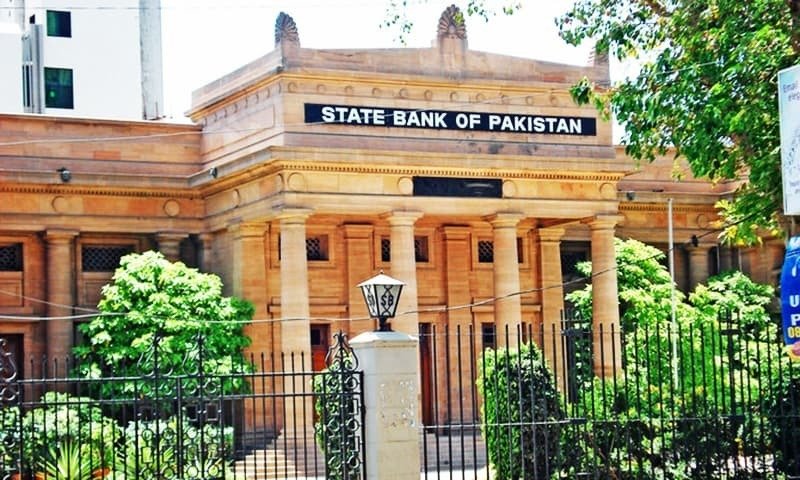
The WB attributed the rupee depreciation to widening trade deficit, downgrading Pakistan’s stock market by MSCI, increasing likelihood of global monetary tightening and the Afghan crisis.
The report discussed in detail Pakistan’s current account deficit problem, which it said was stemming from low exports rather than from higher import bill.
Due to strengthened domestic demand, imports have grown much higher than exports in recent months, leading to a large trade deficit, the WB said.
The key factors that are hindering exports are high effective import tariff rates, limited availability of long-term financing for firms to expand export capacity, inadequate provision of market intelligence services for exporters, and low productivity of Pakistani firms, the WB said.
The increasing use of regulatory duties is not going to be an effective tool to contain the trade deficit due to limited share of non-essential goods of hardly 9% to 10% in the import basket, Gonzalo Varela, the senior economist in the macroeconomics, trade and investment global practice of the WB, said. He said that 80% of the exports are of productive purposes.
By imposing regulatory duties, the imports cannot be fixed but the revenues would surely increase, Varela said. The increase in exports relative to the rupee depreciation is slow due to inflation and low demand from trading partners, he added.
