

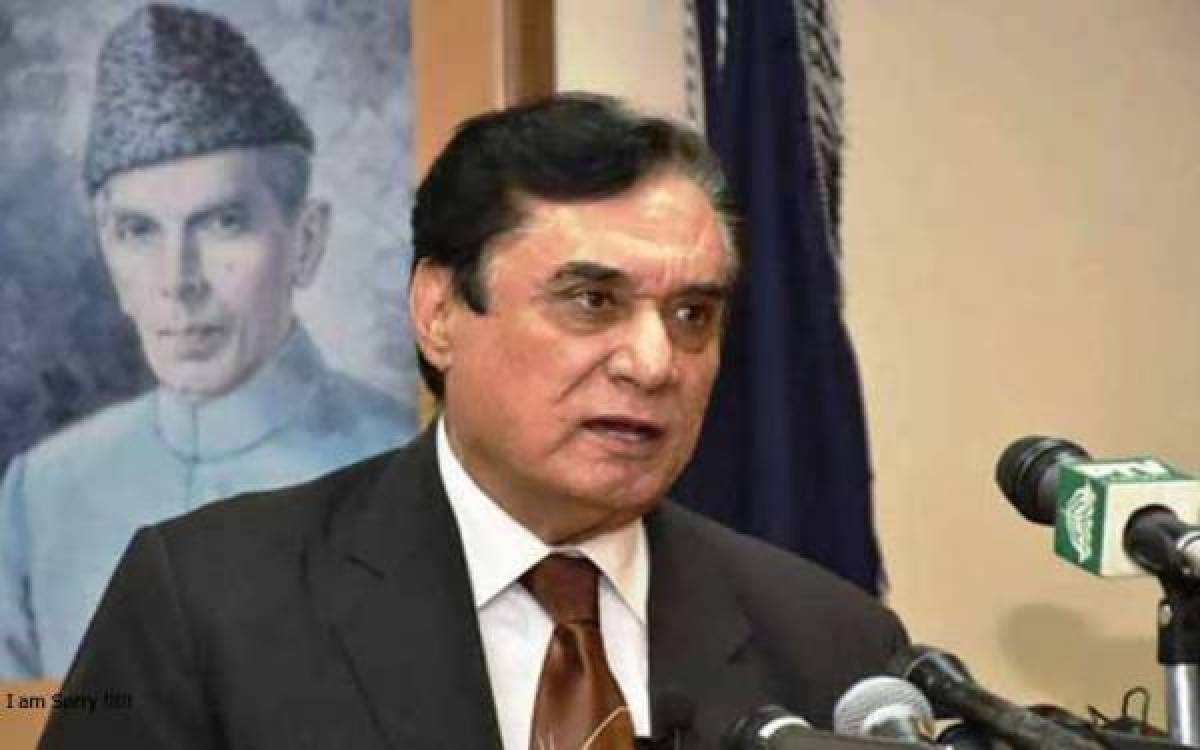

ISLAMABAD: President Dr Arif Alvi has promulgated an ordinance with effect from Oct 6 wherein the jurisdiction of the National Accountability Bureau (NAB) has been curtailed while President can reappoint the incumbent NAB chairman or extend his tenure.
After the issuance of the ordinance, sitting NAB Chairman Javed Iqbal can stay in his office till the appointment of new chairman even after the expiry of his term. His four years term will end on Oct 8 (Friday), but now he will continue to enjoy his work as Chairman NAB as long as government is happy with his ‘performance’.
Contrary to the rhetoric of some federal ministers that ruled out consultation over the appointment of NAB chairman with opposition leader Shehbaz Sharif as the latter faces corruption references, the National Accountability Second Amendment Ordinance 2021 has amplified the opposition’s role in the appointment of NAB chairman.
Another salient feature of the ordinance is exclusion of the federal and provincial cabinets, business community and collective decisions of the committees or sub-committees, Council of Common Interests, National Economic Council, National Finance Commission, Executive Committee of National Economic Council, Central Development Working Party, Provincial Development Working Party, Departmental Development Working Party and State Bank of Pakistan from the ambit of NAB.
According to the ordinance, “all matters pertaining to Federal, Provincial or Local taxation, other levies or imposts, including refunds, or loss of exchequer pertaining to taxation” will be dealt with in accordance with the revenue or banking laws and will be transferred from the accountability courts to the courts of competent jurisdiction.
Moreover, NAB cannot proceed against “any person or entity who, or transaction in relation thereto, which are not directly or indirectly connected with the holder of a public office…procedural lapses in any public or governmental work, project or scheme, unless it is shown that a holder of public office or any other person has been conferred or has received any monetary or other material benefit from that particular public or governmental work”.

The ordinance has amended Sub-section b of Section 6 of the National Accountability Ordinance (NAO) to grant extension in the tenure of the NAB chairman by excluding the word “non-extendable” from the statue.
However, it has retained the proviso that makes consultation between the opposition leader and the leader of the house in the National Assembly on the appointment of NAB chairman, but states that the president would consult both of them.
It has increased the role of the opposition and enhanced the parliamentary oversight as it has provided a forum of a 12-member parliamentary committee in case the consultation between the PM and the opposition leader proves futile.
The ordinance has enhanced the authority of prosecutor general of NAB empowering him to play a crucial role in advising the chairman to file or withdraw any reference from the court.
It has also allowed the accountability court to grant bail to any accused.
Earlier under the NAB law, there was no provision of granting bail to the accused as an under custody suspect could only apply for bail after expiry of his 90-day remand and that too under the extraordinary jurisdiction of the high court under Article 199 of the Constitution that empowers the high court to enforce fundamental rights.
The ordinance allows the appointment of retired judges of high courts as accountability judges. In addition, it provides that a district and sessions judge and an additional district and session judge may also be designated as the judge of accountability court with the consent of the chief justice of the high court concerned.
Federal Law Minister Barrister Dr Farogh Naseem and Minister for Information and Broadcasting Chaudhry Fawad Hussain earlier held a press conference and explained that the law would enable NAB to focus on mega corruption cases.
